
 Algeria
 Egypt
 Libya
 Morocco
 Sudan
 Tunisia
 Benin
 Burkina Faso
 Cabo Verde
 Côte d'Ivoire
 Ghana
 Guinea
 Guinea-Bissau
 Liberia
 Mali
 Mauritania
 Niger
 Nigeria
 Senegal
 Sierra Leone
 The Gambia
 Togo
 Cameroon
 Central African Republic
 Chad
 Equatorial Guinea
 Gabon
 Republic of the Congo
 São Tomé and Príncipe
 Burundi
 Comoros
 Djibouti
 Eritrea
 Ethiopia
 Kenya
 Madagascar
 Malawi
 Mauritius
 Mozambique
 Rwanda
 Seychelles
 Somalia
 South Sudan
 Tanzania
 Uganda
 Angola
 Botswana
 Eswatini
 Lesotho
 Namibia
 South Africa
 Zambia
 Zimbabwe
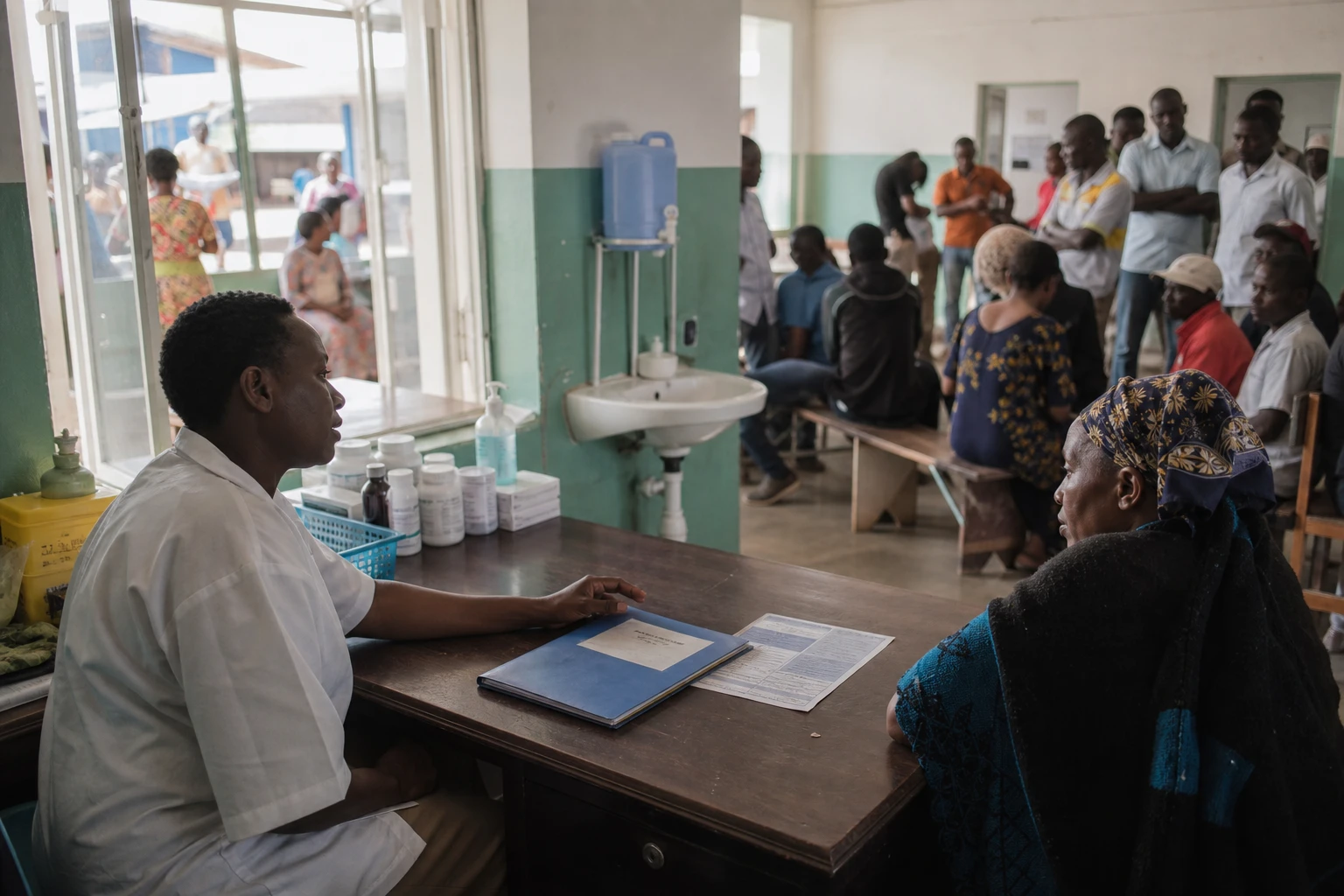
In Bunia, the security crisis now threatens to disrupt a health response already under pressure. Since 20 September 2026, a series of incidents at the Kigonze displacement site in Ituri has prompted families to leave, as teams track the spread of the Ebola virus in the region.
At Kigonze, displaced people caught between security and a health emergency
The Kigonze site is home to nearly 19,000 displaced people, according to information reported by the local press and attributed to Damien Mama, the United Nations humanitarian co-ordinator in the Democratic Republic of the Congo. These families fled violence affecting several territories in Ituri and live in a place where access to water, healthcare and protection remains essential.
On Sunday 20 September, gunfire was heard around the site, in the Mudzi-Mpela neighbourhood of Bunia, the capital of Ituri. Soldiers reportedly carried out a cordon-and-search operation for weapons and people suspected of belonging to an armed group. Military authorities had not yet published a detailed account of events when the first local alerts were issued.
The situation then worsened. A fire, reported on Wednesday 23 September, destroyed several shelters and belongings of displaced people. The cause of the fire has not been independently established. In this context, many families left Kigonze to join relatives or host families.
In a statement released on 27 September, Damien Mama said humanitarian access had been difficult in the preceding days. He said the United Nations had not yet been able to independently establish all the facts or accurately assess the extent of the damage and needs.
“Our priority, therefore, is to gain access to the site as quickly as possible, in order to assist those in need,” said the UN humanitarian co-ordinator in the DRC, quoted by several Congolese media outlets.
Why the dispersal complicates the Ebola response
The problem goes beyond the loss of shelters. Kigonze is among the sites covered by Ebola response activities. These include identifying people who have been exposed, tracing contacts, referring people to healthcare facilities and monitoring symptoms.
When thousands of people leave one site without a relocation plan, health teams can lose track of some contacts. Families disperse across different neighbourhoods of Bunia or move to rural areas. They may also be reluctant to come forward for fear of stigma, isolation or another security operation.
Damien Mama warned that this dispersal, combined with access difficulties, could quickly complicate epidemiological surveillance, contact tracing and the continuity of services. During an epidemic, these activities help identify people who may have been exposed more quickly and limit chains of transmission.
The Congolese National Public Health Institute has been monitoring an Ebola virus disease outbreak affecting eastern DRC for several months. Its situation reports include several health zones in Ituri, including Bunia, and describe a surveillance system involving health authorities and partners on the ground.
The health situation is unfolding in an environment already marked by population displacement, logistical difficulties and tensions surrounding some response activities. In June, officials had already flagged the particular risks facing displaced people living in overcrowded sites in Bunia.
A local crisis in a province under pressure
Ituri faces several sources of vulnerability. The province hosts people who have left their villages after attacks or armed threats. It must also maintain public services in hard-to-reach areas while responding to an epidemic that requires health workers to be regularly present.
For Kigonze’s families, immediate safety is the priority. But leaving the site does not necessarily mean being better protected. Host families often have limited resources. Children may lose access to school, while adults must find food, water and a livelihood in neighbourhoods already under strain.
The consequences may also vary by location. In Bunia, dispersed people are closer to health centres, but may be living in very densely populated accommodation. In outlying or rural areas, they may be farther from healthcare and surveillance teams. For those working in the informal economy, moving again also means losing a selling spot, customers or daily income.
The presence of soldiers at a civilian site also raises a protection concern. Security operations may respond to real threats, but they must preserve the civilian and humanitarian character of places hosting displaced people. Clarifying the facts, informing residents and ensuring humanitarian access are therefore essential to prevent a further erosion of trust.
A test for co-ordination in Central Africa
The situation at Kigonze extends beyond Bunia. It shows how a security crisis can weaken an epidemiological response within days. It also highlights that displaced people are not a stationary group: they move in response to threats, family ties and access to resources.
The DRC will therefore need to balance three priorities: securing sites without obstructing aid, locating dispersed families and maintaining health surveillance. This co-ordination will need to involve provincial authorities, health services, humanitarian agencies, community leaders and local organisations.
In the short term, access to Kigonze will make it possible to assess the damage, identify urgent needs and document departures. Teams will then need to establish where the families who left the site are, without creating new risks of transmission or protection concerns.
For Ituri and the Congolese response to Ebola, the challenge is clear: prevent a local security incident from turning an already displaced population into a community invisible to health services.
The latest information on the situation at Kigonze, data released on people displaced at the site and reports monitoring the Ebola response provide updates on the situation.



