
 Algeria
 Egypt
 Libya
 Morocco
 Sudan
 Tunisia
 Benin
 Burkina Faso
 Cabo Verde
 Côte d'Ivoire
 Ghana
 Guinea
 Guinea-Bissau
 Liberia
 Mali
 Mauritania
 Niger
 Nigeria
 Senegal
 Sierra Leone
 The Gambia
 Togo
 Cameroon
 Central African Republic
 Chad
 Equatorial Guinea
 Gabon
 Republic of the Congo
 São Tomé and Príncipe
 Burundi
 Comoros
 Djibouti
 Eritrea
 Ethiopia
 Kenya
 Madagascar
 Malawi
 Mauritius
 Mozambique
 Rwanda
 Seychelles
 Somalia
 South Sudan
 Tanzania
 Uganda
 Angola
 Botswana
 Eswatini
 Lesotho
 Namibia
 South Africa
 Zambia
 Zimbabwe
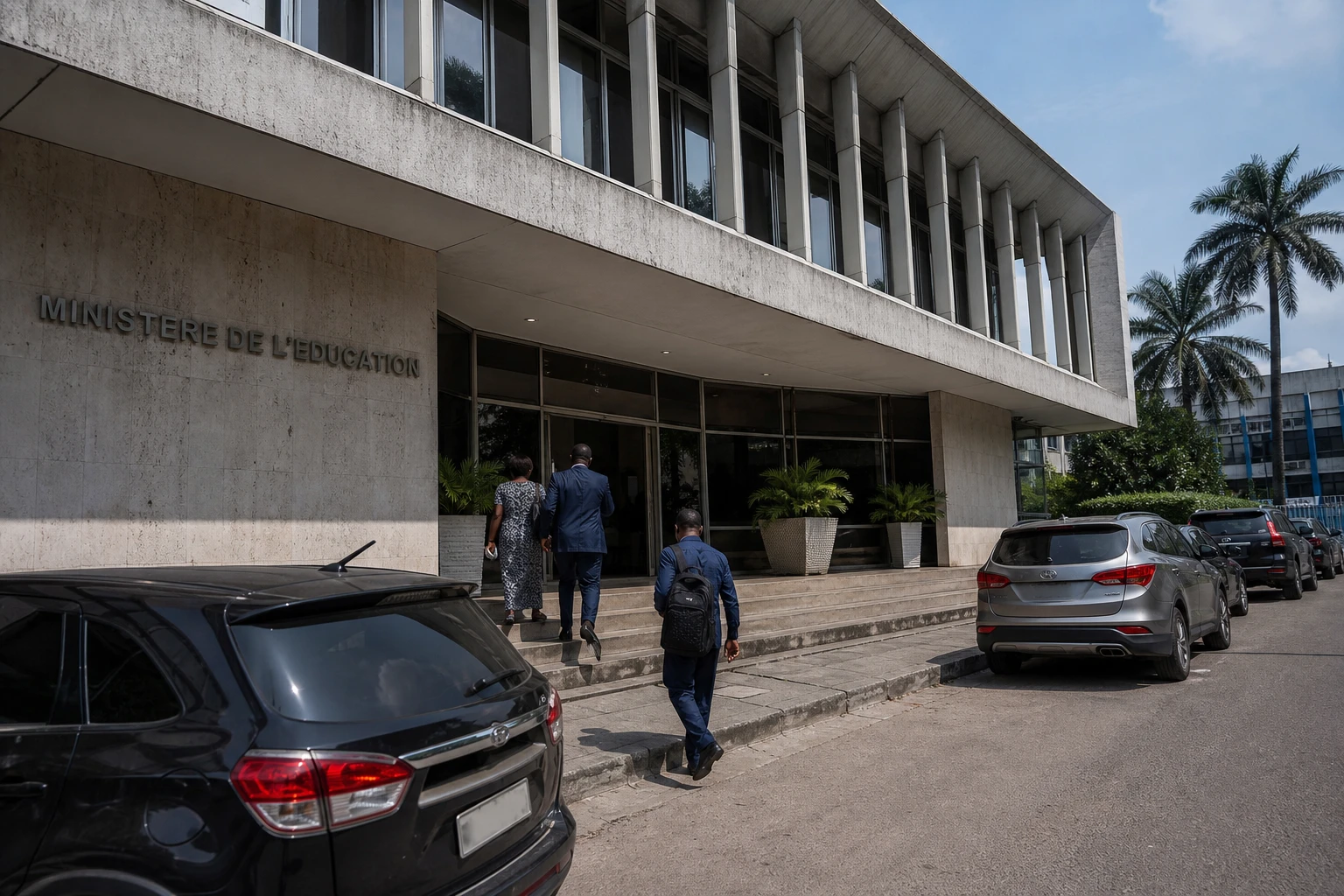
A school year already disrupted by fire
In Bukavu, tragedy struck just as families thought they were returning to a normal school routine. In this city in South Kivu, parents are no longer talking only about school supplies, uniforms or the journey to school. They are also counting those who are missing and trying to find their footing again after a disaster that affected children as lessons were getting under way.
The tragedy highlights a wider reality in the east of the Democratic Republic of the Congo, where security, humanitarian and urban emergencies overlap. Bukavu is under the control of the AFC/M23, while education, health and customary authorities are trying to maintain a minimum level of organisation amid repeated fires, destroyed homes and inadequate emergency services.
What is known about the fire
The fire broke out on Thursday 10 September 2026 in the Cimpunda neighbourhood, in the commune of Kadutu, and ravaged Furaha and Ujamaa primary schools, according to initial findings reported in Bukavu. Pupils were caught in a stampede as the flames spread. Some children died of asphyxiation; others were trampled.
The death toll rose over the course of the day. Hospital sources and a report by the South Kivu 2 and 3 education sub-divisions put the toll at 29 pupils dead and 25 injured. The same report states that 27 bodies were at the morgue of Bukavu General Referral Hospital and two others at Bukavu University Clinics. AFC/M23 officials had given a provisional toll of 24 dead.
The injured were treated at Bukavu General Referral Hospital and Kadutu Hospital, where their condition was described as stable in the latest available information. Several dozen nearby houses are also reported to have been destroyed by fire, confirming that the blaze spread beyond the school grounds.
Families caught between grief and uncertainty
On Friday, relatives went to the morgue. In a disaster of this kind, the pain does not end with the news of the deaths. It extends to the search for bodies, funeral arrangements and then the very practical question of when lessons can resume for surviving children. The head of Mosala neighbourhood said that funeral arrangements had to come before any decision on transferring pupils to other schools.
This is a central question. A child who escapes the flames does not automatically return to a school, a uniform, exercise books and a safe environment. In a city where several schools and many homes have already burned in recent days, education now depends as much on physical reconstruction as on psychological support for families.
The Bukavu case also highlights how exposed densely populated neighbourhoods in the east of the Congo remain to urban fires. The combination of closely packed homes, limited emergency infrastructure and often unsafe housing can turn a fire in one neighbourhood into a collective disaster. Here, the school was not merely affected: it became a focal point for the anguish of a population already under strain.
Prevention, emergency response and public responsibility
Beyond the grief, the case raises a clear question: who is actually protecting children in a city where fires are multiplying? The South Kivu provincial government deplored the lack of preventive measures. Civil society groups, meanwhile, denounced a failure to anticipate the danger and inadequate enforcement of urban planning and housing rules.
Assistance from neighbouring Rwanda, which was asked to respond to the fire because Bukavu lacked suitable equipment, shows how limited local firefighting capacity is. This speaks not only to the urgency of the moment, but also to the structural fragility of a city struggling to withstand repeated disasters without a robust emergency response system.
The previous week, Bukavu had already experienced a series of fires that destroyed hundreds of homes, two schools, a church and several businesses. In this context, the fire at Furaha and Ujamaa schools does not appear to be an isolated accident. It exposes a build-up of urban risks, compounded by insecurity, demographic pressure and inadequate essential public services.
What the incident says about DR Congo and the region
For Kinshasa, the tragedy comes as national authorities are highlighting the return to school and the modernisation of Congolese education. On 4 September 2026, President Félix Tshisekedi visited schools in Kinshasa to demonstrate his commitment to a more functional and dignified education system. In Bukavu, a few days later, reality served as a reminder that a new school year is only meaningful if buildings, emergency services and prevention measures are in place.
At regional level, the tragedy also touches on the fragile balance in the African Great Lakes region. South Kivu remains a province where security crises, population displacement and urban failures intersect. When schoolchildren die in a fire, it is not merely a local incident. It is a warning about the state of basic infrastructure, the local authorities’ ability to protect residents and the priority actually given to civil protection in eastern DR Congo.
The immediate response will have to focus on two fronts. First, organising the funerals and supporting families. Then, restoring the damaged schools and reallocating pupils. In a city such as Bukavu, human needs matter more than administrative timelines. This is precisely the gap that the tragedy has brought to light.



