Algeria
 Egypt
 Libya
 Morocco
 Sudan
 Tunisia
 Benin
 Burkina Faso
 Cabo Verde
 Ghana
 Guinea
 Guinea-Bissau
 Liberia
 Mali
 Mauritania
 Niger
 Nigeria
 Senegal
 Sierra Leone
 The Gambia
 Togo
 Cameroon
 Central African Republic
 Chad
 DR Congo
 Equatorial Guinea
 Gabon
 Republic of the Congo
 São Tomé and Príncipe
 Burundi
 Comoros
 Djibouti
 Eritrea
 Ethiopia
 Kenya
 Madagascar
 Malawi
 Mauritius
 Mozambique
 Rwanda
 Seychelles
 Somalia
 South Sudan
 Tanzania
 Uganda
 Angola
 Botswana
 Eswatini
 Lesotho
 Namibia
 South Africa
 Zambia
 Zimbabwe
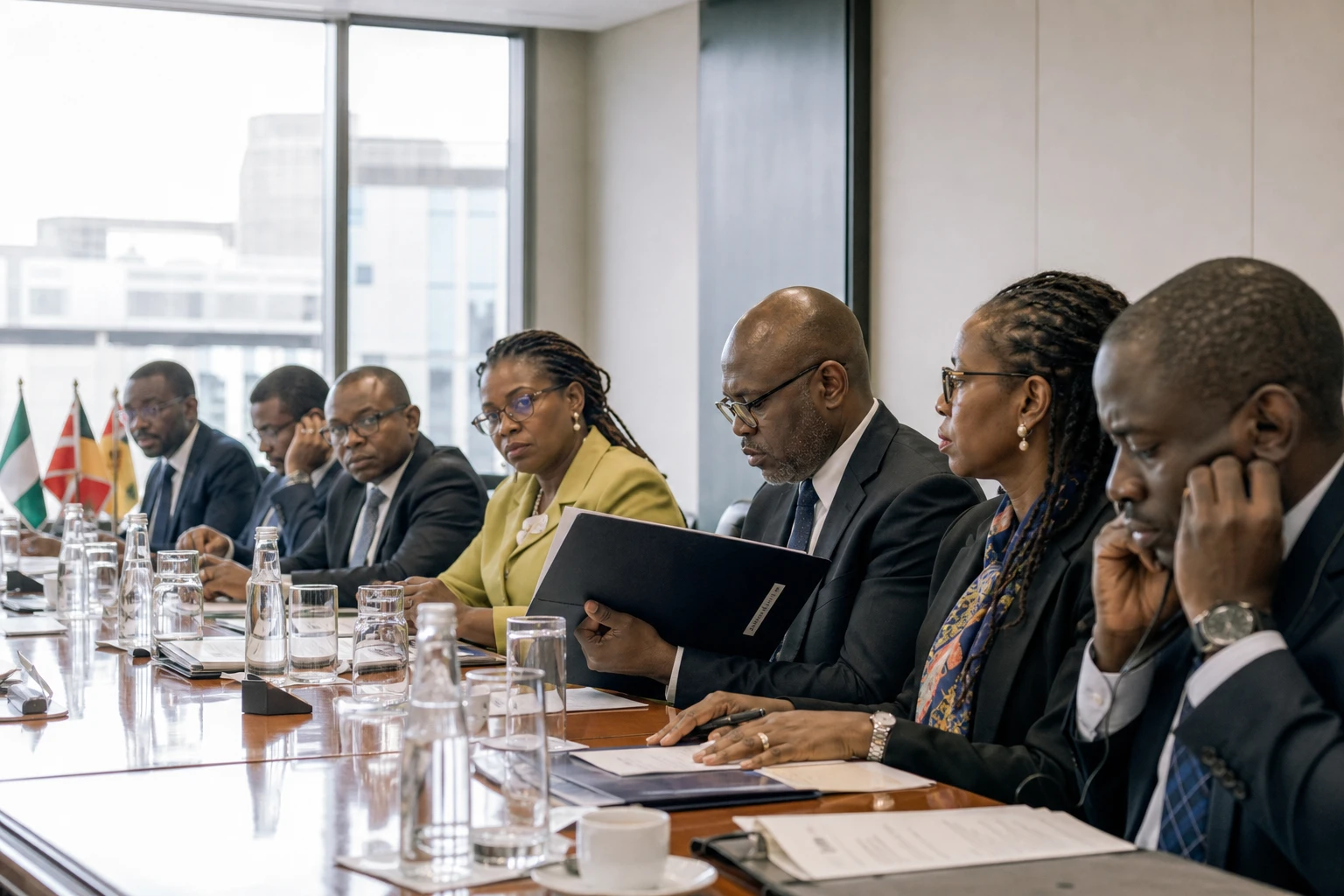
In Abidjan, Bridge Bank Group Côte d’Ivoire’s listing on the Regional Securities Exchange (BRVM) is more than a simple change of status. It highlights investors’ appetite for West African financial firms, as well as the demands that now accompany access to public savings.
A first listing at the heart of the regional market
On Thursday 24 September 2026, Bridge Bank Group Côte d’Ivoire joined the BRVM’s main equity market under the ticker BBGC. The ceremony was held in Abidjan-Plateau, home to the regional financial exchange’s headquarters.
The offering comprised 10 million shares, priced at 6,750 CFA francs each. It represented 20% of the bank’s capital, for a total value of 67.5bn CFA francs. Demand reached 142% of the offer in less than 24 hours.
The listing was announced in the BRVM’s official notice No. 263-2026 on the first listing of Bridge Bank Group Côte d’Ivoire. The reference price was set at 6,750 CFA francs. The price actually observed on the market may subsequently fluctuate according to buy and sell orders.
This was a public offering for sale. In other words, the shares on offer came from existing shareholders. The transaction was therefore not a capital increase intended to provide the bank directly with new equity. This distinction is important in understanding the immediate financial impact of the listing.
The transaction was led by Bridge Securities. It received approval from the Financial Markets Authority of the West African Monetary Union, the AMF-UMOA, under number OA/26-03.
Results that helped drive investor interest
The recorded demand was underpinned by an already visible growth trajectory. Between 2021 and 2025, net banking income, which primarily measures revenue from banking activities, grew by an average of 17.5% a year.
Over the same period, net profit increased by an average of 15.8% a year. The bank also reports an average return on equity of 28%. This indicator compares the profit generated with the capital contributed by shareholders.
At the end of 2025, Bridge Bank Group Côte d’Ivoire reported net banking income of 67.7bn CFA francs. Its net profit reached 27.2bn CFA francs. Its total assets then stood at about 1,427bn CFA francs.
Growth continued in the first half of 2026. At 30 June, total assets had reached 1,560bn CFA francs. Customer deposits stood at 1,318bn CFA francs, while outstanding loans totalled 824bn CFA francs.
For the period, net banking income came to 37.7bn CFA francs. Net profit reached 15.2bn CFA francs, up 46% year on year, according to figures presented at the first listing.
These results provide an economic basis for the transaction. They do not, however, guarantee the share price’s future performance. A listed company must now publish financial information regularly and convince the market that its results are sustainable over time.
An Ivorian bank in a sector that dominates the BRVM
Bridge Bank Group Côte d’Ivoire operates in a sector that already has a strong presence on the regional exchange. As at 22 September 2026, banks accounted for 42.94% of the BRVM equity market’s capitalisation.
This concentration reflects the importance of credit and financial services in the economies of the West African Economic and Monetary Union. WAEMU comprises eight countries that share, among other things, the CFA franc and a regional financial market organised around the BRVM.
For companies, the stock exchange offers broader access to investors across the region. For savers, it provides an opportunity to own a stake in companies operating within their economic area. Liquidity nevertheless remains a key issue. A share can be listed without being traded frequently each day.
BBGC’s arrival therefore increases the number of listed banking stocks. It also strengthens Côte d’Ivoire’s representation, as its economic capital, Abidjan, accounts for a large share of WAEMU financial activity. Côte d’Ivoire’s political capital remains Yamoussoukro, but the regional stock exchange is based in Abidjan.
The bank plans to use this greater visibility to accelerate its digital transformation, expand financing for small and medium-sized enterprises, diversify its revenue and strengthen its development in West Africa.
Listing brings a new level of discipline
The opening of the capital changes the relationship between the bank and its stakeholders. Existing shareholders must now engage with individual investors, financial institutions and savers from several WAEMU countries.
This change demands greater transparency. Results, risks, strategic decisions and any difficulties must be explained regularly. Governance thus becomes as important as commercial growth.
Bridge Bank Group Côte d’Ivoire’s management has made transparency, financial discipline and dialogue with shareholders key commitments. These promises will be assessed through future financial disclosures and the bank’s ability to sustain its performance.
For customers, the impact is indirect but tangible. A growing bank can broaden its credit offering, digital services and support for businesses. However, the pursuit of growth must remain compatible with risk management, particularly in an environment marked by banking competition and the rise of digital payments.
A signal for financing West African economies
BBGC’s listing comes amid an expansion of the regional financial market. Following several recent transactions in different sectors, it confirms investors’ interest in companies based in the WAEMU area.
The BRVM is nevertheless seeking to reduce the dominant position of banks. Its future development will also depend on the arrival of industrial, technology, agricultural, mining and energy companies. A more diversified regional economy should be reflected in the composition of its stock exchange.
For Côte d’Ivoire, the transaction raises the profile of a domestic financial player on a market that extends beyond the country’s borders. For other West African economies, it is a reminder that regional savings can support private companies when the conditions of trust, information and governance are in place.
Investors will be watching the next stage: the performance of BBGC shares, the release of the next results and the practical delivery of the commitments announced. The first listing opens a new chapter. Above all, it makes the bank’s performance a constant focus for the regional market.