Algeria
 Egypt
 Libya
 Morocco
 Sudan
 Tunisia
 Benin
 Cabo Verde
 Côte d'Ivoire
 Ghana
 Guinea
 Guinea-Bissau
 Liberia
 Mali
 Mauritania
 Niger
 Nigeria
 Senegal
 Sierra Leone
 The Gambia
 Togo
 Cameroon
 Central African Republic
 Chad
 DR Congo
 Equatorial Guinea
 Gabon
 Republic of the Congo
 São Tomé and Príncipe
 Burundi
 Comoros
 Djibouti
 Eritrea
 Ethiopia
 Kenya
 Madagascar
 Malawi
 Mauritius
 Mozambique
 Rwanda
 Seychelles
 Somalia
 South Sudan
 Tanzania
 Uganda
 Angola
 Botswana
 Eswatini
 Lesotho
 Namibia
 South Africa
 Zambia
 Zimbabwe
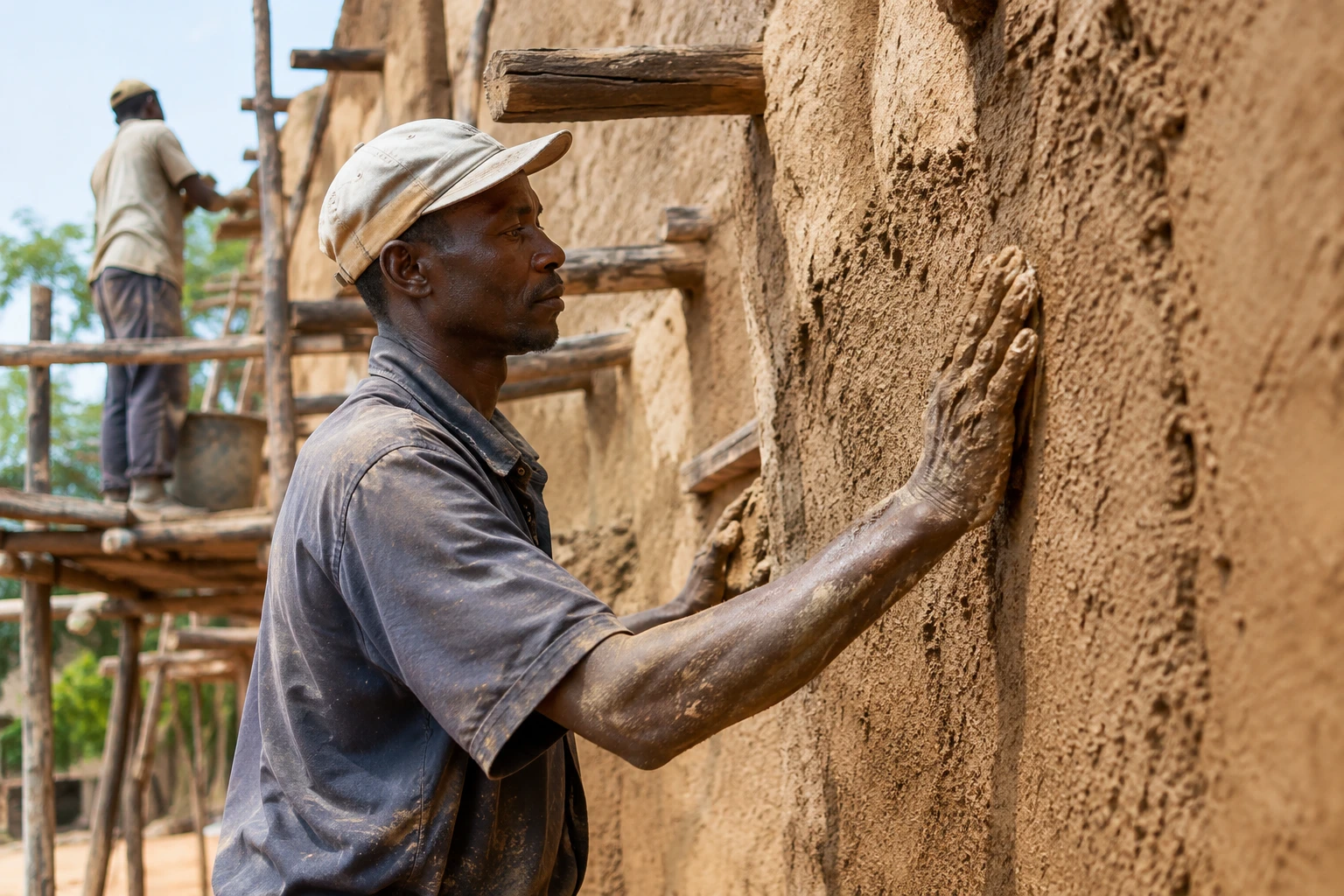
In Bouna, in north-eastern Côte d’Ivoire, restoring an earthen mosque means more than repairing walls. It also requires passing on the skills that built them, preserving a living place of worship and adapting traditional methods to the rain and erosion that are weakening the building.
A project that passes on skills as it restores
In the Limamiso neighbourhood, the Sudanese-style mosque is being restored alongside a training project. Launched in October 2026, the activities combine work on the building with practical training for Ivorian masons. The Ivorian Press Agency reports that 15 masons are taking part and that master masons from Djenné, Mali, are sharing their experience with local teams.
Those involved in the project date the building to the 18th century. It is reported to have been weakened by water ingress, erosion and heavy rain. The minaret collapsed, damaging part of the roof. These details have been reported by the organisers and Ivorian heritage authorities; they describe the practical challenges of earthen construction, but do not in themselves constitute an independent assessment of the building’s condition.
The stated principle is to prioritise traditional materials and methods while testing how well they hold up in local conditions. The project “Earthen Architecture and Climate Resilience in West Africa”, funded by the International Alliance for the Protection of Heritage (ALIPH), is being implemented by CRAterre in partnership with the École du patrimoine africain in Porto-Novo. In Côte d’Ivoire, the Ivorian Office for Cultural Heritage (OIPC) is working with the Ministry of Culture and Francophonie.
The training is part of a regional exchange of expertise. Malian craftspeople, Ivorian masons and heritage-site managers are meeting to share techniques for building and maintaining earthen structures. For Bouna’s residents, the immediate goal is to restore a usable and familiar building without erasing the marks of its history.
Ivorian heritage shaped by West African connections
The Sudanese-style mosques of northern Côte d’Ivoire bear witness to longstanding links between architecture, trade and the spread of Islam in West Africa. Earth, projecting wooden elements and buttresses are not simply imported decoration: they express forms adapted to available materials and the skills of local communities.
In 2021, UNESCO inscribed a group of eight Ivorian mosques on its World Heritage List. Bouna is not among them. The recognised group includes buildings in several northern localities, including Kong, Tengréla, Kouto and Kaouara. The inscription recognises the monuments’ architectural and historical value; it does not mean that other mosques in the country lack significance. The OIPC has raised the possibility of extending recognition to other buildings, subject in particular to their state of conservation.
Figures on the decline of heritage sites should, however, be treated with caution. Ivorian documents submitted to UNESCO refer to several hundred mosques still standing at the start of the 20th century and around 20 today. This estimate points to a sharp decline, but the periods and counting methods are not always specified consistently. The figure should therefore be attributed to heritage documents rather than presented as a recent comprehensive inventory.
Bouna’s restoration is taking place in a context where institutional protection and day-to-day maintenance need to complement each other. For the eight listed sites, UNESCO has stressed the importance of management systems involving both the state and communities. It has also noted the impact of bad weather on several mosques and called for closer monitoring of meteorological risks. These recommendations speak directly to the question facing Bouna: how can the original fabric be preserved without ignoring today’s climate pressures?
Long-term care begins when the work ends
A successful restoration is measured by more than the building’s reopening. It also depends on the ability to monitor walls, intervene in time and pass on the skills needed for future work. Training Ivorian masons could help reduce reliance on occasional interventions from elsewhere, provided these craftspeople are then able to practise and pass on their trade.
Testing local materials is another crucial issue. In information provided about the project, teams describe using earth from the area and experimenting with mixtures intended to improve water resistance. These choices need to be assessed over time: the compatibility of a render or treatment with old masonry cannot be judged solely at the end of the work. Preserving authenticity also means documenting what is replaced, reused or altered.
The mosque is also a place of worship and a landmark for residents, not merely an object for visitors. Decisions about its upkeep, use and appearance therefore concern local communities as much as specialists and public bodies. A restoration carried out in consultation with them can strengthen this shared responsibility, while a project conceived solely as a technical operation risks leaving the question of future maintenance unanswered.
Regional skills and resilience
The Bouna project illustrates heritage cooperation that crosses West African borders. The experience of masons from Djenné, Ivorian expertise and support from the École du patrimoine africain are part of a region where earthen-building traditions have travelled and adapted to different areas. This cooperation does not erase local particularities; rather, it allows methods to be compared and their relevance tested on site.
It remains to be seen how the project’s results will be monitored after the training sessions, scheduled to end on 31 October 2026. The condition of the repairs, regular maintenance and the effective transfer of techniques will help assess the project’s impact. For Bouna and other Ivorian sites, the central question is not simply how to save a monument today, but how to make its conservation possible tomorrow, with local communities and skills.