Algeria
 Egypt
 Libya
 Morocco
 Sudan
 Tunisia
 Benin
 Burkina Faso
 Cabo Verde
 Côte d'Ivoire
 Ghana
 Guinea
 Guinea-Bissau
 Liberia
 Mali
 Mauritania
 Niger
 Nigeria
 Senegal
 Sierra Leone
 The Gambia
 Togo
 Cameroon
 Chad
 DR Congo
 Equatorial Guinea
 Gabon
 Republic of the Congo
 São Tomé and Príncipe
 Burundi
 Comoros
 Djibouti
 Eritrea
 Ethiopia
 Kenya
 Madagascar
 Malawi
 Mauritius
 Mozambique
 Rwanda
 Seychelles
 Somalia
 South Sudan
 Tanzania
 Uganda
 Angola
 Botswana
 Eswatini
 Lesotho
 Namibia
 South Africa
 Zambia
 Zimbabwe
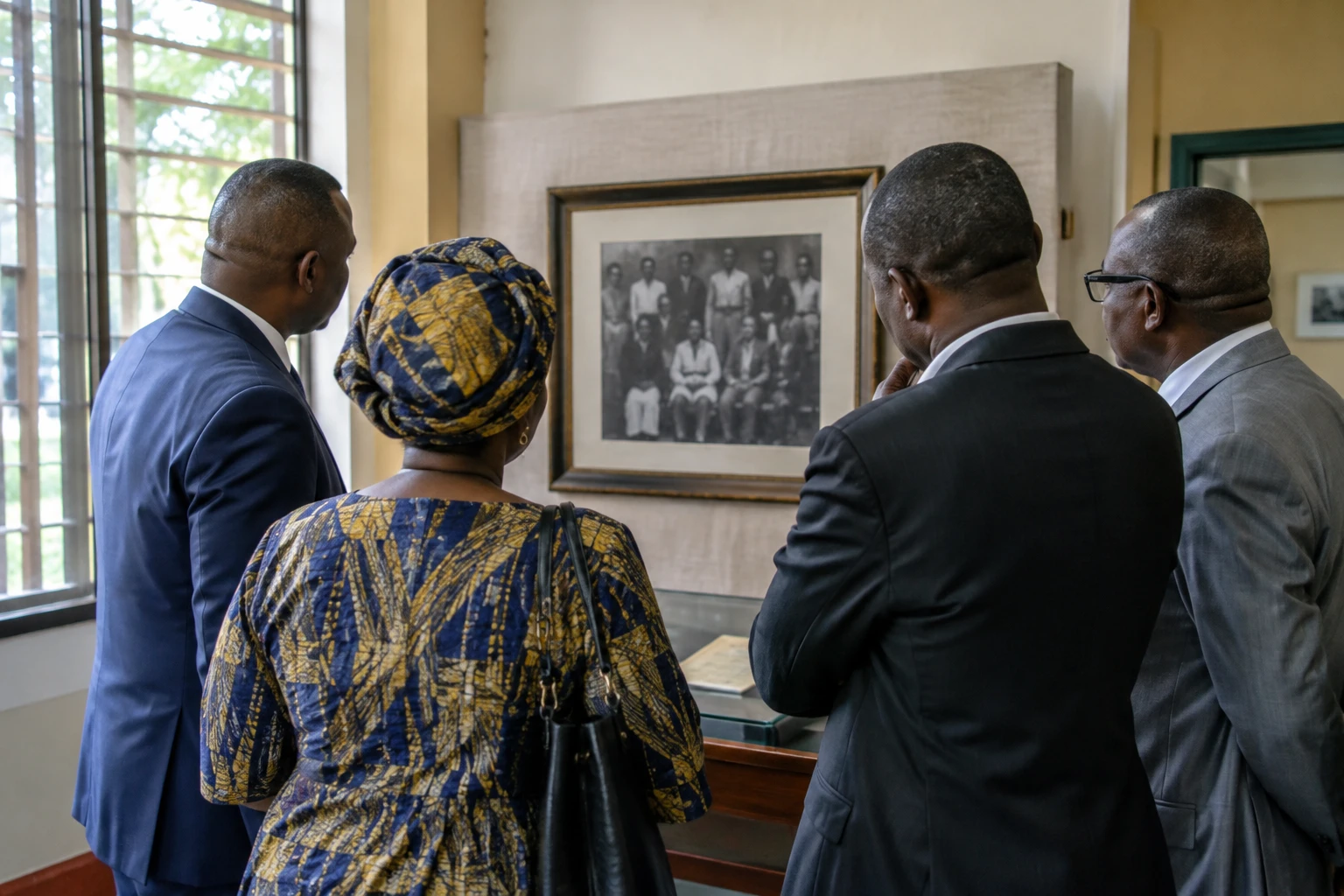
In Berengo, the memory of Jean-Bédel Bokassa is about more than a tomb or images of an imperial coronation. For some young Central Africans, he embodies the ambition of a state capable of building and carrying greater weight. For others, his name chiefly evokes repression. Thirty years after his death, on 3 November 1996, this divided memory raises a question that remains relevant: what should be remembered of a regime that combined modernisation projects with unchecked authority?
A reign that turned the Central African Republic into an empire
Bokassa’s rise took place during the first decades of independence. A former French army officer, he seized power in a coup on 1 January 1966, ousted President David Dacko and ruled until 1979. In December 1976, he proclaimed the Central African Empire. His coronation took place in Bangui on 4 December 1977, at a lavish ceremony whose exact cost remains difficult to establish.
His rule cannot be reduced to its pageantry. Supporters point to the authority of the state, infrastructure projects and the ambition to raise the country’s international profile. But these achievements and ambitions are difficult to separate from a regime centred on one man, who abolished checks and balances and repressed opposition.
The contrast emerges in accounts gathered in Berengo. Jonathan describes Bokassa as an “indispensable builder” and recalls his ambition to modernise the country. Nathanaëlle, by contrast, condemns a style of government marked, in her view, by violence, imprisonment and abuses of power. These comments reflect individual perspectives; they do not, on their own, capture the diversity of Central African memories.
The violence of 1979 remains central to his record
References to development cannot erase the violence attributed to the regime. In April 1979, pupils in Bangui protested against the requirement to wear school uniforms. A commission of inquiry comprising African magistrates later concluded that children had been massacred and judged Bokassa’s personal involvement to be “almost certain”. Estimates of the number of victims have varied: they should therefore be attributed to the reports and sources that cite them, rather than presented as an uncontested toll.
The African commission is an important part of this history: the facts were not established solely on the basis of statements by foreign governments. The mission’s findings were reported by the press at the time, while US diplomatic archives relayed allegations by Amnesty International. Taken together, these documents confirm the gravity of the events, even though precise figures and some individual responsibilities have been described in different terms.
The 1979 crisis unfolded amid broader unrest. Student protests took place during a period of social and political tensions, notably delays in the payment of civil servants’ salaries and scholarships. In September, Bokassa was overthrown while abroad; David Dacko returned to power with the support of French forces. The change of regime ended the empire, but not the debate over local and foreign responsibility for this period.
Berengo, a memorial site turned political issue
Bokassa died on 3 November 1996. He was buried on the grounds of his former palace in Berengo, near Bangui. The site is more than a family or historical relic: it has also hosted military activities. In 2018, the presence of Central African soldiers and Russian instructors on the estate reignited a dispute between some heirs and the authorities, who consider the site to belong to the state.
This occupation illustrates how memory can become entangled with contemporary issues of sovereignty, ownership and security. For people living nearby, the uses of the site have tangible effects; for Bokassa’s descendants, Berengo remains associated with family history. For the state, meanwhile, the estate may represent a strategic location. These interests do not coincide, and underline the need to distinguish historical debate from decisions about the site’s current use.
The Central African Republic carries this memory within a political history marked, since independence in 1960, by several coups and changes of regime. Recalling this continuity helps explain the lasting weight of concentrated power. It does not make all regimes equivalent, nor does it erase the responsibilities specific to each.
A national memory with regional echoes
The debate is primarily a matter for Central Africans, but it also resonates across Central Africa. The Central African Republic is a member of CEMAC, the Economic and Monetary Community of Central Africa, which brings six states together around economic and monetary co-operation. Bokassa’s history is a reminder to countries in the region of the possible consequences of weakened institutions when power is concentrated and oversight mechanisms are eroded.
At a pan-African level, the point is not to choose between the image of a builder and that of an authoritarian ruler. It is to document both achievements and violence, clarify what has been established and identify what remains disputed. For younger generations, this approach prevents memory from being reduced to nostalgia or condemnation without context.
In Berengo and Bangui, the 30th anniversary of Bokassa’s death therefore does not bring the debate to a close. It is a reminder that a political legacy is also measured by the space it leaves for institutions, freedoms and citizens. How the authorities protect memorial sites, and whether historians can establish the facts, will remain crucial to passing on this period without erasing its contradictions.