Algeria
 Egypt
 Libya
 Morocco
 Sudan
 Tunisia
 Benin
 Burkina Faso
 Cabo Verde
 Côte d'Ivoire
 Ghana
 Guinea
 Guinea-Bissau
 Liberia
 Mali
 Mauritania
 Niger
 Nigeria
 Senegal
 Sierra Leone
 The Gambia
 Togo
 Cameroon
 Chad
 DR Congo
 Equatorial Guinea
 Gabon
 Republic of the Congo
 São Tomé and Príncipe
 Burundi
 Comoros
 Djibouti
 Eritrea
 Ethiopia
 Kenya
 Madagascar
 Malawi
 Mauritius
 Mozambique
 Rwanda
 Seychelles
 Somalia
 South Sudan
 Tanzania
 Uganda
 Angola
 Botswana
 Eswatini
 Lesotho
 Namibia
 South Africa
 Zambia
 Zimbabwe
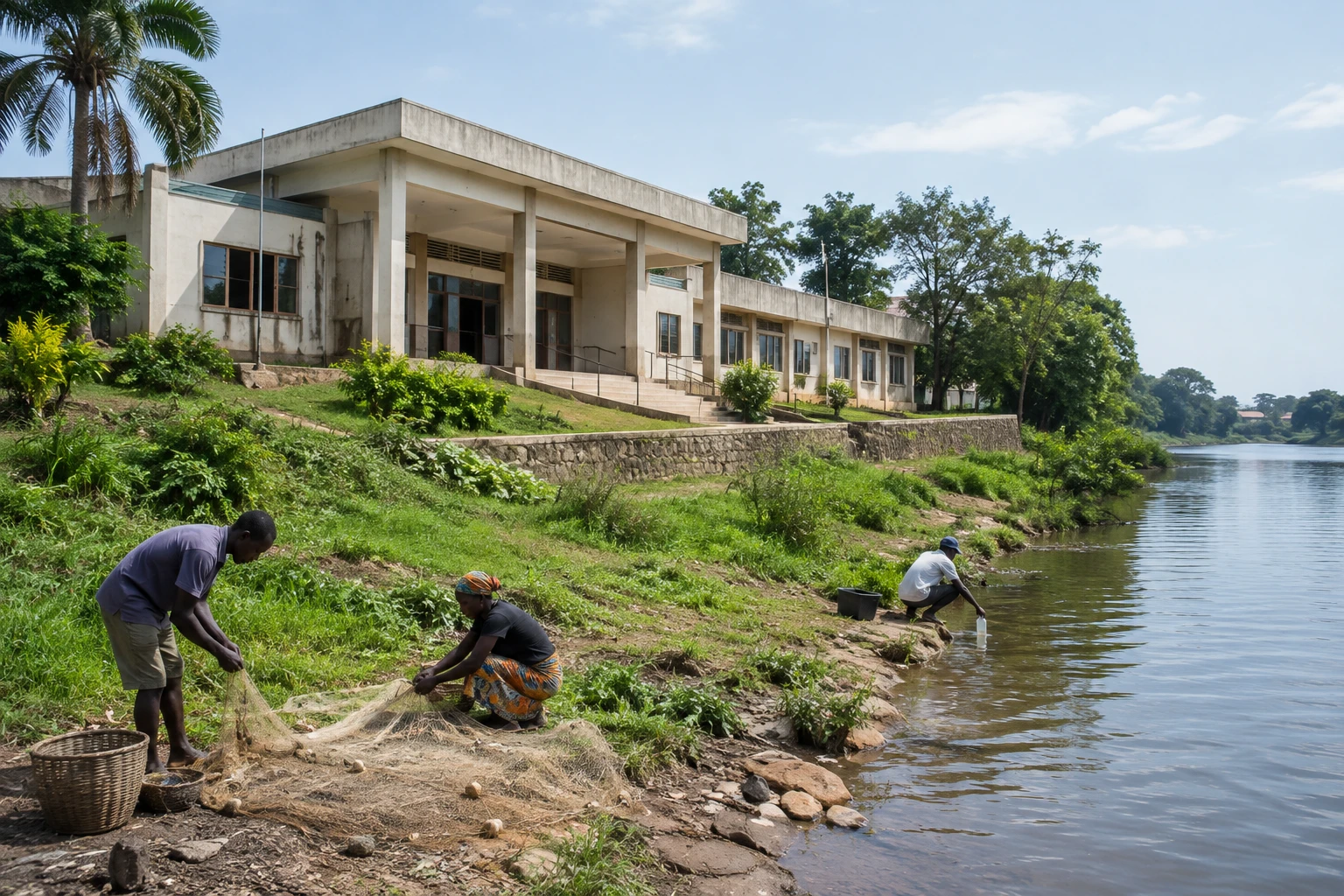
At Boali, about 100 kilometres north of Bangui, fishing depends on a river that residents see changing. Trees are felled to make charcoal, weakening the riverbanks and aquatic habitats. But the activity also provides income and cooking fuel. For families, protecting the Mbali therefore means addressing the health of the river and everyday needs together.
Visible pressure on the Mbali River
Fishers in Boali say they bring back fewer fish and smaller catches than before. At the market, seller Flore Ouagbele describes rising demand, with buyers coming from Bangui, among other places. In her account, local residents themselves are finding it harder to get fish.
Fisher Jean-Roméo Senguemboli blames the felling of trees around the river to produce charcoal. He also links the decline in catches to intense heat and climate change. These observations raise concerns about local livelihoods. However, on their own, they do not constitute a scientific count of fish populations.
Yves Kaengonza, an expert at the Central African ministry responsible for water, forests, hunting and fishing, explains that the loss of vegetation cover can increase water turbidity, reduce oxygenation and degrade breeding areas. Sediment from exposed soils can cloud the water and affect spawning grounds, where fish lay their eggs. These mechanisms are consistent with fishers’ observations, but do not on their own establish how much of the decline in catches is attributable to each factor.
The phenomenon is part of a broader context. The Central African Republic’s national climate adaptation plan notes that periods of low rainfall can lower water levels in Boali and reduce hydroelectric output. In July 2024, Radio Ndeke Luka reported that the state-owned company Enerca was concerned about reservoirs supplying the Boali facilities drying up. Water resources thus link fishing activities to the electricity consumed in Bangui.
Between household energy and fishery resources
Charcoal meets a real demand. It is used for cooking and provides a source of income for local producers. Pressure builds where these needs meet limited access to other fuels and the expansion of felling near populated areas. Calling for production to stop without offering an alternative risks shifting the cost on to households and workers who depend on it.
Conversely, dwindling fish stocks can affect fishers, sellers and consumers at the same time. When catches fall, fishing-related incomes are at risk and market supplies become tighter. Boali residents may then find themselves competing with buyers from other towns. Local testimony points to this tension, but provides no price or volume data series with which to measure its scale.
The regional dimension also matters. The Central African Republic is part of the Congo Basin, a vast forest and river system shared by several countries. Rivers, species and environmental pressures do not stop at borders. In 2025, WWF estimated that annual freshwater fish catches in Africa averaged 2.56 kilograms per person, the highest level in the world. This continental figure highlights the importance of inland fisheries for food, but does not measure stocks in the Mbali.
Pressures on waterways are not limited to deforestation. A FAO document on fisheries in the Central African Republic also lists the destruction of riverbanks, dams and certain mining activities among the risks to waterways. In Boali, the effects of tree-felling, rainfall variations and other uses of the basin will therefore need to be distinguished before effective responses can be set.
Responses at the watershed level
The first priority is to document changes in the river: water levels, quality, turbidity and oxygen, as well as the quantities and species caught over the seasons. Regular surveys conducted with fishers and the relevant services would help establish whether catches are falling over the long term and where habitats are most affected. They would also help avoid attributing every change solely to climate or tree-felling.
Next, protecting riverbanks and breeding grounds must go hand in hand with accessible energy alternatives. The national adaptation plan notably refers to promoting improved cookstoves. Their effectiveness, however, would depend on their availability, cost and uptake by households. Logging rules and reforestation can complement these measures if they can be enforced locally and are discussed with the communities concerned.
Forest governance initiatives are already under way in Boali. In July 2026, the government, FAO and industry stakeholders worked on preparing a system to verify the legality and traceability of timber. This tool targets the timber industry and does not directly address pressure on the Mbali from small-scale charcoal production. It nevertheless illustrates the importance of making forest rules clearer and enforceable, provided that the arrangements also take local activities and needs into account.
For the Central African authorities, the challenge is to link forest, energy and fisheries policies. Across the Congo Basin, the degradation of a local waterway is a reminder that conservation is not limited to the great forest blocks. It also depends on riverbank management, everyday uses and communities’ ability to make a living from resources without depleting them. In Boali, changes in water levels and catches will show whether the responses being pursued address these connections rather than just one symptom.