Algeria
 Egypt
 Libya
 Morocco
 Sudan
 Tunisia
 Benin
 Burkina Faso
 Cabo Verde
 Côte d'Ivoire
 Ghana
 Guinea
 Guinea-Bissau
 Liberia
 Mali
 Mauritania
 Niger
 Nigeria
 Senegal
 Sierra Leone
 The Gambia
 Togo
 Cameroon
 Central African Republic
 Chad
 Equatorial Guinea
 Gabon
 Republic of the Congo
 São Tomé and Príncipe
 Burundi
 Comoros
 Djibouti
 Eritrea
 Ethiopia
 Kenya
 Madagascar
 Malawi
 Mauritius
 Mozambique
 Rwanda
 Seychelles
 Somalia
 South Sudan
 Tanzania
 Uganda
 Angola
 Botswana
 Eswatini
 Lesotho
 Namibia
 South Africa
 Zambia
 Zimbabwe
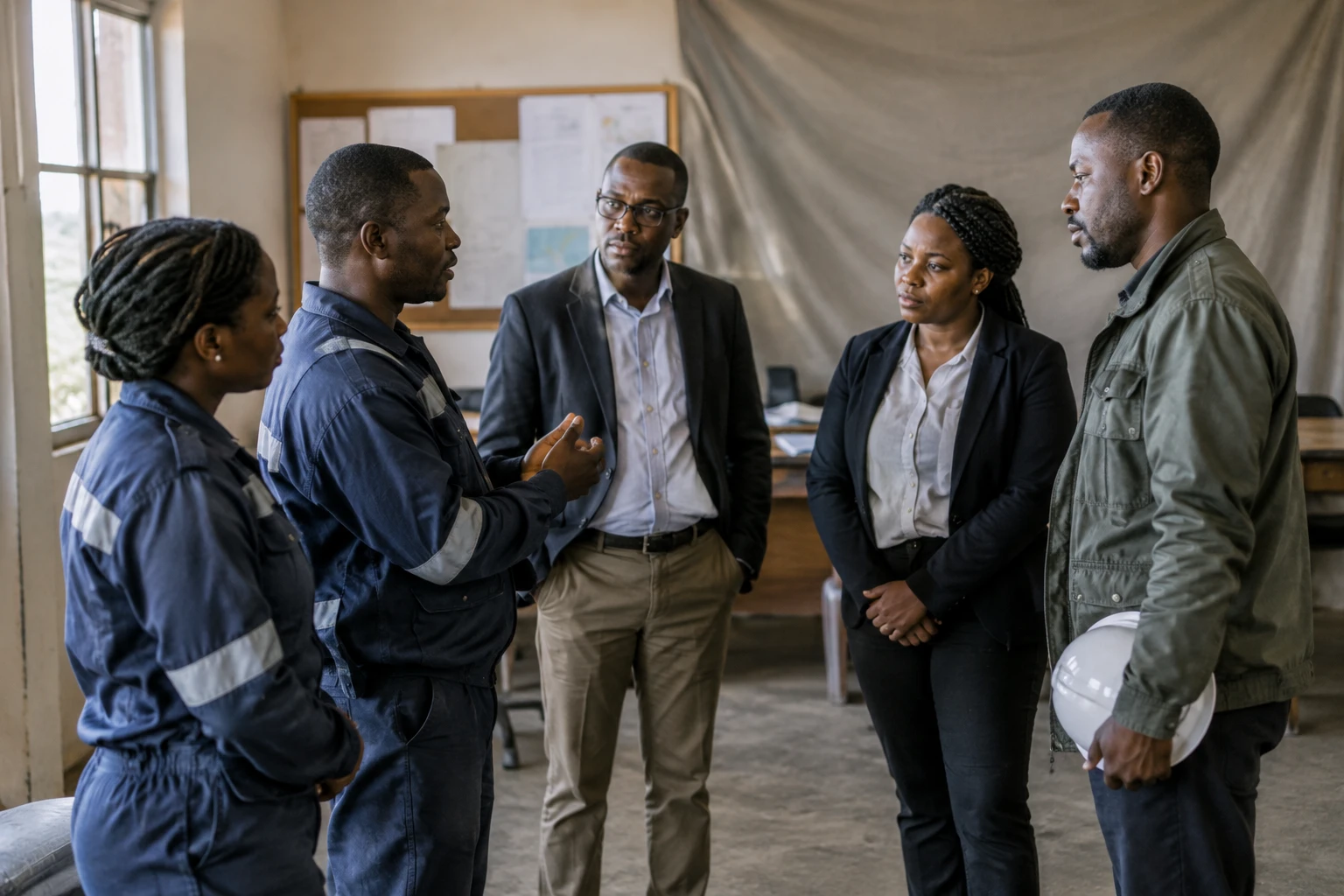
In Walikale, North Kivu, a mine can produce thousands of tonnes of tin while remaining exposed to the upheavals of war. Bisie is both a major industrial site for the Democratic Republic of the Congo (DRC) and an asset whose revenues are of interest to Congolese, South African and Emirati investors.
Operations at the heart of a fragile region
Bisie is in Walikale territory, North Kivu, in the east of the DRC. The region remains marked by insecurity and armed clashes. In March 2025, Alphamin temporarily halted extraction and evacuated some staff following a deterioration in the security situation. The company later announced a gradual resumption. The United Nations also noted that the mine’s activities were suspended from mid-March to mid-April.
This precedent is a reminder that production depends as much on mining facilities as on access to the site, staff safety and routes for transporting ore out. The consequences extend beyond the company: interruptions affect jobs and economic activities linked to the mine, while the state may see revenues from mining fluctuate.
The DRC belongs to several regional groupings, including the East African Community and the Southern African Development Community (SADC). These frameworks do not directly govern operations at Bisie. They do, however, highlight the importance of trade routes, cross-border security and mineral traceability in a region where supply chains extend beyond national borders.
Who has an interest in Bisie?
The mine is operated by Alphamin Bisie Mining SA, a company incorporated under Congolese law. According to information published by Alphamin, its parent company indirectly holds 84.14% of the operator. South Africa’s state-owned Industrial Development Corporation (IDC) holds 10.86%, while the Congolese state owns 5%.
The state’s stake gives the public sector a direct interest in the operating company. The IDC’s share links the project to a South African public investor. But the largest shareholder block is one level up: at Alphamin Resources, which holds a majority stake in the mining subsidiary.
In July 2025, International Resources Holding (IRH), a group based in Abu Dhabi, completed the acquisition of about 56% of Alphamin through its subsidiary Alpha Mining. IRH is owned by 2PointZero Group. This stake gives the group a decisive weight in Alphamin’s shareholding, but does not mean that it directly owns 56% of the Congolese company operating Bisie.
Tremont Master Holdings, which sold the majority stake, retains a minority holding. Other investors also own Alphamin shares. Their financial exposure to Bisie is through the listed company: it depends on Alphamin’s results, investment decisions and dividends, rather than an equivalent direct stake in the Congolese operator.
Production is rising, but the figures must be distinguished
For the 2025 financial year, Alphamin reported production of 18,576 tonnes of contained tin. This was up from 17,324 tonnes in 2024, a rise of about 7%. The annual increase stated in the source material therefore refers to the change from 2024 to 2025, but 17,324 tonnes is not the 2025 production figure.
For 2026, the company is targeting about 20,000 tonnes. In the third quarter, which ended in September, it reported 5,030 tonnes, almost the same as in the previous quarter, when it produced 5,013. The total for the first three quarters reached 15,069 tonnes. This leaves production still to be delivered in the fourth quarter to meet the annual target.
The quarterly figures are reported by the company. They provide a snapshot of activity, but are not enough on their own to measure local benefits. The share going to employees, Congolese suppliers, public finances and neighbouring communities also depends on costs, levies, local purchasing and revenue-sharing mechanisms.
Expansion under several constraints
In the longer term, Alphamin is considering reaching annual production of 25,000 tonnes, notably by mining higher-grade underground zones. This remains a company plan, subject to mining works, investment and operating conditions. It is not guaranteed production.
Results will also depend on very practical factors: staff safety, fuel availability, road conditions and transport times. The company has said that the final quarter is generally more challenging logistically. In North Kivu, these commercial constraints come on top of an unstable security situation.
For the DRC, the challenge is to turn the extraction of a strategic mineral into lasting benefits while ensuring operational continuity and monitoring revenues. For investors, Bisie represents a source of production and revenue whose prospects depend on an asset located in a high-risk area. The next results will show whether 2026 production comes close to the stated target. At the regional level, the case is a reminder that mining competitiveness also depends on corridor security and transparent supply chains.
Sources for verification: Alphamin’s third-quarter 2026 operating results, second-quarter 2026 production, first-quarter 2026 production, 2025 production and 2026 guidance, announcement of a temporary halt to operations, gradual resumption reported by Radio Okapi, United Nations report on the situation in the east of the DRC, Alphamin’s 2025 annual report, DRC profile from the East African Community and SADC member states.