
 Algeria
 Egypt
 Libya
 Morocco
 Sudan
 Tunisia
 Benin
 Burkina Faso
 Cabo Verde
 Côte d'Ivoire
 Ghana
 Guinea
 Guinea-Bissau
 Liberia
 Mali
 Mauritania
 Niger
 Nigeria
 Senegal
 Sierra Leone
 The Gambia
 Togo
 Cameroon
 Chad
 DR Congo
 Equatorial Guinea
 Gabon
 Republic of the Congo
 São Tomé and Príncipe
 Burundi
 Comoros
 Djibouti
 Eritrea
 Ethiopia
 Kenya
 Madagascar
 Malawi
 Mauritius
 Mozambique
 Rwanda
 Seychelles
 Somalia
 South Sudan
 Tanzania
 Uganda
 Angola
 Botswana
 Eswatini
 Lesotho
 Namibia
 South Africa
 Zambia
 Zimbabwe
A border absorbing the shocks
In Birao, in the north-east of the Central African Republic, security is measured not only by the presence of soldiers. It is also reflected in a town’s capacity to shelter, care for and feed families fleeing a new cycle of violence. For several months, this town in Vakaga has served both as a destination for Sudanese refugees and as a refuge for Central Africans displaced by fighting along the border.
This double shock highlights a reality that is often overlooked: in the border areas of the CAR, local and regional crises overlap. Birao lies in a region that looks towards Bangui, Chad and Sudan. Its stability also depends in part on support from the United Nations Multidimensional Integrated Stabilization Mission in the Central African Republic, MINUSCA, and the redeployment of the Central African Armed Forces, the FACA.
Am-Dafock, then the shift towards Birao
On 30 June 2026, an armed attack targeted Am-Dafock, a border locality about 60 kilometres north-east of Birao. MINUSCA confirmed that it had condemned the assault and the gunfire directed at its base in the area. In the days that followed, the situation calmed somewhat, but remained fragile and unpredictable.
According to local authorities and the UN mission, the attack caused extensive damage to public infrastructure in Am-Dafock: the sub-prefecture, town hall, gendarmerie, health centre and archives were destroyed or set on fire. MINUSCA also facilitated air transport for a humanitarian assessment mission conducted with OCHA, the UN Office for the Coordination of Humanitarian Affairs.
Those who fled made their way to Birao, where the first shelters were erected near the Korsi site, the state-recognised reception area for Sudanese refugees. UNHCR recently estimated that more than 35,000 Sudanese refugees had arrived in the Central African Republic since April 2023, including about 22,000 in Birao. The figure shows the scale of the pressure on a town already exposed to risk.
Families crowded together amid rain, illness and water shortages
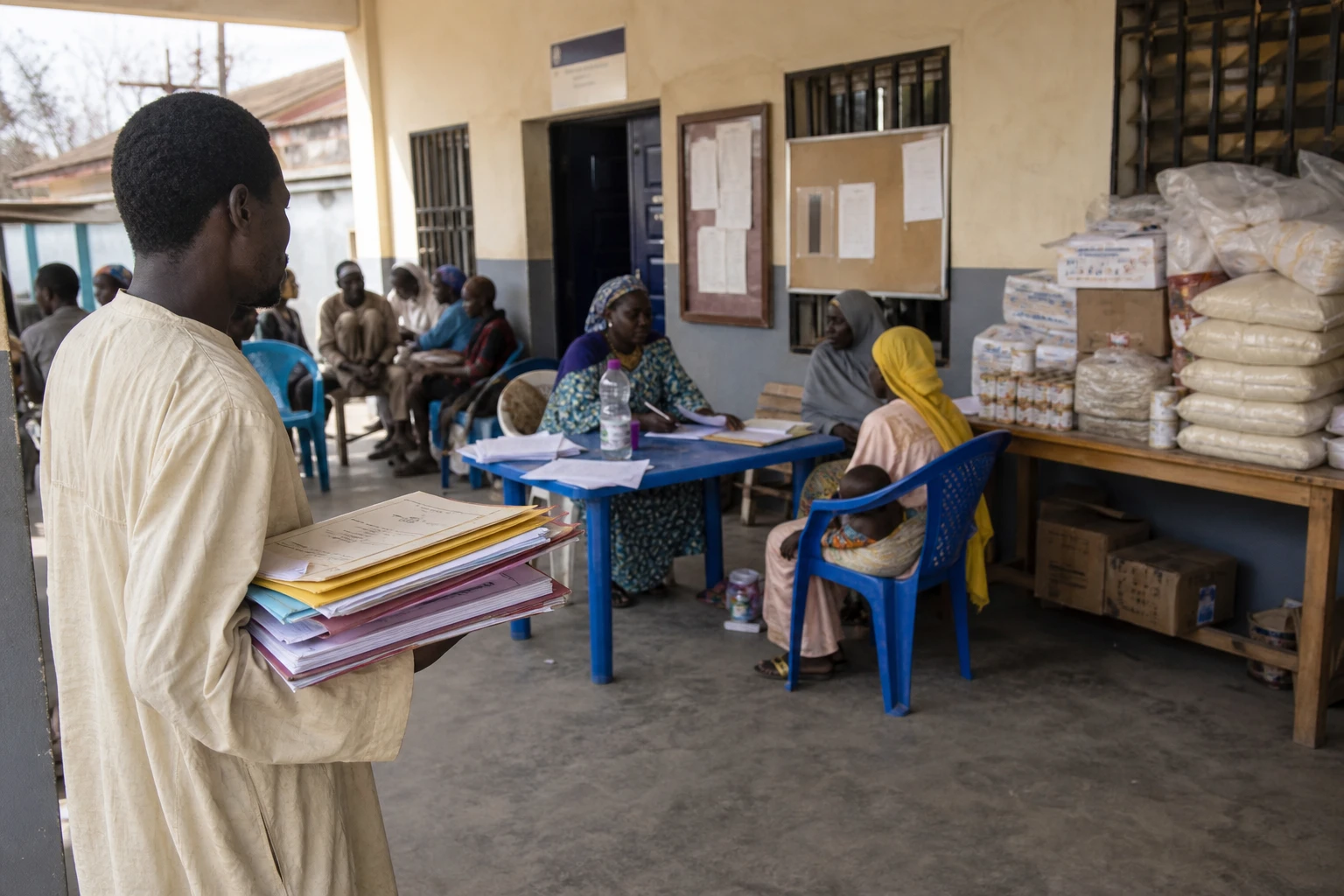
On the ground, the accounts of displaced people describe an emergency with very tangible needs. Tarpaulins, latrines, drinking water, medicines and food are needed. The rainy season makes everything worse. Makeshift shelters are leaking. Children are falling ill. Older people and infants are bearing the heaviest cost of the displacement. MINUSCA says about 16,000 people affected by the 30 June attack have already received emergency assistance, but needs remain high.
The situation is not only humanitarian. It is also a health and social crisis. In a town where arrivals keep coming, every disruption to water supplies, every lack of care and every delay in distribution has an immediate effect on daily life. Humanitarian teams also point out that Birao now hosts Sudanese refugees, internally displaced Central Africans and host communities, all sharing the same services, which are often already under strain.
The case of Birao also illustrates the fragility of the Sahelian and Sudanese borderlands. The war in Sudan, which broke out in April 2023 between the Sudanese army and the Rapid Support Forces, continues to drive civilians towards Vakaga. The pressure extends beyond the CAR. It affects all of Sudan’s neighbouring countries, from Chad to Egypt, as well as South Sudan and the Central African Republic.
Security, sovereignty and the state’s mandate
Following the attack on Am-Dafock, the Central African authorities stepped up security in Birao with MINUSCA’s support. The mission also supported the deployment of more than 300 FACA personnel in Vakaga, including in Birao, Tiringoulou, Gordil and Am-Dafock. The redeployment is intended to restore a regular state presence in areas where public services remain fragile and at times intermittent.
On 18 July 2026, the Central African prime minister visited Birao with several members of the government. The visit was presented as a political signal: to show that Vakaga has not been abandoned, and that the response to insecurity is not limited to military action. In this kind of area, the administration, schools, health centres and civil registry matter as much as weapons.
For residents, the presence of security forces can be reassuring. But it does not feed a family, treat a fever or replace a roof. That is the challenge in Birao: to hold the security front without allowing the humanitarian crisis to take precedence. Rebuilding public authority therefore depends on three interlinked measures: protecting civilians, providing immediate aid and gradually restoring administrative services.
A test for Vakaga and for Central Africa
Vakaga is not a peripheral area. It is a pivotal region for the Central African Republic and, more broadly, for Central Africa. Population movements, cross-border attacks and troop movements intersect there with the routes used for informal trade, refugees and local mediation. In a region such as CEMAC, where borders remain porous, any border incident can quickly extend beyond the local sphere.
UNHCR and its partners have also warned that the response to Sudan in the CAR is underfunded, even as Birao bears a significant share of the needs. The 2026 humanitarian appeal remains far from fully funded. This means pressure on displaced families could continue even if the fighting temporarily falls silent.
For now, two developments need to be monitored. One is the real stability of Am-Dafock and other border localities in Vakaga. The other is the ability of Bangui and its partners to turn the emergency response into a lasting presence: water, healthcare, shelter, schools and administration. In Birao, peace cannot be decreed. It is built through the return of services, the reopening of roads and families no longer having to live in temporary conditions.



