Algeria
 Egypt
 Libya
 Morocco
 Sudan
 Tunisia
 Benin
 Burkina Faso
 Cabo Verde
 Côte d'Ivoire
 Ghana
 Guinea
 Guinea-Bissau
 Liberia
 Mali
 Mauritania
 Niger
 Nigeria
 Senegal
 Sierra Leone
 The Gambia
 Togo
 Cameroon
 Chad
 DR Congo
 Equatorial Guinea
 Gabon
 Republic of the Congo
 São Tomé and Príncipe
 Burundi
 Comoros
 Djibouti
 Eritrea
 Ethiopia
 Kenya
 Madagascar
 Malawi
 Mauritius
 Mozambique
 Rwanda
 Seychelles
 Somalia
 South Sudan
 Tanzania
 Uganda
 Angola
 Botswana
 Eswatini
 Lesotho
 Namibia
 South Africa
 Zambia
 Zimbabwe
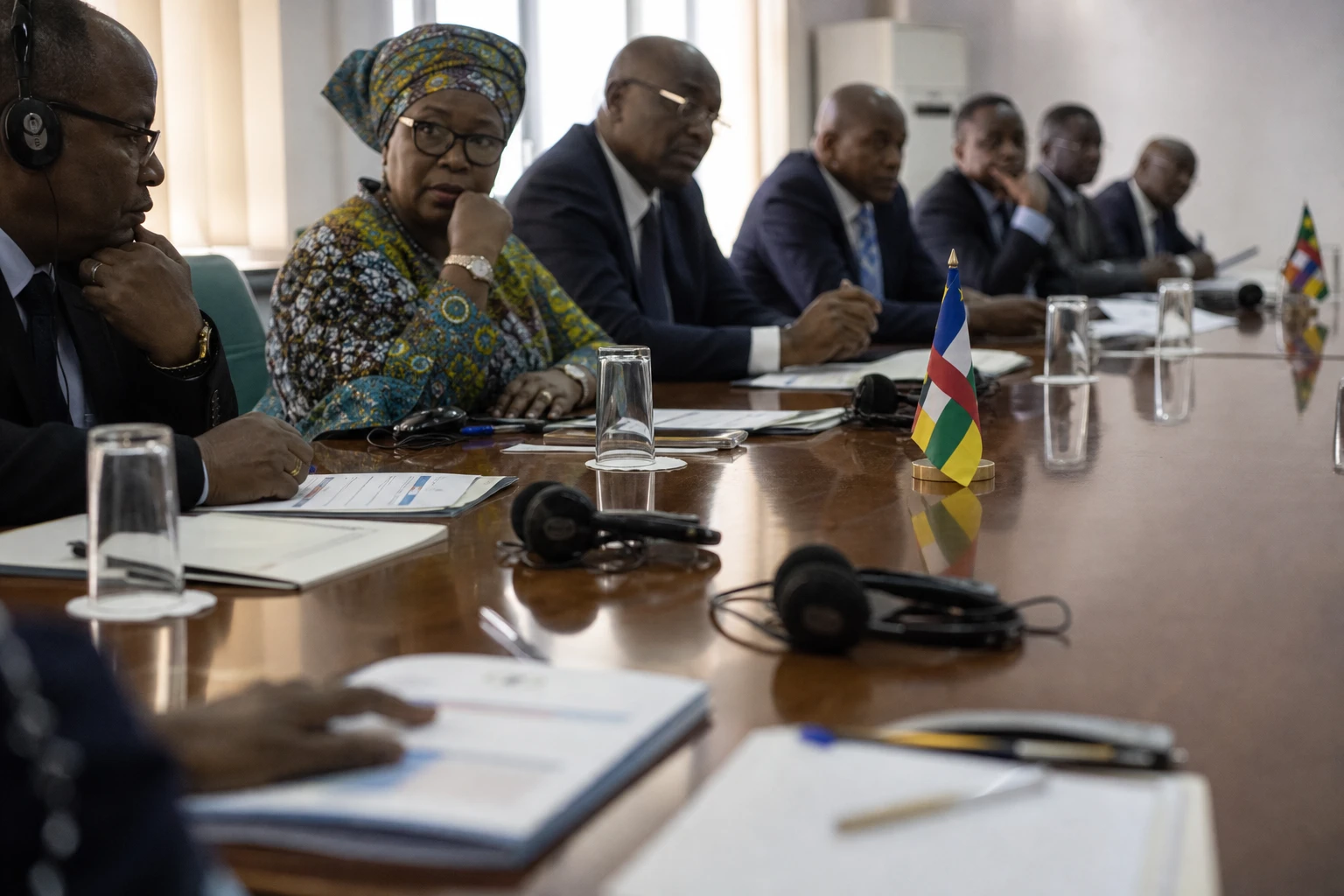
In Birao, peace is measured first by the opening of a market, a clinic and a space for young people
In Vakaga, in the north-east of the Central African Republic, residents are asking for more than speeches about peace. They want passable roads, healthcare, regular incomes and functioning public services. It is with this in mind that a new development hub has been established in Birao, with support from the United Nations and the Central African authorities, to link local stability with economic recovery.
The choice of Birao is no coincidence. The capital of Vakaga, the town lies in the country’s far north-east, close to Sudan and Chad, in an area long marked by administrative isolation, forced displacement and difficulties accessing basic social services. The prefecture is also one of the entry points for Sudanese refugees who have arrived since war broke out in Sudan, adding to pressure on host communities.
A project that forms part of a broader recovery strategy
The launch of the Birao hub is part of an approach now openly adopted by international partners in the Central African Republic: start in areas of return, establish basic services there, then support economic activity to reduce tensions. Nationwide, the United Nations refugee agency now refers to development hubs, hubs designed for refugees, returnees and host communities. In its 2025 and 2026 documents, the agency says that around ten hubs have been identified in the CAR, with examples already visible in Baoro, in Nana-Mambéré.
This framework is not purely humanitarian. It reflects a shift in the relationship between Bangui and the periphery. The Central African Republic remains a vast country with limited infrastructure, where the administrative presence is uneven. In Vakaga, reconstruction therefore depends on very practical facilities: healthcare, schools, markets, support for agriculture and livestock, and income-generating activities. This is also what UN actors regularly emphasise when they call for the consolidation of state authority and the reintegration of displaced people.
What has been announced in Birao
At the inauguration, the authorities and UN agencies presented several components already under way or being put in place: a health centre, a market, women’s and youth centres, as well as other infrastructure intended to support daily life. The stated aim is twofold: to improve access to basic social services and create better conditions for the return of refugees, displaced people and returnees.
The Central African prime minister linked this work to a prior requirement: security. This connection is central in the CAR. Without lasting calm, infrastructure projects remain fragile; without economic prospects, peace remains incomplete. The United Nations is following the same approach, funding projects that combine peacebuilding, local recovery and stronger social cohesion. In Bossangoa, another joint initiative launched in April 2026 has already illustrated this approach.
In Vakaga, development is also a response to displacement
Vakaga illustrates a phenomenon that has become a major issue in the Central African Republic: border areas are no longer merely administrative margins; they are also places of refuge and transit. In Birao, the Korsi site has already served as a place of settlement for Sudanese refugees, while protection and assistance programmes have been put in place by UNHCR and its partners. This reality changes the local equation. Public services must meet the needs of both residents and newcomers.
The practical effects are visible on several levels. For households, a health centre reduces costly journeys to other towns. For women, a structured market and dedicated spaces can safeguard small incomes and strengthen economic autonomy. For young people, productive activities offer an alternative to idleness. For local authorities, these facilities provide a material foundation for the state’s presence in a prefecture long seen as peripheral.
But the challenge remains ensuring these initiatives last. Development projects in the CAR often face three obstacles: insecurity, logistical constraints and a lack of sustainable funding. UNHCR notes that the response in the country remains dependent on available resources, even as protection and recovery needs remain substantial. The Sudan crisis also continues to weigh on the capacity of Vakaga and other border prefectures to host people.
A significance that extends beyond Birao
What is at stake in Birao concerns more than Vakaga. Across Central Africa, the CAR is testing an approach that combines humanitarian aid, stabilisation and local development. This is of interest to CEMAC, whose political and economic heart remains vulnerable when border areas on the periphery become unstable. It also concerns the African Union, as the return, displacement and sustainable reintegration of people are issues facing several countries across the continent dealing with protracted crises.
The timeline to watch is therefore the implementation, not just the announcements. The coming months will show whether the infrastructure promised in Birao becomes a source of regular services, whether the economic activities created prove sustainable, and whether refugees, returnees and host families find common value in them. In the Central African Republic, this is often where a project’s credibility is determined: by its ability to outlast the launch and become useful in daily life.