Algeria
 Egypt
 Libya
 Sudan
 Tunisia
 Benin
 Burkina Faso
 Cabo Verde
 Côte d'Ivoire
 Ghana
 Guinea
 Guinea-Bissau
 Liberia
 Mali
 Mauritania
 Niger
 Nigeria
 Senegal
 Sierra Leone
 The Gambia
 Togo
 Cameroon
 Central African Republic
 Chad
 DR Congo
 Equatorial Guinea
 Gabon
 Republic of the Congo
 São Tomé and Príncipe
 Burundi
 Comoros
 Djibouti
 Eritrea
 Ethiopia
 Kenya
 Madagascar
 Malawi
 Mauritius
 Mozambique
 Rwanda
 Seychelles
 Somalia
 South Sudan
 Tanzania
 Uganda
 Angola
 Botswana
 Eswatini
 Lesotho
 Namibia
 South Africa
 Zambia
 Zimbabwe
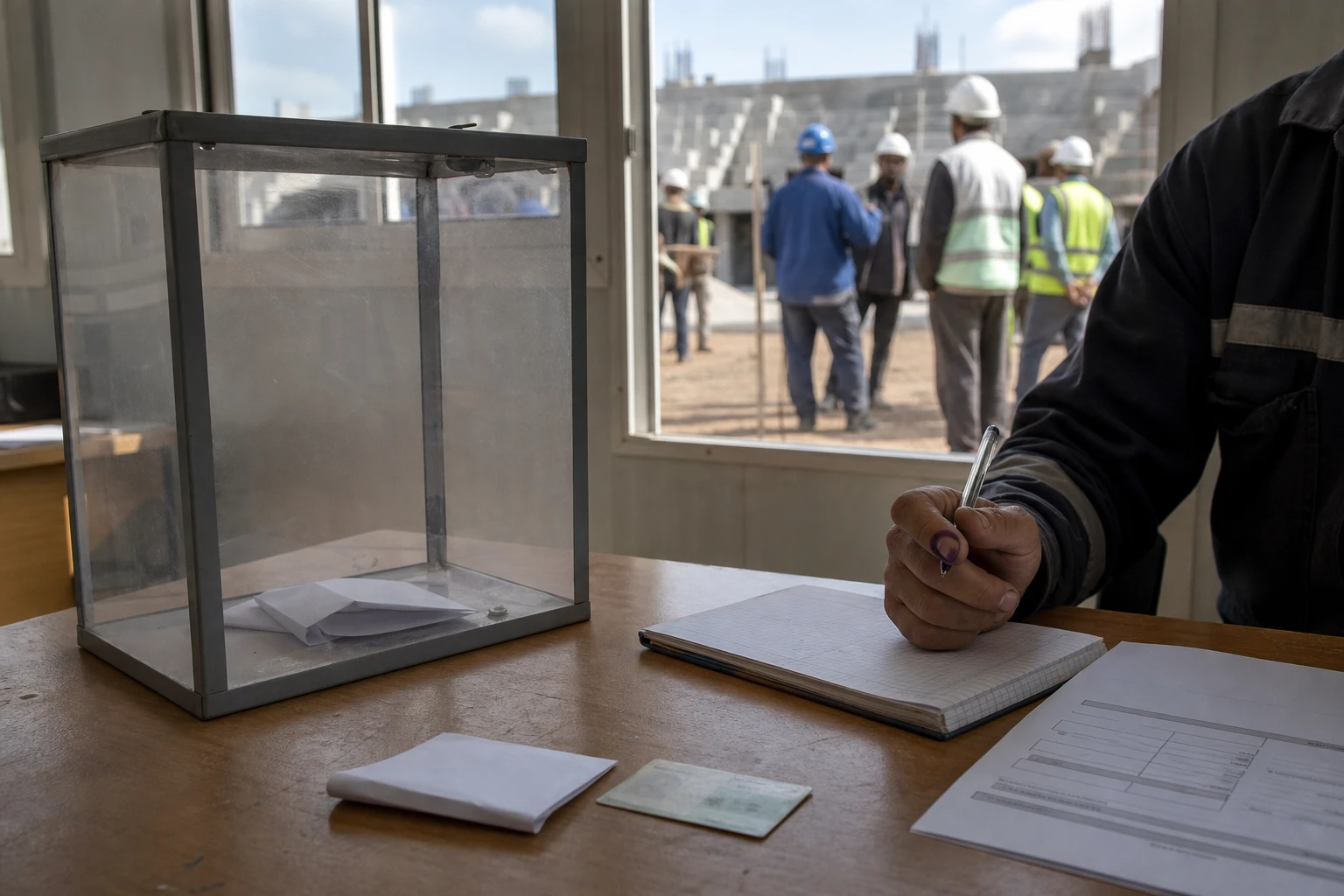
In Benslimane, the future Grand Stade Hassan II is progressing with its foundations, but an essential part of its stands remains unresolved. The procedure to supply and install the venue’s seats has yet to be completed, five days after bids closed.
A 277.5 million dirham contract with no successful bidder
The call for tenders for lot 09 of the project was launched by the National Agency for Public Facilities (ANEP). The public agency is conducting procurement on behalf of the project to develop the Hassan II stadium in Benslimane on a temporary basis.
The contract is estimated at 277.5 million dirhams, including all taxes. It covers the supply and installation of seats in the stands, as well as several facilities linked to welcoming the public and media and providing hospitality areas.
The deadline for submitting bids was set for 23 September 2026. By that date, the tender had closed without an officially published result. Available information also indicates that the two bids submitted were rejected; both were presented by foreign companies.
The procurement monitoring platform currently lists the procedure as closed but not awarded. This distinction matters: it confirms that no successful bidder has been announced, without prejudging ANEP’s next decision or the form any possible re-launch may take.
The contract provides for about 114,414 seats across general admission, VIP and VVIP areas, boxes, hospitality zones and facilities reserved for the media. Compared with the announced capacity of 115,000 spectators, the budget amounts to just over 2,400 dirhams per seat, including installation.
Technical requirements narrow the field of candidates
The tender specifications require candidate companies to demonstrate at least one completed project involving the supply and installation of seats at a stadium with more than 60,000 places during the past 15 years.
This requirement addresses a real challenge. In a venue of this size, seats must withstand heavy attendance, meet fire safety standards and endure intensive use. Their installation must also ensure accurate numbering, smooth circulation and consistent visibility from the stands.
The contract also includes equipment for the press and television production. The programme specifically mentions work tables for journalists, platforms for cameras and designated places for the various categories of spectators.
The number of companies able to provide comparable references is therefore limited. Major stadiums built recently in Africa, Europe, the Middle East and Asia rely on a small group of specialist manufacturers and installers.
The challenge is not limited to manufacturing the seats. It also involves co-ordination with the structural works, stands, access routes, evacuation systems and other technical contracts. A change to one contractor’s schedule can affect the stages that follow.
Main construction work continues on course
The failed tender does not mean work on the Grand Stade Hassan II has stopped. Construction is continuing in El Mansouria, in Benslimane province, in the Casablanca-Settat region.
The project covers about 100 hectares. It is to include a 115,000-seat venue, which would make it the largest football stadium on the African continent and one of the biggest in the world. The site is also to include training pitches, service areas and additional facilities.
The Casablanca-Settat Regional Investment Centre gives a projected opening date of 2027. Other information released about the project points to a phased delivery before the 2030 World Cup. These deadlines will need to be clarified as the various contracts progress.
The roofing and façade contract is another major stage of the project. In March 2026, two companies were declared compliant with the administrative and technical requirements of that procedure, according to information published on the contract. This contrasts with the seats contract, for which no successful bidder has yet been announced.
A timeline to watch ahead of the 2030 World Cup
Morocco will co-host the 2030 World Cup with Spain and Portugal. The Grand Stade Hassan II is the main new venue in Morocco’s plans. Its significance therefore extends beyond the sporting project alone.
For the authorities, the stadium is intended to boost the appeal of the Casablanca-Settat region and support the modernisation of transport, accommodation and services. For Moroccan construction companies, the project is also an industrial and technical showcase, although some highly specialised equipment still requires international suppliers.
The seats tender thus highlights a familiar tension in major projects: the higher the ambition, the more the contract depends on a small number of operators able to meet the required standards. A re-launch with overly restrictive terms could again limit competition. Conversely, excessive changes to the tender specifications could raise questions about the level of technical guarantees.
There is still some leeway in the schedule before 2030. However, the seats contract will need to be awarded, completed and inspected well before the competition opens. Operational testing, spectator circulation, safety and audiovisual coverage cannot be left until the final weeks.
A national and regional priority
At the national level, the project’s success will depend as much on delivering the stadium as on how it is used after the World Cup. A 115,000-seat venue will need a sustainable operating model, with matches, African competitions, cultural events and regular integration into national sporting life.
At the regional level, the project forms part of Morocco’s growing role as a host for major African and international competitions. After the Africa Cup of Nations and ahead of the 2030 World Cup, the country is seeking to turn its sports infrastructure into multipurpose facilities.
The next step will be a practical one: ANEP will need to clarify the status of the procedure, then decide whether to re-launch or adjust the contract. The stadium’s structure continues to take shape. Its interior fit-out, meanwhile, is entering a phase in which every week counts.