
 Algeria
 Egypt
 Libya
 Morocco
 Sudan
 Tunisia
 Benin
 Burkina Faso
 Cabo Verde
 Côte d'Ivoire
 Ghana
 Guinea
 Guinea-Bissau
 Liberia
 Mali
 Mauritania
 Niger
 Nigeria
 Senegal
 Sierra Leone
 The Gambia
 Togo
 Cameroon
 Central African Republic
 Chad
 Equatorial Guinea
 Gabon
 Republic of the Congo
 São Tomé and Príncipe
 Burundi
 Comoros
 Djibouti
 Eritrea
 Ethiopia
 Kenya
 Madagascar
 Malawi
 Mauritius
 Mozambique
 Rwanda
 Seychelles
 Somalia
 South Sudan
 Tanzania
 Uganda
 Angola
 Botswana
 Eswatini
 Lesotho
 Namibia
 South Africa
 Zambia
 Zimbabwe
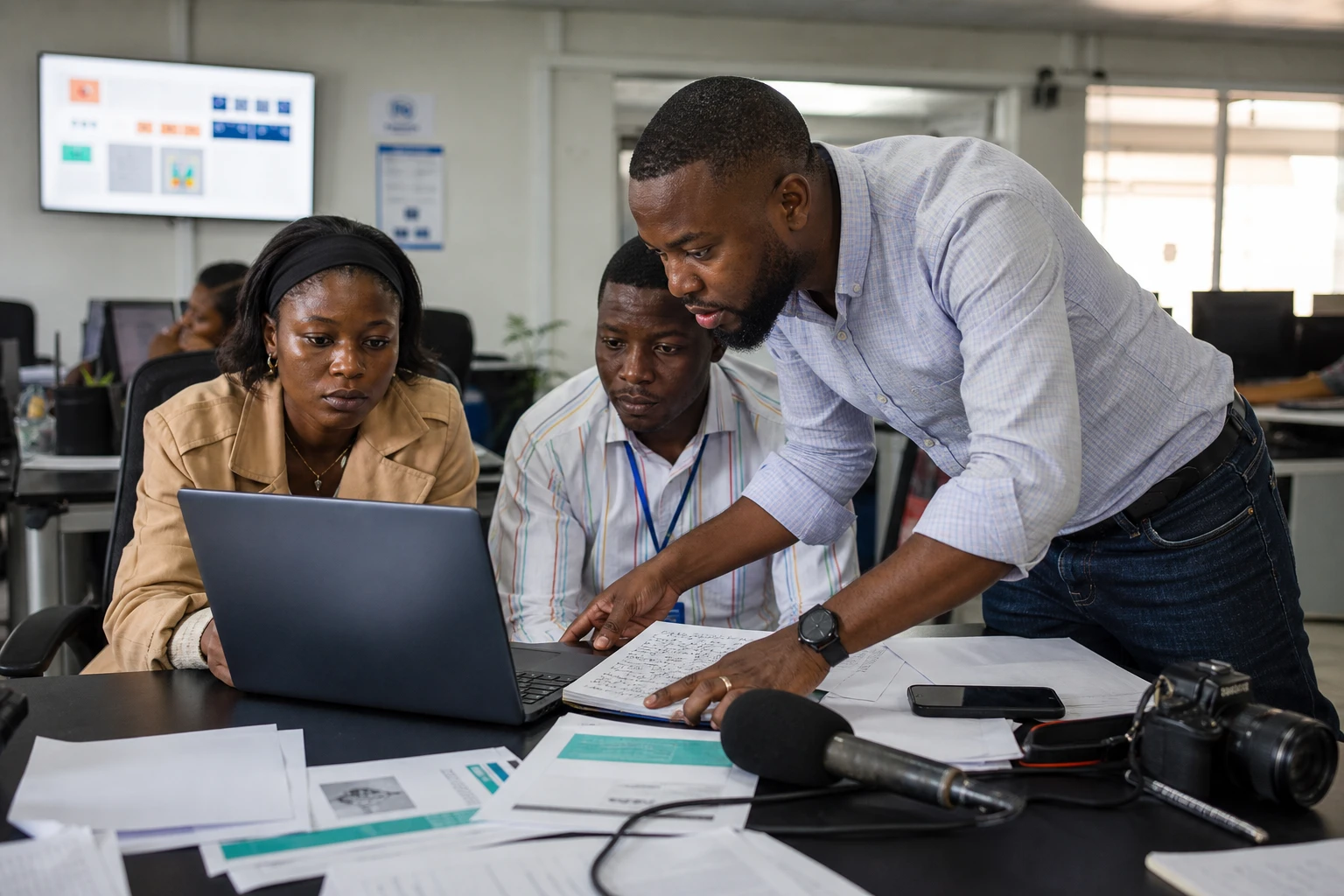
In Beni, the response is not confined to treatment centres
In the east of the Democratic Republic of the Congo, an epidemic cannot be fought with tests, vaccines and medical teams alone. It is also won in neighbourhoods, at markets, along motorcycle-taxi routes and through the trust people place in health workers. In Beni, this has become central: young people have taken to the streets to talk about Ebola, but above all to dispel fear, rumours and mistrust.
The initiative reflects a frequently decisive turning point in Ebola outbreaks in the DRC: a technical response is not enough if communities feel excluded. The World Health Organization and the Africa Centres for Disease Control and Prevention also stress that containment depends on rapid community action, contact tracing and credible communication, especially amid insecurity and the spread of rumours.
Beni, a city shaped by past Ebola outbreaks and insecurity
Beni, in North Kivu, is no stranger to Ebola. It was one of the hardest-hit areas during the major 2018-2020 outbreak, which left a lasting impression on local memory of treatment centres, safe burials and tensions involving health teams. In 2026, the outbreak gained momentum in the east of the country, prompting the Congolese authorities to describe it as the country’s 17th Ebola virus disease epidemic. It first affected Ituri and North Kivu, before signs emerged that it was spreading to other provinces.
The security situation weighs heavily. In the east of the DRC, the presence of armed groups, population displacement and social exhaustion after successive crises create fertile ground for suspicion. The WHO said that in early August 2026 the response had to contend with insecurity, access difficulties, population movements and disinformation, while occupancy at treatment centres in North Kivu reached 139%.
In this context, urban youth are becoming both public health actors and social intermediaries. In Beni, this mobilisation is also part of a broader local history: that of a city that has often had to organise itself to keep daily life going when institutions were slow to arrive or struggled to reach it.
Incidents, rumours and a response seeking to rebuild trust
According to reports from Beni, response teams were confronted in the Mabolio neighbourhood as they went into the field to investigate a suspected case. Health workers were reported injured, and a video showing young people armed with sticks and bladed weapons circulated online. The city’s youth leader called on people to avoid “any intoxication and disinformation” about the disease, while urging young people to stand with health workers.
The episode highlights a longstanding problem in Ebola outbreaks in the DRC: the disease spreads quickly, but accurate information spreads even more slowly. The WHO’s infodemic report for June 2026 notes that community discussions were fuelled by videos of confrontations with burial teams, rumours about open or empty coffins, and claims that the outbreak was politically or financially motivated. The same document stresses the need for transparency and two-way engagement with communities.
In Beni, young people involved in awareness-raising are therefore seeking to address two divides. One is fear of the disease itself. The other is mistrust of the state, NGOs and teams arriving from outside. This divide has already exacted a heavy toll in previous outbreaks, when treatment centres were set on fire and safe burials were contested. The problem is not only medical. It is social, political and community-based.
What the response means for residents, and what it reveals about the DRC
The Congolese government has placed its response within a broader framework of national coordination. In May 2026, the presidency referred to a $319 million budgeted plan, with $20 million released as emergency funding, under presidential supervision and the technical coordination of the INRB, the National Institute of Biomedical Research. This structure shows that the response is not the responsibility of the health ministry alone: it also involves the political establishment, international partners and the provinces concerned.
On the ground, however, the question is not primarily about budgets. It is practical. For a family in Beni, trust determines whether they seek care promptly, accept contact monitoring and comply with dignified and safe burials. When trust falters, patients arrive later, chains of transmission lengthen and teams lose precious time. The WHO and Africa CDC said in early August that the response needed to be led more closely with communities, not merely for them.
This approach also matters across the Great Lakes region. The epidemic crossed health borders, with cases reported in Uganda at the start of the crisis, and raised questions about cross-border surveillance between the DRC, Uganda and South Sudan. The lesson for Africa is clear: in an area where people move, markets are interconnected and health systems are unevenly equipped, the response to Ebola is measured as much by the speed of detection as by the quality of local dialogue.
Finally, the youth caravan in Beni is a reminder of a frequently overlooked truth: when it comes to Ebola, young people are not merely a group to protect. They can also act as mediators, interpreters and sentinels. In a city accustomed to crises, they are sometimes the ones restoring the link between science and the streets, between the treatment centre and the neighbourhood, between the health emergency and everyday life.



