
 Algeria
 Egypt
 Libya
 Morocco
 Sudan
 Tunisia
 Benin
 Burkina Faso
 Cabo Verde
 Côte d'Ivoire
 Ghana
 Guinea
 Guinea-Bissau
 Liberia
 Mali
 Mauritania
 Niger
 Nigeria
 Senegal
 Sierra Leone
 The Gambia
 Togo
 Cameroon
 Central African Republic
 Chad
 Equatorial Guinea
 Gabon
 Republic of the Congo
 São Tomé and Príncipe
 Burundi
 Comoros
 Djibouti
 Eritrea
 Ethiopia
 Kenya
 Madagascar
 Malawi
 Mauritius
 Mozambique
 Rwanda
 Seychelles
 Somalia
 South Sudan
 Tanzania
 Uganda
 Angola
 Botswana
 Eswatini
 Lesotho
 Namibia
 South Africa
 Zambia
 Zimbabwe
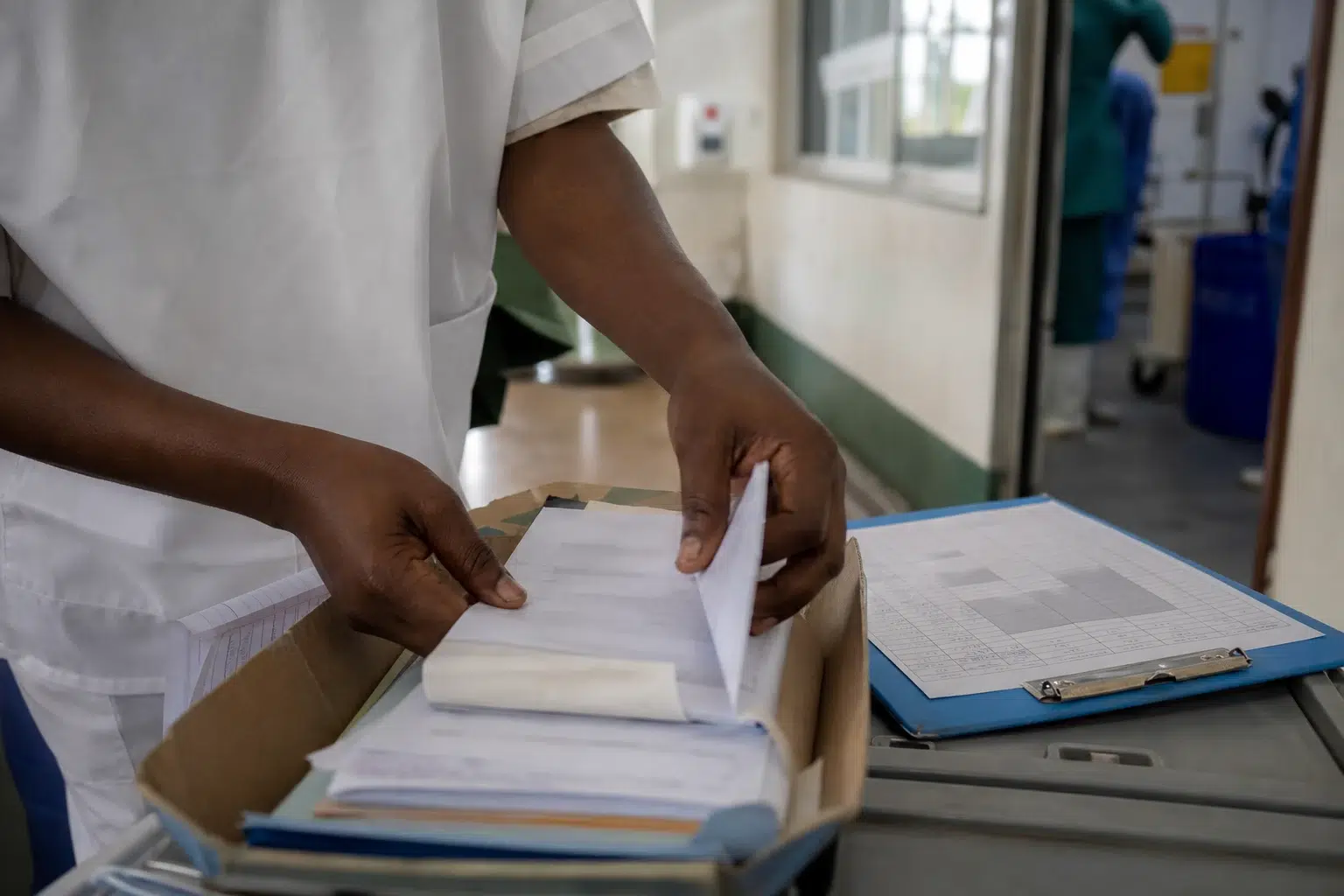
In Beni, the Ebola response steps up
In eastern Democratic Republic of the Congo, every bed counts. When an outbreak spreads through already fragile health districts, the challenge is not just to treat severe cases. Patients must also be prevented from travelling for too long, health workers must be protected, and confidence must be maintained in facilities that are often overwhelmed. In the DRC, this approach is guiding the opening of a new treatment centre in Beni, North Kivu.
North Kivu is no ordinary healthcare setting. The province has lived with insecurity, population displacement and overstretched public services for years. It has already served as a testing ground for several Ebola responses, notably during the major 2018-2020 outbreak. Kinshasa and the provincial authorities therefore have real experience, but also a painful legacy: delays in care, rumours and a breakdown of trust.
A 20-bed centre brings care closer to patients
The new site at Beni General Hospital is described as the second standardised Ebola treatment centre in North Kivu, after the one in Katwa. It has 20 beds and is intended to ease pressure on other health facilities in the province. The increase in capacity comes as the response is already expanding across several provinces in the east.
Provincial Health Minister Prisca Luanda Kamala said this kind of infrastructure meets a simple need: bringing care closer to communities and reducing delays in getting suspected cases to specialised units. In an Ebola outbreak, a few hours can matter. Rapid isolation reduces the risk of transmission within families, in markets and even in the corridors of general hospitals.
This strategy is part of a broader response. The World Health Organization says the DRC is facing its 17th Ebola outbreak, caused by the Bundibugyo virus, for which there is currently no approved vaccine or specific treatment. Health authorities have therefore focused on surveillance, contact tracing, IPC — infection prevention and control —, early treatment and a more evenly distributed network of treatment centres.
A health measure with political and social significance
The opening of a second centre in Beni matters beyond the city. It shows that the response is not confined to a single hotspot, but is seeking to cover a wider area in North Kivu and, beyond it, the provinces of Ituri and South Kivu. As of 1 July, the WHO reported 1,460 confirmed cases and 452 deaths in the country, with the outbreak reaching 36 health districts. These figures remain in flux, as ongoing surveillance continues to expand the scope of confirmed cases.
For families, the difference is tangible. A closer centre means fewer journeys, fewer delays and, often, fewer people abandoning care. For health workers, it also means better triage between ordinary fevers, suspected cases and confirmed cases. In a region where health facilities already treat malaria, respiratory infections, injuries and other everyday emergencies, this organisation reduces overcrowding and limits cross-contamination.
The discharge of Beni’s first recovered patient in late June also carried symbolic weight. It is a reminder of an essential fact: Ebola is not an automatic death sentence if treatment comes in time. Local teams, community outreach workers and survivors themselves then become advocates. Their voices often carry more weight than official messages, especially in areas where distrust has sometimes hampered the response.
But the challenge remains immense. In eastern DRC, health responses still face insecurity, access difficulties and population mobility. This complicates contact tracing, the delivery of supplies and the protection of staff. Opening a centre does not solve everything. It is just one link in a chain that must hold from village to hospital, and from hospital to neighbourhood surveillance.
At regional level, the outbreak is also a reminder of how porous health borders are in Central Africa and the Great Lakes region. Movement between the DRC, Uganda, Rwanda and beyond requires sustained cooperation; otherwise, a local hotspot can quickly become a regional alert. That is already clear from WHO notifications, with cases linked to the DRC reported outside the country. For the African Union and WHO Africa, the challenge is clear: strengthen local health systems for the long term, rather than relying on repeated emergency responses.
Sources
- http://fr.africanews.com/2026/07/06/ebola-un-deuxieme-centre-de-traitement-ouvre-dans-le-nord-kivu/
- https://www.africanews.com/2026/07/06/second-ebola-treatment-centre-opens-in-north-kivu/
- https://www.who.int/emergencies/situations/ebola-outbreak—drc-2026
- https://www.who.int/emergencies/disease-outbreak-news/item/2026-DON612
- https://www.afro.who.int/countries/uganda/publication/ebola-bundibugyo-virus-disease-outbreak-democratic-republic-congo-3
- https://www.afro.who.int/countries/uganda/publication/ebola-bundibugyo-virus-disease-outbreak-democratic-republic-congo-1
- https://www.afro.who.int/countries/democratic-republic-of-congo/news/the-democratic-republic-of-the-congo-declares-ebola-resurgence-in-north-kivu
- https://www.radiookapi.net/2026/06/29/actualite/sante/premiere-guერison-debola-dans-le-centre-de-traitement-beni
- https://www.opinion-info.cd/societe/2026/06/29/beni-une-premiere-patiente-guerie-debola-quitte-le-centre-de-traitement
- https://www.afro.who.int/news/providing-ebola-protection-among-inmates-in-democratic-republic-congo
- https://www.afro.who.int/news/ebola-vaccination-begins-north-kivu
- https://www.who.int/news-room/speeches/item/who-director-general-s-opening-remarks-at-the-media-briefing—3-june-2026
- https://www.lemonde.fr/en/le-monde-africa/article/2026/06/16/on-the-ground-it-s-a-disaster-in-bunia-democratic-republic-of-congo-ebola-epidemic-spirals-out-of-control_6754548_124.html
- https://www.lemonde.fr/en/le-monde-africa/article/2026/05/22/ebola-in-the-drc-the-epidemic-is-unprecedented-in-scale_6753705_124.html



