Algeria
 Egypt
 Morocco
 Sudan
 Tunisia
 Benin
 Burkina Faso
 Cabo Verde
 Côte d'Ivoire
 Ghana
 Guinea
 Guinea-Bissau
 Liberia
 Mali
 Mauritania
 Niger
 Nigeria
 Senegal
 Sierra Leone
 The Gambia
 Togo
 Cameroon
 Central African Republic
 Chad
 DR Congo
 Equatorial Guinea
 Gabon
 Republic of the Congo
 São Tomé and Príncipe
 Burundi
 Comoros
 Djibouti
 Eritrea
 Ethiopia
 Kenya
 Madagascar
 Malawi
 Mauritius
 Mozambique
 Rwanda
 Seychelles
 Somalia
 South Sudan
 Tanzania
 Uganda
 Angola
 Botswana
 Eswatini
 Lesotho
 Namibia
 South Africa
 Zambia
 Zimbabwe
A worrying signal in eastern Libya
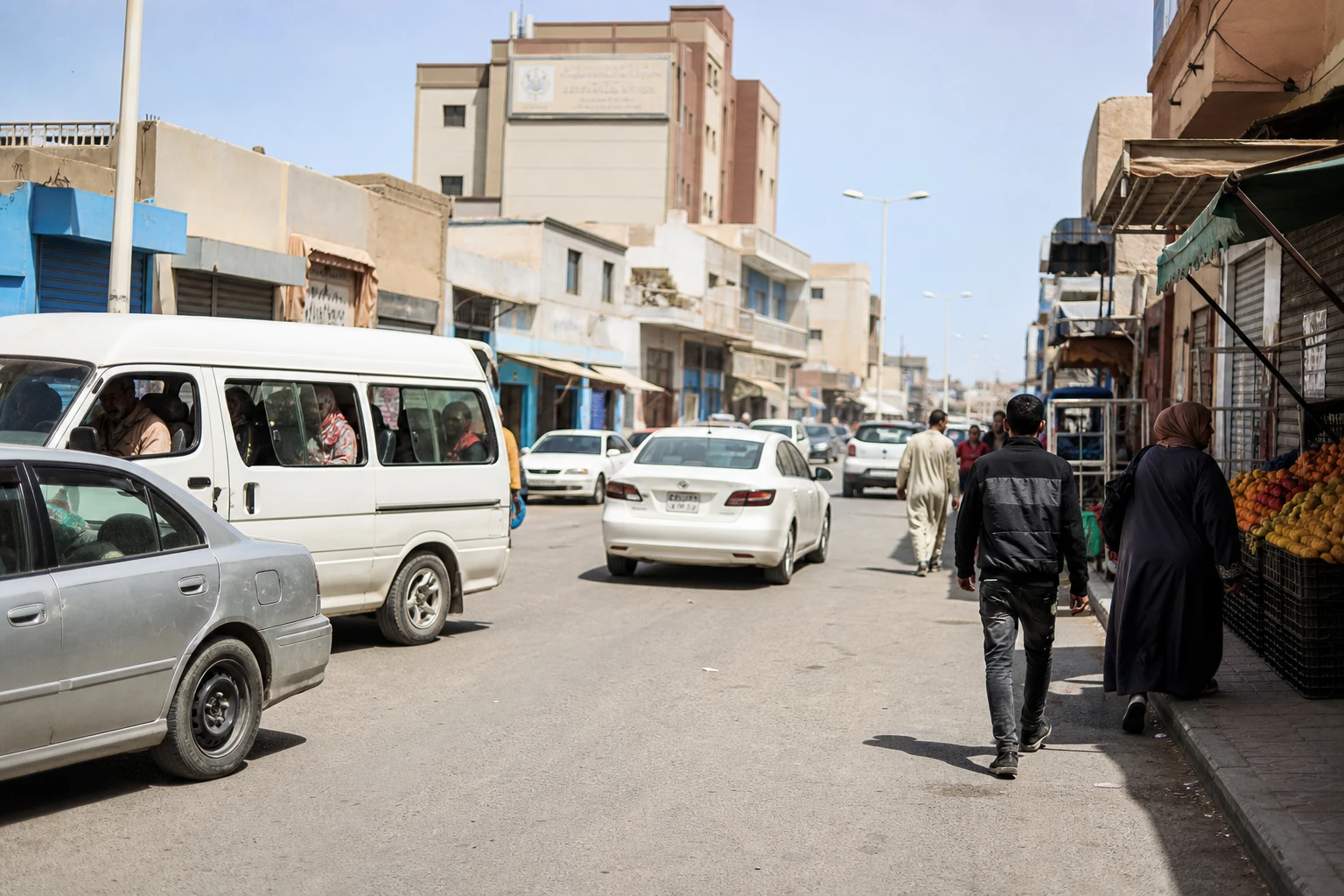
In Benghazi, a car bomb targeting a very senior official does not just strike one man. Above all, it is a reminder that security in Libya remains fragmented, even where the eastern authorities have for years projected an image of tight control. On 14 July 2026, a car bomb killed Fawzy al-Mansouri, head of military intelligence for Khalifa Haftar’s forces, in the Sayyida Aisha district. The news was confirmed by the Associated Press and is consistent with the security context described by the UN.
The shock is all the greater because Benghazi, in eastern Libya, has long served as a showcase for Haftar’s authority. The Field Marshal has built a military and administrative apparatus there that presents itself as a bulwark against chaos. But targeted attacks on senior officials tell a different story: the stability on display remains vulnerable, even in the most heavily monitored strongholds. In recent years, the UN has continued to refer to the coexistence of two centres of power, Tripoli in the west and Benghazi in the east, amid the slow search for a shared political framework.
What we know about the attack
According to AP, Fawzy al-Mansouri was killed when an explosives-laden vehicle blew up against his car in the evening in Benghazi. The same report said he headed military intelligence for Khalifa Haftar’s forces. The Libyan National Army, as this camp calls itself, condemned the attack and pledged to find those responsible. No group had claimed the operation at the time of the first confirmations.
The funeral underscored the political significance of the event. Senior military officials travelled to Benghazi, including Khaled and Saddam Haftar, two of the Field Marshal’s sons. The chief of staff of the eastern camp described it as a terrorist act and said the operation called for a swift response. This public display of mourning is not insignificant. It shows that a blow to intelligence strikes at the heart of the command structure, not merely a secondary level.
The attack comes amid a broader series of isolated acts of violence against infrastructure and security figures in Libya. On the same day, in the west, a drone strike caused a huge fire at the Zawiya oil site. AP thus described a country where flashpoints are confined neither to one camp nor to one region. The simultaneous incidents underscore the dispersal of centres of power and the difficulty of imposing a unified security chain.
A breach at the heart of the Haftar model
For the eastern camp, this death has significance beyond the military sphere. Since 2014, Khalifa Haftar has built his legitimacy on a simple narrative: restore order, retake heavy weapons, pacify Benghazi, then extend this approach to the rest of the country. Yet the strike against an intelligence chief shows that an apparatus can appear solid while remaining exposed to infiltration, score-settling or clandestine operations. In Benghazi, security is tight, but it is also highly politicised.
This fragility has tangible consequences for Libyans. For military leaders, it opens the way to a tougher approach, with more checks, more arrests and greater pressure on networks suspected of hostility. For residents, it often means heightened anxiety and tighter constraints on public life. In a city such as Benghazi, where the local authorities claim to have restored order after years of urban warfare, every high-profile attack revives memories of the targeted killings that marked the previous decade. Africanews also notes that the city was one of the most violent theatres of the post-2011 fighting.
The national context remains deadlocked too. Libya is still divided between a government based in Tripoli, recognised by the UN and led by Abdelhamid Dbeibah, and a rival administration in the east, backed by Haftar’s forces and led by Ossama Hammad. The UN continues to work towards a political settlement, with a structured dialogue that brought together representatives from several regions in 2026 to discuss security, the economy and governance. At the same time, the UN mission stresses the need to unify institutions and hold credible elections.
Against this backdrop, the blow to Benghazi’s intelligence services raises a simple question: who can still guarantee a monopoly on the use of force in Libya? Neither the west nor the east offers a convincing answer today. Western authorities are struggling to contain militias and armed rivalries around Tripoli. Eastern authorities, meanwhile, must now explain how an official under such heavy protection could be struck at the heart of their stronghold.
Regional implications and dates to watch
The issue extends beyond Libya. Benghazi remains a hub for the balance of power in North Africa and the Sahel. Armed networks, arms flows and ad hoc alliances cross the Egyptian border, follow Tunisian routes and reach further afield through links to the Mediterranean Sea. In this context, every high-profile attack raises questions about the strength of the security barrier that several neighbours consider useful for containing instability. The visit to Haftar in Benghazi by the head of Egypt’s intelligence services in February 2026 also shows that security in eastern Libya is being closely watched at regional level.
North Africa is following the issue for another reason: Libya remains a major energy platform. Tensions around oil infrastructure, as the Zawiya attack once again showed, can affect public revenues and the ability of the two rival administrations to fund their state apparatus. In a country where institutions remain fragmented, every security shock fuels the struggle over legitimacy, resources and the political timetable.
The next point to watch is the UN process. The UN mission has had its mandate extended until 31 October 2026 and resumed discussions in 2026 on security, justice and governance. In other words, the question is not only who planted the bomb. It is also whether the attack will prompt a turn towards greater insularity in the east, or instead remind all Libyan actors that no camp can govern such a fragmented country alone for long.