Algeria
 Egypt
 Libya
 Morocco
 Sudan
 Tunisia
 Benin
 Burkina Faso
 Cabo Verde
 Côte d'Ivoire
 Ghana
 Guinea
 Guinea-Bissau
 Liberia
 Mali
 Mauritania
 Niger
 Nigeria
 Senegal
 Sierra Leone
 The Gambia
 Togo
 Cameroon
 Chad
 DR Congo
 Equatorial Guinea
 Gabon
 Republic of the Congo
 São Tomé and Príncipe
 Burundi
 Comoros
 Djibouti
 Eritrea
 Ethiopia
 Kenya
 Madagascar
 Malawi
 Mauritius
 Mozambique
 Rwanda
 Seychelles
 Somalia
 South Sudan
 Tanzania
 Uganda
 Angola
 Botswana
 Eswatini
 Lesotho
 Namibia
 South Africa
 Zambia
 Zimbabwe
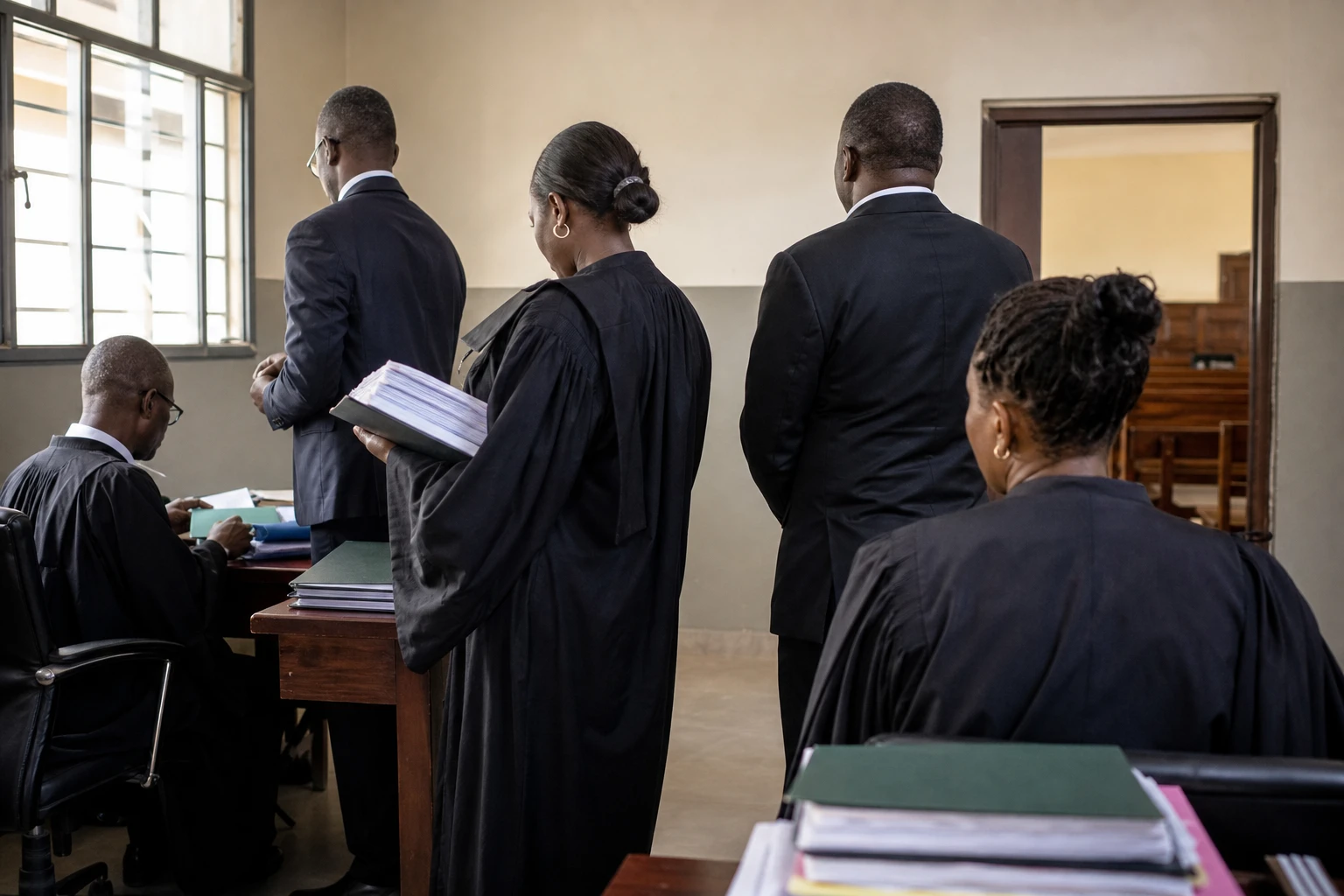
Justice awaited in a country where every delay carries a heavy cost
In Bangui, a criminal court session that starts late is never simply a calendar shift. For victims waiting for a verdict, people in pre-trial detention and families already worn down by years of instability, a delay of a few weeks can become months of judicial silence. In the Central African Republic, this slowness feeds a longstanding problem: justice moves forward, but rarely at the pace the country needs.
The issue extends beyond the Bangui Court of Appeal alone. The Central African justice system operates in a fragile environment, with limited resources, prisons under strain and strong expectations around the fight against impunity. The Special Criminal Court, based in Bangui, and ordinary criminal court sessions are two complementary pillars of the same judicial response: one for the most serious conflict-related crimes, the other for ordinary criminal cases.
Thirty cases and four weeks of hearings in Bangui
The year’s first ordinary criminal court session opened on Monday 3 August at the Bangui Court of Appeal, after a delay that judicial authorities attributed to financial constraints. According to Jean Vidal Damas, the prosecutor general at the Court of Appeal, it took time to mobilise the necessary resources, before support from partners ultimately made it possible to begin the hearings.
The session is due to examine around 30 cases over a period of four weeks. The offences cited include serious crimes and major criminal offences: assassinations, murders, fatal assaults, criminal conspiracy, aggravated theft, arson of a home and embezzlement of public funds. The prosecution also says around 40 detainees are concerned.
The judicial calendar in the Central African Republic provides for two criminal court sessions a year in the Bangui jurisdiction. In practice, this pace depends on the availability of material resources, the transport of detainees, hearing security and registry logistics. As early as 2022, MINUSCA noted that its support helped secure courtrooms and the transfer of detainees, showing how closely the organisation of these sessions remains tied to external assistance.
A justice system still under strain
The postponement of this session is unsurprising in a country where the justice system continues to face structural difficulties. Human rights organisations regularly point out that access to reparations, the length of pre-trial detention and weak investigations remain sensitive issues. Amnesty International still noted in 2025 persistent gaps in victim protection and independent monitoring of places of detention. Human Rights Watch, for its part, says security, political and budgetary challenges continue to weigh on the rule of law.
In this context, even a minor delay to a criminal court session has tangible effects. It slows the handling of cases, prolongs families’ wait and fuels the impression that some cases end up getting lost in the hearing backlog. For detainees awaiting trial, it can mean prolonged uncertainty. For victims, it means the prospect of judicial recognition being pushed back again. For the institution, it creates a further risk of losing credibility.
Central African civil society has been warning for years about this erosion. When sessions are held late or too far apart, the message sent is ambiguous: the judicial system exists, but its ability to respond quickly and in proportion to the facts remains uneven. In a country where the justice system must also absorb some of the cases arising from armed crises, this perception matters as much as the statistics.
Bangui, CEMAC and the broader issue of institutional credibility
The Central African Republic is a member of CEMAC, the Economic and Monetary Community of Central Africa. In this regional bloc, judicial governance, legal certainty and confidence in institutions affect investment, economic activity and political stability. A better-functioning justice system in Bangui will not solve everything, but it sends an essential signal: the state remains capable of delivering justice, even slowly, rather than allowing crimes to fade into oblivion.
The regional context also shows that the Central African Republic is not alone in facing this challenge. UN-backed hybrid mechanisms, such as the Special Criminal Court, and ordinary courts, such as the Bangui Court of Appeal, have become reference points for Central Africa as a whole when it comes to documenting serious crimes and addressing impunity. Ordinary criminal hearings, even when far removed from wartime cases, complement this structure by dealing with the everyday violence that shapes people’s sense of insecurity.
Recent experience also shows that the Central African justice system is trying to regain momentum. The Ministry of Justice announced the end of the first ordinary criminal court session of 2025 on 4 November, after it opened on 6 October. This sequence shows that a more regular calendar remains possible when resources are available. The session that opened on 3 August is therefore part of an effort to catch up, but also of a deeper struggle: to ensure judicial continuity, which is essential in a country where the demand for justice remains one of the first tests of public authority.
The question of what comes next remains. If the hearings run their course without another logistical incident, they will provide concrete evidence of the Central African institutions’ ability to narrow the gap between promises and action. In an environment where impunity has long formed the backdrop to the crisis, every session held in Bangui matters far beyond the walls of the court.