Algeria
 Egypt
 Libya
 Morocco
 Sudan
 Tunisia
 Benin
 Burkina Faso
 Cabo Verde
 Côte d'Ivoire
 Ghana
 Guinea
 Guinea-Bissau
 Liberia
 Mali
 Mauritania
 Niger
 Nigeria
 Senegal
 Sierra Leone
 The Gambia
 Togo
 Cameroon
 Chad
 DR Congo
 Equatorial Guinea
 Gabon
 Republic of the Congo
 São Tomé and Príncipe
 Burundi
 Comoros
 Djibouti
 Eritrea
 Ethiopia
 Kenya
 Madagascar
 Malawi
 Mauritius
 Mozambique
 Rwanda
 Seychelles
 Somalia
 South Sudan
 Tanzania
 Uganda
 Angola
 Botswana
 Eswatini
 Lesotho
 Namibia
 South Africa
 Zambia
 Zimbabwe
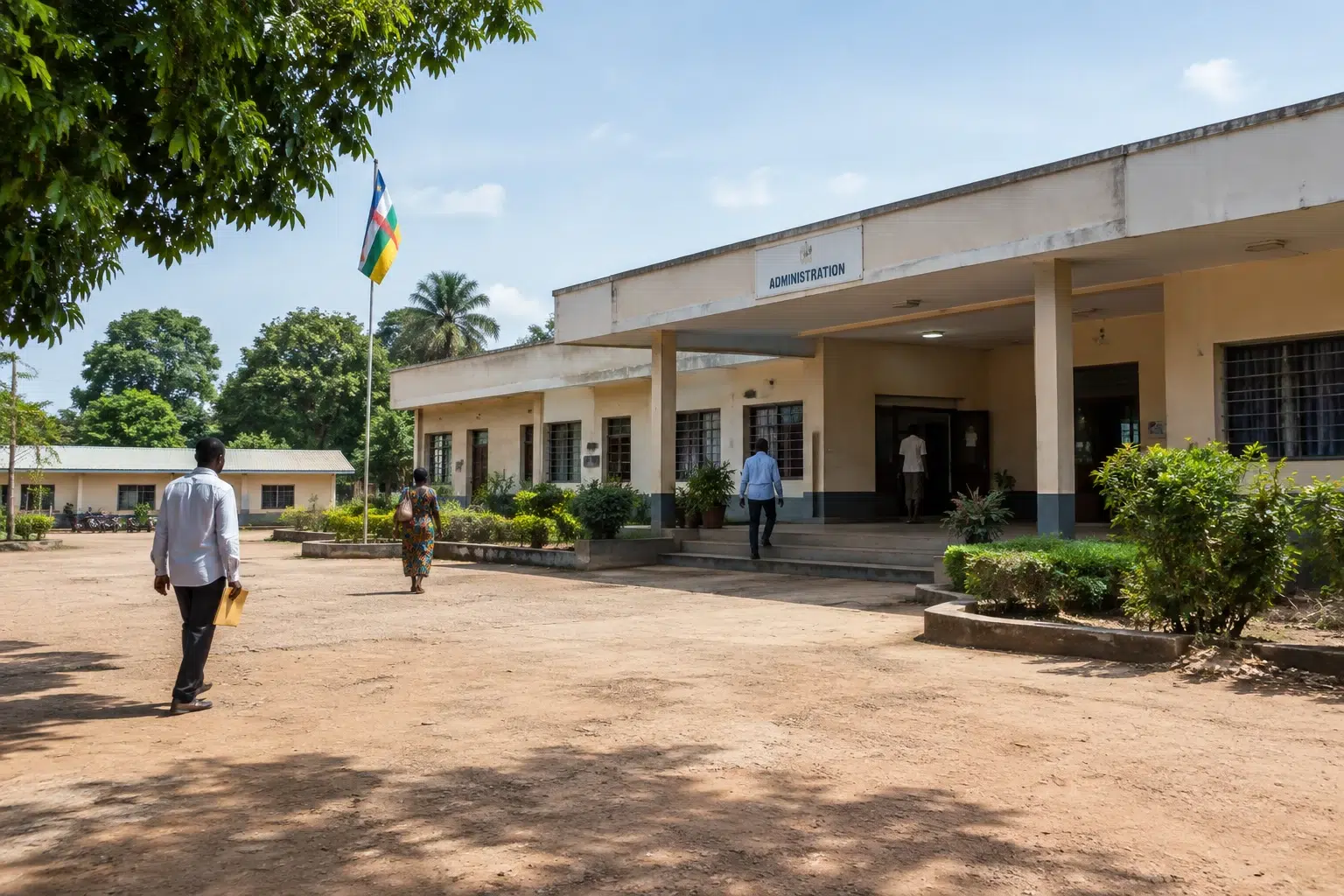
In Bambouti, the release of three people held for nearly ten months ends a long wait for their relatives. It also underlines how fragile the state’s presence and the organisation of elections remain in some border areas of the Central African Republic.
Captivity linked to December vote
Sub-prefect Koumba Ndiaye and two officials from the National Elections Authority (ANE) were released on Monday 19 October 2026, according to local authorities cited by Journal de Bangui. The three people had been abducted on 28 December 2025, the day of the four-way presidential, legislative, regional and municipal elections.
The abduction was attributed to the armed group Azandé Ani Kpi Gbé (AAKG). A fourth man, a gendarmerie brigade commander who was also captured, is said to have escaped in August, according to the same report. The precise circumstances of the release and the three people’s current whereabouts have not been made public.
Mediation efforts are said to have involved the bishop of Bangassou, MPs from Haut-Mbomou and MINUSCA, the United Nations peacekeeping mission in the Central African Republic. The sub-prefect’s family, local authorities and the UN mission are described in the available reports as having confirmed the release. It has not been independently established whether a ransom was paid; sources close to the case cited in those reports say no ransom was paid.
Bambouti, on the border and far from Bangui
Bambouti is in Haut-Mbomou, in the south-east of the country, near the border with South Sudan. Its remoteness complicates travel, access to public services and security operations. It also makes residents particularly dependent on roads, air transport and local contacts to reach the national authorities.
The 28 December attack disrupted voting in the locality, as Central African institutions held a combined election at four levels for the first time. The African Union’s election observation mission praised the conduct of the vote nationwide, while UN reports on electoral operations describe the logistical and security support provided in Haut-Mbomou. These national assessments do not erase Bambouti’s exceptional circumstances, where election officials were taken hostage.
MINUSCA had supported the ANE and local authorities in preparing for the vote, including by transporting materials and providing security assistance. But the presence of an international mission and national forces did not prevent the abduction. The episode highlights the gap between the ability to organise an election in several localities and the ability to protect public officials over the longer term once voting is over.
A release, but not yet a return to normal
For the three people released, the immediate priorities are their safety and an assessment of their health. Published reports say their general condition is considered satisfactory, while noting that medical examinations are still needed. Their transfer to Bangui was expected in the following days, but this had not been confirmed in the available information.
For their families, the end of the captivity brings relief after several months of uncertainty. For the administration, the abduction of a sub-prefect and election officials undermines the continuity of public services. In a locality far from the capital, civil servants’ ability to carry out their duties also depends on practical security guarantees and regular communication with the authorities.
If its role is confirmed, the mediation demonstrates the importance of religious figures, elected representatives and international actors in local negotiations. It does not, however, resolve tensions between the state and armed groups, or the risks faced by civilians. The details that remain unknown — including the conditions of the release and any commitments that may have been made — make it impossible to conclude that the situation has improved durably.
A national and regional issue
Haut-Mbomou borders South Sudan and the Democratic Republic of the Congo. Security dynamics there therefore extend beyond the Central African Republic’s administrative boundaries, even though the release primarily concerns officials and institutions of the Central African Republic. Co-operation between Bangui, local communities and MINUSCA remains an important issue in this border area.
At national level, the case raises a practical question: how can public authority be maintained in remote regions without limiting the response to a security presence alone? The resumption of services, the protection of officials and dialogue with residents will matter as much as the return of the released people to the capital.
The next step to watch is therefore their announced transfer to Bangui, followed by any verifiable information about their condition and the circumstances of their release. Caution remains necessary: at this stage, the main fact has been reported by a Central African media outlet citing local authorities, while contextual information about the vote and MINUSCA’s presence is documented separately by the African Union and the United Nations.