Algeria
 Egypt
 Libya
 Morocco
 Sudan
 Tunisia
 Benin
 Burkina Faso
 Cabo Verde
 Côte d'Ivoire
 Ghana
 Guinea
 Guinea-Bissau
 Liberia
 Mali
 Mauritania
 Niger
 Nigeria
 Sierra Leone
 The Gambia
 Togo
 Cameroon
 Central African Republic
 Chad
 DR Congo
 Equatorial Guinea
 Gabon
 Republic of the Congo
 São Tomé and Príncipe
 Burundi
 Comoros
 Djibouti
 Eritrea
 Ethiopia
 Kenya
 Madagascar
 Malawi
 Mauritius
 Mozambique
 Rwanda
 Seychelles
 Somalia
 South Sudan
 Tanzania
 Uganda
 Angola
 Botswana
 Eswatini
 Lesotho
 Namibia
 South Africa
 Zambia
 Zimbabwe
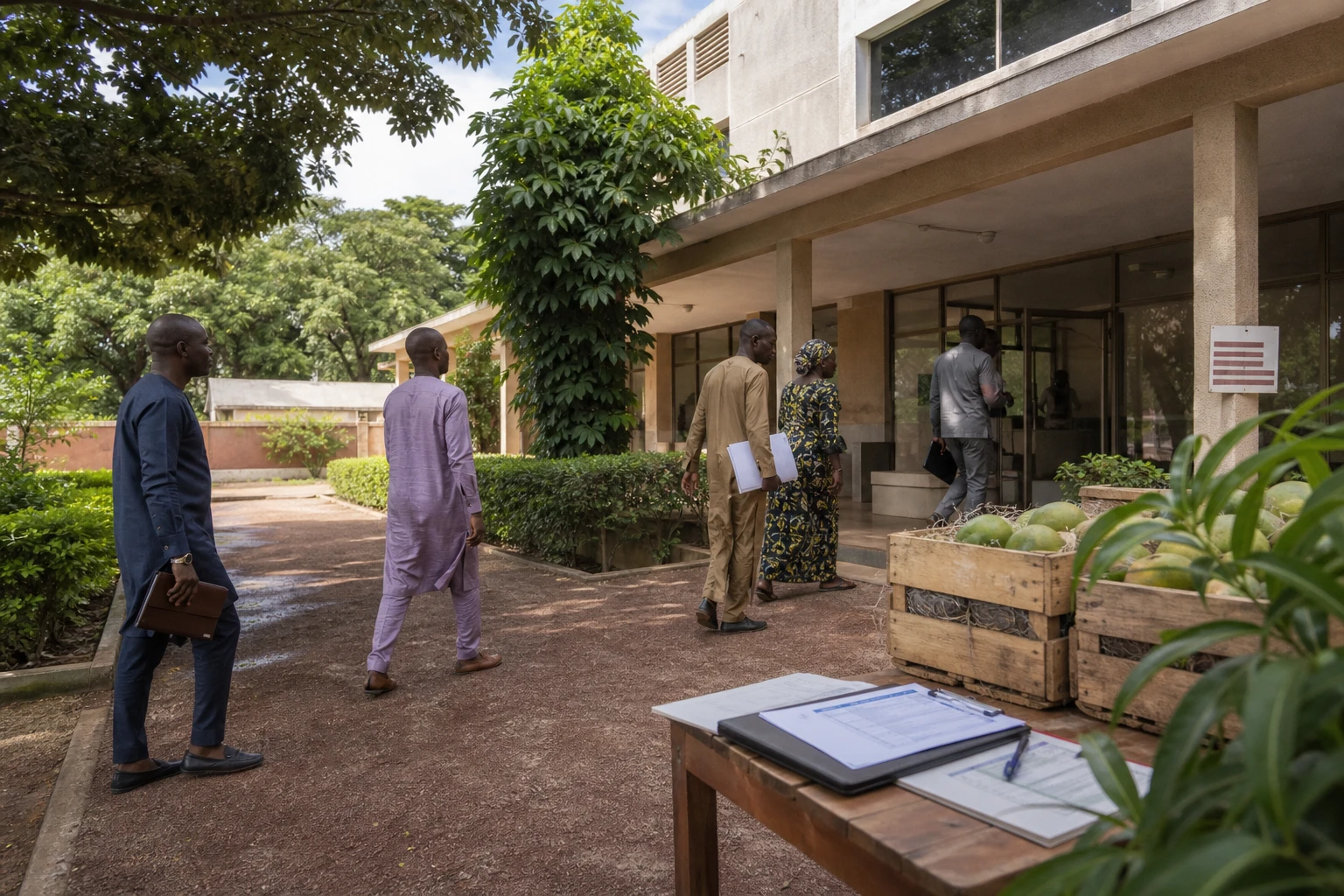
In Bambali, in the Sédhiou region, the challenge is not limited to building a factory. It is about linking local agricultural production to facilities able to process, preserve and sell it. The SM10 Agro project, backed by Senegal international Sadio Mané, aims to take this step with an announced investment of 11.7 billion CFA francs.
A project designed as an agro-industrial chain
The foundation stone for the complex was laid on 19 September 2026 in Bambali. The ceremony was attended by government officials, local elected representatives and community representatives. The project is to combine a mango plantation with an industrial platform specialising in fruit processing and transformation.
According to information released by the Senegalese Press Agency, the complex aims to process 8,500 tonnes of mangoes a year. Three products are planned: pulp, dried mango and mango butter. The facility is also to include sorting, packaging and export activities.
The planned agricultural area covers 500 hectares. It could accommodate about 78,000 Kent mango trees, according to information reported by the Senegalese press. The stated target is more than 1,000 direct jobs at the outset. Some reports put the figure at up to 2,500 direct jobs once the entire project is fully operational.
These figures describe an expected trajectory, however, rather than an operation already under way. Work is scheduled to begin in March 2027. The project’s expansion will therefore depend on securing the land, the construction timetable and the complex’s ability to obtain a reliable supply.
Land, the first step before production
The main difficulty concerns the gap between the industrial site and the agricultural plantation. According to information reported by Le Soleil, 10 hectares had then been identified for the factory. The 500 hectares earmarked for orchards had yet to be assembled.
This distinction is crucial. A factory can be built on a limited site, but its operation depends on an adequate volume of fruit. Without secured orchards, SM10 Agro will have to rely on partner growers and a supply chain capable of reducing losses between harvest and processing.
Bambali mayor Ibrahima Touré said discussions were continuing to reach the planned area. His statement shows that the project does not rely on private funding alone. It also involves local decisions, land procedures and a lasting agreement with the communities concerned.
In rural Senegal, agricultural land is not simply an administrative formality. It affects usage rights, existing activities and the balance between investment, family farming and the management of natural resources. The project’s success will therefore depend as much on the clarity of agreements as on the construction of buildings.
APIX’s role goes beyond permits
The Senegalese Investment Promotion and Major Projects Agency, APIX, is supporting SM10 Agro in its dealings with the administration. It is involved in authorisations, land procedures, permits and access to incentive schemes for investors.
APIX director-general Bakary Séga Bathily summed up this role by describing the agency as an interface between the investor and public services. Its job is to identify obstacles, coordinate the relevant parties and facilitate the project’s progress.
The scheme may also cover tax and customs benefits applicable to certain investments. When the project was presented, APIX said SM10 Agro could, subject to conditions, benefit from five years of exemptions on certain imported equipment. These measures are intended to reduce the initial cost of setting up, without replacing obligations relating to land, the environment or employment.
This involvement illustrates a less visible reality of major private investment in Senegal. Capital can launch a project, but its implementation then requires coordination between local authorities, technical services, growers and business operators.
A stake for Sédhiou and Casamance
For Sédhiou, the project’s significance lies in creating industrial activity outside Dakar and Thiès. The region has agricultural resources but still lacks facilities capable of processing a substantial share of its output locally. SM10 Agro aims to address this shortfall by locating several links in the chain in the same area.
Local processing can change incomes and market opportunities. Growers could sell part of their harvest to an industrial facility, while young people and women could gain access to jobs, training or work in transport, maintenance and services.
The effects will not be the same for everyone, however. Industrial jobs will be concentrated around the Bambali site. Growers further away will need suitable collection and transport arrangements. Smallholders, for their part, will need to know the quality standards, purchasing schedules and payment terms applied by the complex.
The project will also have to contend with the seasonal nature of mangoes. A factory operating for several months a year must secure its stocks, equipment and markets. The planned diversification into pulp, drying and mango butter could help make better use of harvests and limit post-harvest losses.
An initiative followed beyond Senegal
SM10 Agro is part of a broader ambition to expand local processing in West Africa. Across ECOWAS, the Economic Community of West African States, several countries are seeking to sell more processed products rather than raw materials.
The mango sector has regional potential, but depends on road quality, cold chains, health standards and access to markets. For Senegal, a complex in Bambali could strengthen trade between Casamance, other producing regions and West African markets. It could also support exports to Europe and the Middle East, if the required standards are met.
The next steps will therefore be decisive: effectively securing the 500 hectares, starting construction, installing the industrial units and defining relationships with growers. The timetable announced for March 2027 will provide an initial checkpoint. After that, actual jobs, processing volumes and incomes distributed will show the investment’s economic impact.