Algeria
 Egypt
 Libya
 Morocco
 Sudan
 Tunisia
 Benin
 Burkina Faso
 Cabo Verde
 Côte d'Ivoire
 Ghana
 Guinea
 Guinea-Bissau
 Liberia
 Mauritania
 Niger
 Nigeria
 Senegal
 Sierra Leone
 The Gambia
 Togo
 Cameroon
 Central African Republic
 Chad
 DR Congo
 Equatorial Guinea
 Gabon
 Republic of the Congo
 São Tomé and Príncipe
 Burundi
 Comoros
 Djibouti
 Eritrea
 Ethiopia
 Kenya
 Madagascar
 Malawi
 Mauritius
 Mozambique
 Rwanda
 Seychelles
 Somalia
 South Sudan
 Tanzania
 Uganda
 Angola
 Botswana
 Eswatini
 Lesotho
 Namibia
 South Africa
 Zambia
 Zimbabwe
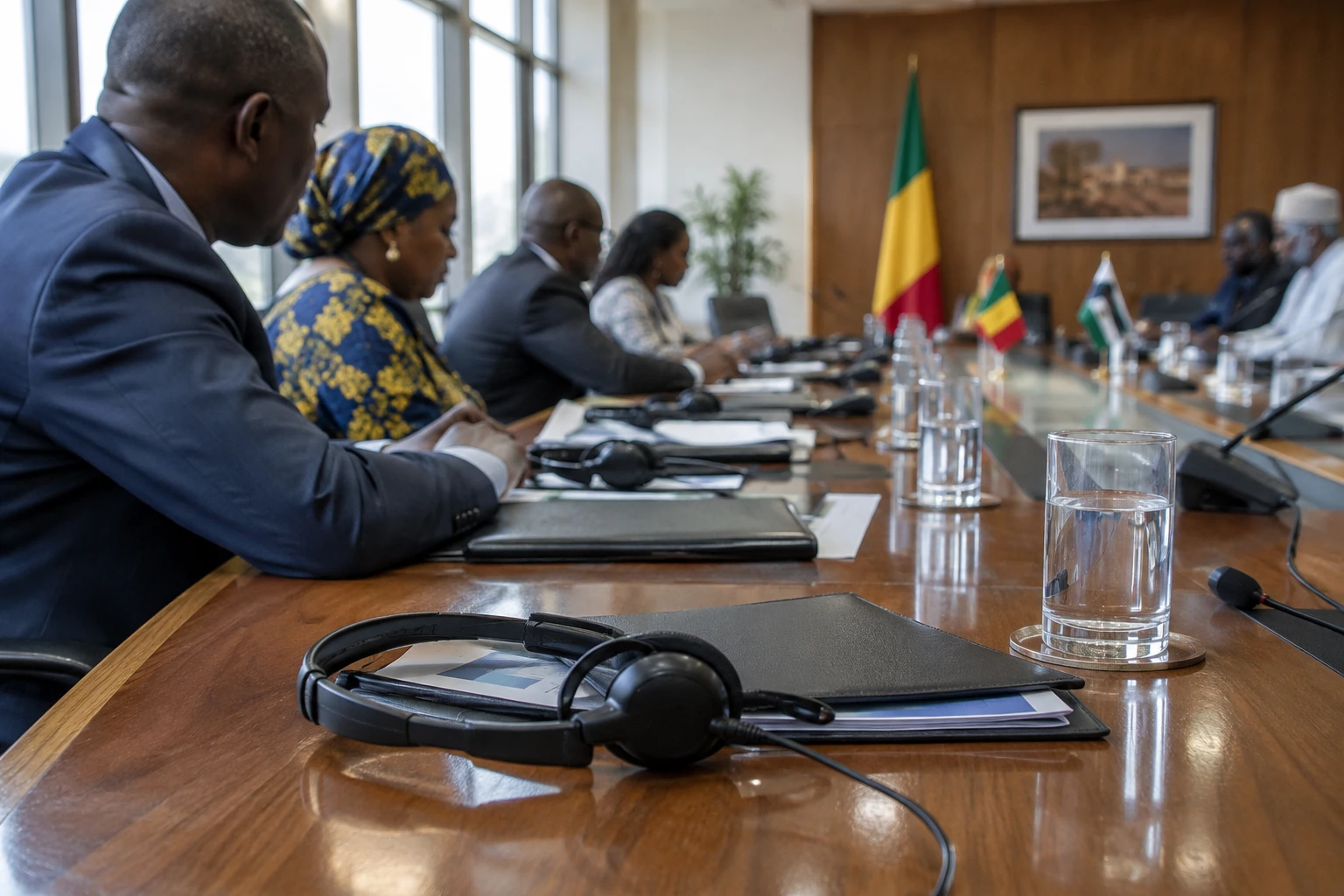
In Bamako, land intended to protect an airport has become the focus of a major land dispute. The trial, due to begin on 12 October, is to examine how plots were allocated in an area classified as part of the state’s public domain, and who bears responsibility.
A strategic area, occupied over time
The grounds of Bamako-Sénou’s Modibo Keïta International Airport are protected by a 1999 decree. They cover about 7,194 hectares and are intended to safeguard airport operations and the safety of aircraft and local residents. Mali’s Office of Radio and Television recalled this framework during demolitions launched in January 2021.
Yet homes, warehouses and industrial facilities have been established within the area over the years. The court case concerns several thousand plots. Figures published vary by document and report: around 3,000 plots are cited in recent accounts, while the case summary refers to about 3,500. These estimates should not be confused with a definitive count established by the court.
The complexity lies not only in defining a public domain. Occupants have said they received administrative documents, including temporary occupancy permits. Mali’s Official Gazette has indeed published orders of this kind for plots in the area. The central question is therefore also how acts issued by authorities could coexist with the designation of the area as airport grounds.
What the court must examine
The trial of Adama Sangaré and his co-defendants is scheduled to open on Monday 12 October 2026, after two adjournments, on 5 and 8 October. The Malian News and Advertising Agency and L’Essor confirmed the new date. Sangaré, the former mayor of Bamako District, is to appear with eight co-defendants, according to these reports.
The charges concern suspicions related to the subdivision and regularisation of land within the airport domain. The reported offences include misappropriation of public funds, forgery and use of forged documents. The allegations do not amount to a finding of guilt: the defendants deny the claims, and the court must hear the parties before ruling.
The figure of 526 million CFA francs, cited in some accounts of the case as fees for public amenities, should also be treated with caution. More recent reports refer to different financial assessments, sometimes close to 484 million, without always specifying the basis for calculation. These figures are therefore not interchangeable. The trial will have to establish the amounts accepted and any connection they may have to the alleged offences.
The defence argues, according to information made public, that a former Malian president ordered the subdivision as part of the national reconciliation process, notably to make plots available to leaders of armed groups from the North involved in the peace process. This is an argument put forward by the lawyers; it is not, at this stage, a judicial finding.
Consequences beyond the defendants
For public officials, the issue is how responsibilities are divided between the city council, land services and national authorities. For occupants, the proceedings could call into question property built or acquired in reliance on documents presented as official. Residents of the neighbourhoods concerned are directly affected by demolitions and uncertainty over the status of the land. The consequences therefore extend beyond the criminal outcome of the case.
In 2021, demolitions were launched in the airport zone to enforce its designated use and reduce occupations. The Malian News Agency reported that the government cited security imperatives and the area’s official status. This precedent is a reminder that a court ruling on individual responsibility will not automatically resolve the situation of households, document holders or existing buildings.
The trial also comes at a time of institutional realignment in Mali. Since 29 January 2025, the country has no longer been part of ECOWAS, the Economic Community of West African States. It remains a member of the West African Economic and Monetary Union. The land dispute is primarily a domestic matter, but it touches on governance, infrastructure security and trust in the administration, issues that concern the entire region.
A test of administrative consistency
The case highlights a concrete tension: the state designated a vast area for strategic use, while plots were occupied or regularised over time. The court will have to distinguish between the decisions taken, the documents actually issued and the responsibilities of each defendant. It will also have to clarify what amounts to a possible offence and what stems from years of contradictory administrative decisions.
What happens next will depend on the hearings and the evidence examined. For the Malians concerned, the outcome will not be measured only by convictions or acquittals. It will also depend on how clearly the court addresses the future of titles, occupants and the area reserved for Bamako-Sénou airport.