Algeria
 Egypt
 Libya
 Morocco
 Sudan
 Tunisia
 Benin
 Burkina Faso
 Cabo Verde
 Côte d'Ivoire
 Guinea
 Guinea-Bissau
 Liberia
 Mali
 Mauritania
 Niger
 Nigeria
 Senegal
 Sierra Leone
 The Gambia
 Togo
 Cameroon
 Central African Republic
 Chad
 DR Congo
 Equatorial Guinea
 Gabon
 Republic of the Congo
 São Tomé and Príncipe
 Burundi
 Comoros
 Djibouti
 Eritrea
 Ethiopia
 Kenya
 Madagascar
 Malawi
 Mauritius
 Mozambique
 Rwanda
 Seychelles
 Somalia
 South Sudan
 Tanzania
 Uganda
 Angola
 Botswana
 Eswatini
 Lesotho
 Namibia
 South Africa
 Zambia
 Zimbabwe
A familiar face in northern Ghana, whose story goes beyond his extraordinary size
In Gambaga, in the North East Region, many families have lost more than a well-known neighbour. They have lost a landmark. Sulemana Abdul Samed, known by the nickname Awuche, died on Monday 27 July 2026 at Tamale Teaching Hospital, after his health deteriorated. He was 33. In this part of Ghana, his figure had become familiar, but also a symbol of a long, quiet and costly struggle with a rare disease.
Tamale Teaching Hospital, where he was treated, is a referral hospital for the north of the country. According to Ghana’s Ministry of Health, it serves the three northern regions and is among Ghana’s main hospitals. Awuche’s case is a reminder of a reality that often goes unnoticed: in a country where major cities concentrate much of the medical provision, patients in northern areas still have to travel long distances to access specialist care.
From Gambaga to Tamale, then national prominence
Awuche’s story had already drawn the attention of the Ghanaian public several years before his death. In 2023, he was described as Ghana’s tallest man, with his height then measured at 2.89 metres by a local hospital in the north, although the estimate remained tentative for lack of suitable equipment. The same profile described him as a resident of Gambaga, recognised in his community for far more than the curiosity he attracted.
His nickname, Awuche, means “Let’s go” in Hausa. The simple, popular name also said something about the way he occupied public space. He had begun growing abnormally in adulthood. In 2023, he said he had noticed the first signs while working in a butcher’s shop in Accra, Ghana’s capital, as he sought to train as a driver. Later, he said he could no longer walk short distances and that his social life had suffered as a result.
Medical sources and relatives did not describe his condition in exactly the same terms, but agreed on one point: Awuche was living with a disease linked to abnormal hormone production and complications affecting his bones and tissue. In 2023, he was described as having acromegaly, a disorder linked to an excess of growth hormone. In 2026, reports on his treatment referred instead to complications of gigantism, a term often used in public discussion to describe excessive growth caused by endocrine disorders arising early in life.
A rare disease, costly care and belated solidarity
Before his death, Awuche was transferred to Tamale Teaching Hospital after his condition worsened and he developed a severe infection in his left leg. According to available information, doctors had considered amputation because the tissue was badly damaged. The hospital received him for specialist care after he had been treated at Baptist Medical Centre in Nalerigu.
His case also prompted an outpouring of solidarity. In early July 2026, Ibrahim Mahama, a Ghanaian businessman and brother of President John Mahama, announced through his associates that he would cover all medical expenses. Arrangements were then made to transfer the patient to Tamale on 8 July 2026. This belated assistance had given the family renewed hope, without erasing the difficulties that had built up over many years.
The case raises a broader question than compassion alone. In Ghana, as elsewhere in West Africa, rare diseases often impose a double burden: first medically, because diagnosis comes late; then financially, because specialist treatments are costly and insurance or public assistance does not always cover the actual need. In practice, it is often families, community networks and a few benefactors that step in. This results in unequal care, heavily dependent on where people live and the resources available.
What Awuche’s death says about Ghana today
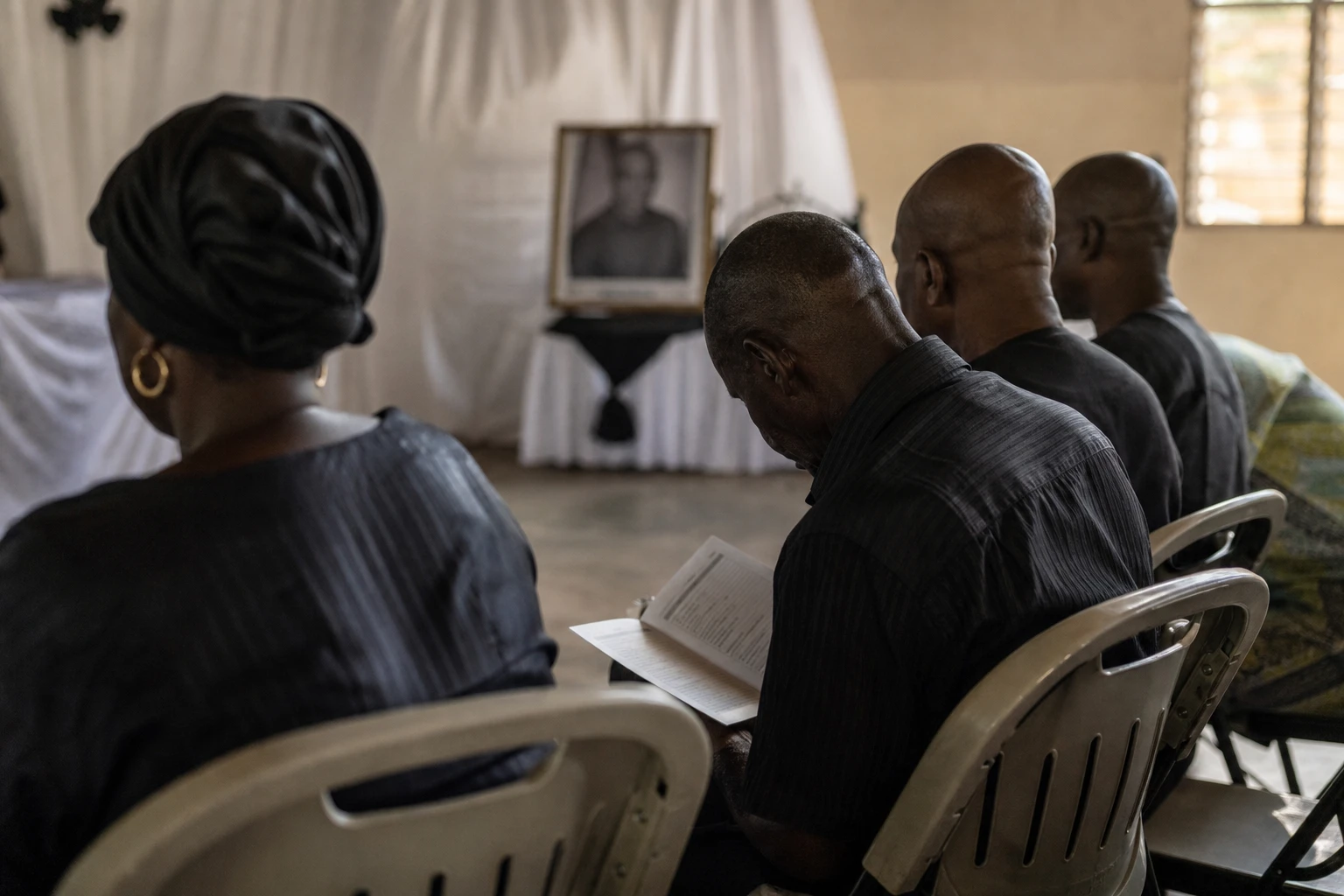
Awuche’s death also revealed the strength of social ties in the north of the country. His family said it had been decided to bury him in Tamale rather than Gambaga, as the village risked being overwhelmed by mourners. The decision says much about his place in local consciousness: he was not just a medical case, but a well-known figure, talked about and identified with an entire community.
In a West Africa where capitals often concentrate media attention and services, Awuche’s story is a reminder that outlying areas also produce their own national figures. Gambaga, a small settlement in the North East Region, entered the conversation because of him. Tamale, a major city in the north, was the setting for his final struggle. Accra, where his growth had begun to become visible while he was working there, marked the start of his break with an ordinary life. These three places trace a very concrete Ghanaian journey: internal migration, the concentration of opportunities in cities, and a forced return to one’s birthplace when health falters.
At the regional level, the issue resonates beyond Ghana. ECOWAS, which brings together West African countries, often highlights free movement and economic integration. But access to specialist care remains unequal from one country to another, and sometimes from one region to another within the same country. Awuche’s journey shows that successful integration is measured not only in roads or trade. It is also measured by the region’s ability to treat, diagnose and support its most vulnerable patients without leaving them until the last minute.
His story is therefore neither a curiosity nor an isolated tragedy. It tells the story of a Ghana that is distinctly Ghanaian, with its local ties, solidarities, inequalities in healthcare and ability to bring forth, from Gambaga to Accra, lives that leave a lasting mark on the collective memory.