Algeria
 Egypt
 Libya
 Morocco
 Sudan
 Tunisia
 Benin
 Burkina Faso
 Cabo Verde
 Ghana
 Guinea
 Guinea-Bissau
 Liberia
 Mali
 Mauritania
 Niger
 Nigeria
 Senegal
 Sierra Leone
 The Gambia
 Togo
 Cameroon
 Central African Republic
 Chad
 DR Congo
 Equatorial Guinea
 Gabon
 Republic of the Congo
 São Tomé and Príncipe
 Burundi
 Comoros
 Djibouti
 Eritrea
 Ethiopia
 Kenya
 Madagascar
 Malawi
 Mauritius
 Mozambique
 Rwanda
 Seychelles
 Somalia
 South Sudan
 Tanzania
 Uganda
 Angola
 Botswana
 Eswatini
 Lesotho
 Namibia
 South Africa
 Zambia
 Zimbabwe
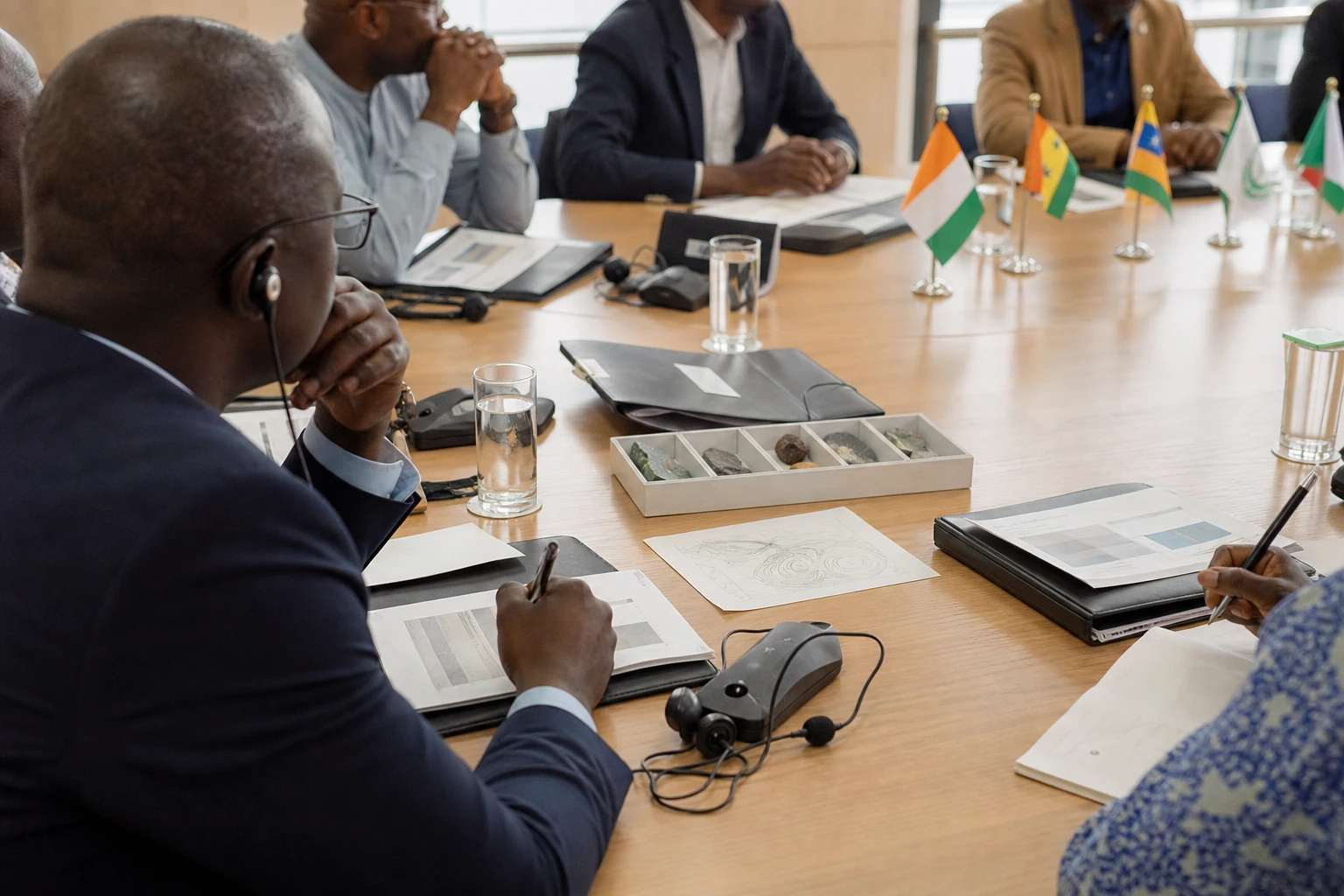
In northern Côte d’Ivoire, the Atex project is back in the mining spotlight. After a long pause in fieldwork, a new campaign is expected to help determine whether the lithium indications already observed could lead to an exploitable resource.
A project still at the exploration stage
Atex is located in north-western Côte d’Ivoire, within the Baoulé-Mossi geological domain, a formation of the West African Craton known for its potential in gold, base metals and pegmatites. The project covers about 134.96 km².
Lithium found in pegmatites is of interest to battery manufacturers and energy transition industries. However, an exploration permit does not yet make a mine. The continuity of the ore must first be confirmed, volumes measured, and the technical and economic conditions for any potential mining operation assessed.
To date, Atex still has no initial mineral resource estimate. This step quantifies mineralisation according to recognised geological standards. It generally precedes more advanced economic, environmental and technical studies.
Preparatory work ahead of further drilling
On 29 September 2026, Australasian Metals announced that it was preparing access tracks at the site. The Australian company then plans to carry out an auger drilling campaign. This method collects shallow samples to help identify areas for more extensive drilling.
This initial phase is therefore intended to better target subsequent operations. Australasian Metals is also reviewing historical samples and available geological data. An inspection of roads, infrastructure and logistical requirements is under way.
The company also says it intends to recruit some of its workforce locally. During a visit to the region, its managing director, Qingtao Zeng, reported a favourable reception from community representatives. This remains the company’s account. It will need to be followed by concrete commitments on employment, communication with local residents and management of the project’s impacts.
The announced work follows an initial drilling campaign carried out in March 2024. According to data released by the project holder, 3,753 metres were drilled in 23 reverse circulation holes. Reverse circulation drilling uses an air flow to bring rock fragments to the surface and reveal the structure of the subsoil.
The results led to a 122% extension of the known lithium mineralisation, over a length of about 800 metres. This indicates that the identified zone has expanded. It does not, however, constitute a resource estimate or proof of future profitability.
Among the intersections reported were 67.97 metres at 1.23% lithium oxide, as well as another intersection of 20.77 metres at 1.65%. These results still need to be placed within a complete geological model. Grade, depth, continuity and ease of processing matter as much as the length of an intersection.
An option does not yet amount to an acquisition
The resumption of exploration comes under an agreement announced on 7 September 2026. Australasian Metals secured an exclusive 90-day option from Firering Strategic Minerals. This gives it time to carry out technical, legal and operational checks before deciding whether to proceed with the transaction.
If the option is exercised and the conditions are met, Australasian could acquire 75% of Atex Mining Resources, the company that holds the Atex exploration permit. Firering would then retain a 15% interest in the project, according to information published by the company.
The agreement provides for an initial, non-refundable sum of A$100,000. A further A$1.4 million would be payable if the option is exercised and the transaction completed. The potential total therefore amounts to A$1.5 million.
The transaction is not yet final. Australasian Metals may walk away from the option after its checks. The company will need to assess the quality of existing data, site access, drilling costs and the administrative requirements in Côte d’Ivoire.
For Firering, the agreement offers a route to funding without giving up the project entirely. For the new investor, it is a way to enter an early-stage asset gradually, initially limiting its financial commitment. For Côte d’Ivoire, the challenge is to turn exploration into real economic activity, with measurable local benefits.
Ivorian lithium enters a selection phase
Atex is not the only project attracting attention. The Ivorian government has also recently granted lithium-related exploration permits in several departments, including Dianra, Kani, Mankono, M’Batto, Agboville and Adzopé. The growing number of permits reflects investors’ increasing interest in Côte d’Ivoire’s subsoil.
Côte d’Ivoire is also seeking to diversify its mining sector. Gold remains dominant, but lithium, nickel, manganese and other critical minerals could broaden the country’s industrial base. The main challenge will be to ensure that this momentum does not stop at exports of raw ore.
The issue also concerns ECOWAS, the Economic Community of West African States. The region is home to several lithium projects, notably in Mali, Ghana and Nigeria. Cooperation on infrastructure, processing and standards could strengthen West African countries’ position with major global buyers.
At the continental level, the same question arises: how can more value be retained in Africa? The United Nations Economic Commission for Africa and the African Development Bank advocate moving up the value chain. This requires roads, reliable energy, geological expertise and processing capacity.
For Atex, the next step is therefore a practical one. Shallow sampling will need to confirm the priority targets. Only then will further drilling, resource modelling and potential development studies follow. The timetable will depend on the technical results, Australasian Metals’ decision and dialogue with the communities around the project.
Ivorian lithium is now attracting interest. Atex will still have to prove that it can make the crucial leap from promising geological indications to a viable mining project.