Algeria
 Egypt
 Libya
 Morocco
 Sudan
 Tunisia
 Benin
 Burkina Faso
 Cabo Verde
 Côte d'Ivoire
 Ghana
 Guinea
 Guinea-Bissau
 Liberia
 Mauritania
 Niger
 Nigeria
 Senegal
 Sierra Leone
 The Gambia
 Togo
 Cameroon
 Central African Republic
 Chad
 DR Congo
 Equatorial Guinea
 Gabon
 Republic of the Congo
 São Tomé and Príncipe
 Burundi
 Comoros
 Djibouti
 Eritrea
 Ethiopia
 Kenya
 Madagascar
 Malawi
 Mauritius
 Mozambique
 Rwanda
 Seychelles
 Somalia
 South Sudan
 Tanzania
 Uganda
 Angola
 Botswana
 Eswatini
 Lesotho
 Namibia
 South Africa
 Zambia
 Zimbabwe
In Bassiknou, the Mauritanian border remains a point of contact and vigilance
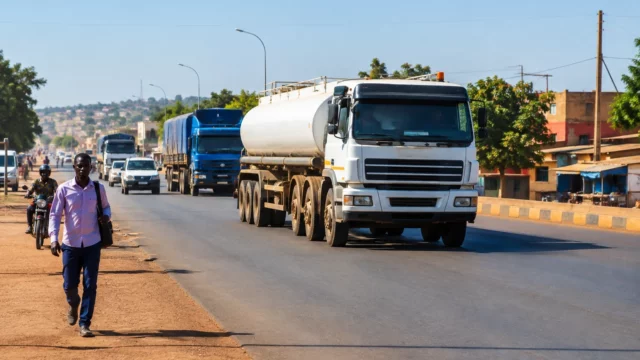
In eastern Mauritania, the border is more than a line on a map. In Bassiknou, in Hodh Ech Chargui, it is also a space of movement, surveillance and tensions spilling over from neighbouring Mali. For several months, this border strip has been at the centre of security concerns, refugee movements and trafficking that takes advantage of vast, poorly controlled areas. The Mauritanian authorities have stepped up border management measures there, while humanitarian organisations warn that the region is already under considerable pressure from an influx of displaced Malians.
It was against this backdrop that an operation in Bassiknou on Friday 4 September 2026 led to the arrest of 17 people and the seizure of two pick-up vehicles loaded with weapons and ammunition, according to security sources cited locally. The suspects were transferred to Néma, the regional capital, for questioning as part of the investigation. Among them is a man identified as Sanda Ould Bouamama, whose real name is Sidi Mohamed Ould Mohamed Ould Bouamama, a former spokesman for Ansar Dine, a Malian group that was later incorporated into JNIM, the jihadist coalition linked to Al-Qaeda in the Islamic Maghreb.
What is known about the case and what it reveals
The Mauritanian authorities had not issued an official statement when these details emerged. Caution is therefore warranted over details that remain unconfirmed. However, the information points to one central fact: weapons were seized in the immediate vicinity of the Malian border, in an area where trafficking in arms, fuel and other goods regularly takes place. In recent months, the Mauritanian gendarmerie has announced other seizures near Bassiknou, highlighting the intensity of surveillance in the area.
The name Sanda Ould Bouamama gives the case particular significance. His background is linked to the Malian crisis of 2012-2013, when Ansar Dine occupied northern Mali alongside other armed groups. Human rights organisations recalled at the time that he had been wanted in Mali before surrendering to the Mauritanian authorities in 2013. His case continued to attract attention after his release in Mauritania in 2015. This history explains why his arrest, if confirmed in its judicial details, goes beyond a simple smuggling case and touches on the political and security networks of the central Sahel.
Caution is still necessary, however. The presence of a well-known name alone does not reveal the precise role of each person arrested. An arms-trafficking network can include smugglers, intermediaries, logistics operators and local contacts, without all of them being involved to the same degree. The investigation will therefore have to establish the precise origin of the weapons, their final destination and the nature of any links to armed groups active in northern Mali. In such a sensitive border region, these distinctions matter as much as the headline figures from the operation.
A signal for Mauritania, Mali and the Sahel
Mauritania faces a twofold challenge. On the one hand, Nouakchott wants to preserve its relative security haven amid jihadist realignments and cross-border trafficking. On the other, the country must ensure that the militarisation of the borders does not burden pastoral communities and the informal exchanges that sustain part of Hodh Ech Chargui. Public documents from the European Union and the United Nations also show that the region is already under significant humanitarian and logistical pressure, particularly around the Mbera camp and areas hosting Malian refugees.
Mali remains central to the equation. Armed groups operate there in a fragmented environment shaped by insecurity, local rivalries and a war economy. When weapons are seized on the Mauritanian side, the issue is not just one of policing: it also points to the porosity of the Sahelian theatre, smuggling routes and weakened controls over parts of Malian territory. The Mauritanian authorities have previously denounced what they called unfounded Malian accusations over the situation in the Mbera area, showing how sensitive bilateral relations remain whenever security is at issue.
At regional level, the case is a reminder of a simple reality: the Sahel can no longer be understood solely through coups or jihadist offensives. The material supply chains that sustain armed groups must also be examined. Weapons, fuel, vehicles and people often move together. When a seizure takes place in Bassiknou, it reveals something about the state of the Sahelian front, but also about states’ ability to co-operate, share intelligence and control borderlands without cutting communities off from their livelihoods. This is where, day by day, part of Mauritania’s stability and the balance of the western Sahel are at stake.