Algeria
 Egypt
 Libya
 Morocco
 Sudan
 Tunisia
 Benin
 Burkina Faso
 Cabo Verde
 Côte d'Ivoire
 Ghana
 Guinea
 Guinea-Bissau
 Liberia
 Mali
 Mauritania
 Niger
 Nigeria
 Senegal
 Sierra Leone
 The Gambia
 Togo
 Cameroon
 Central African Republic
 Chad
 DR Congo
 Equatorial Guinea
 Gabon
 Republic of the Congo
 São Tomé and Príncipe
 Burundi
 Comoros
 Djibouti
 Eritrea
 Ethiopia
 Kenya
 Madagascar
 Malawi
 Mauritius
 Mozambique
 Rwanda
 Seychelles
 Somalia
 South Sudan
 Tanzania
 Uganda
 Angola
 Botswana
 Eswatini
 Lesotho
 Namibia
 Zambia
 Zimbabwe
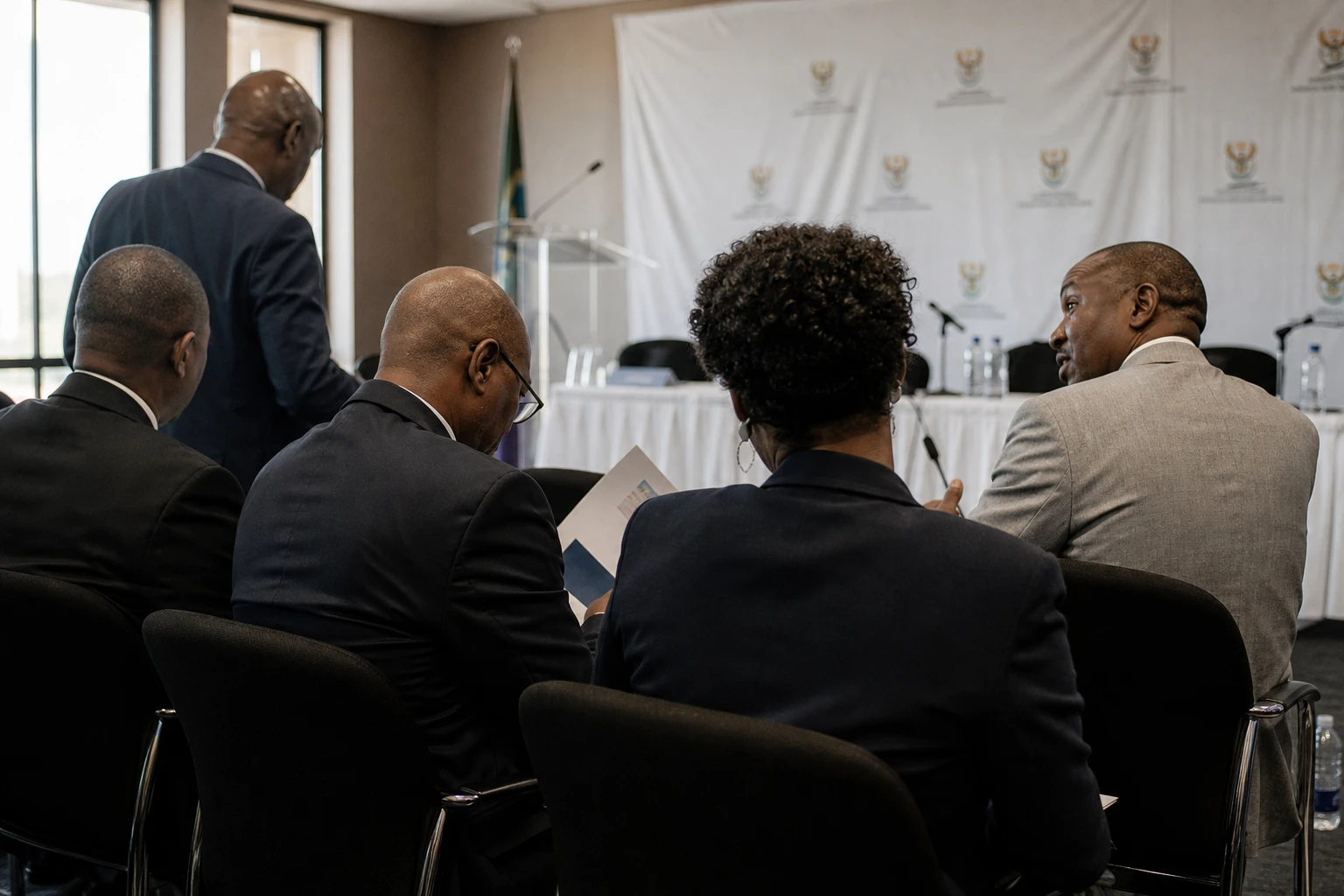
A wind farm construction site in the rain, but a clear signal for South Africa’s market
In the Karoo, construction rarely progresses in a straight line. Between Murraysburg and Richmond, where the Western Cape meets the Northern Cape, a major wind complex is nevertheless staying on course. The schedule remains set for late 2026, despite months of heavy rain that slowed machinery and led contractors to invoke force majeure. This determination says much about the moment South Africa is experiencing: a country seeking to secure its electricity supply by opening the door wider to private players.
The project is part of a region already strategic for energy, industry and transmission lines. In southern Africa, the challenge is not simply to produce more. That output must also be carried to a grid already under strain, then sold within a stable contractual framework. This is precisely where Anthem’s Northern Cluster becomes an example.
What Anthem is building, and why the schedule matters
The Northern Cluster comprises three wind farms: Khangela, Umsinde and Ishwati Emoyeni. Each has a contracted capacity of 140 MW, giving a total of 420 MW. The project’s technical specification refers to an installed capacity of 432 MW, or 144 MW per site, with 32 Vestas V163 turbines rated at 4.5 MW each per farm. Anthem says commercial operations are still expected to begin in the fourth quarter of 2026.
The construction site does not stand alone. The project also relies on grid infrastructure that was energised in early 2026: Gamma B substation, equipped, among other things, with a 500 MVA transformer. According to public information, about 70 km of 132 kV lines have been built to connect the projects to the grid of the National Transmission Company South Africa, the electricity transmission company.
This step is decisive, because a wind farm’s value lies in more than its turbines. It also needs a backbone capable of taking in its output and carrying it onwards. In South Africa, the grid has become one of the main constraints on the energy transition. Gamma B’s arrival reduces this risk along a corridor where several private projects are seeking to feed power into the network.
Private arrangements, long-term contracts and an opening grid
Output from the Northern Cluster will be sold to private companies under contracts lasting 20 to 25 years. Khangela is to supply Richards Bay Minerals, Umsinde is to supply Sibanye-Stillwater, and Ishwati Emoyeni is to deliver electricity to NOA, a power producer and trader. The electricity will be carried over the national grid through wheeling, a mechanism that allows a producer to transmit power via a third party’s network to the end customer.
This model encapsulates the transformation of South Africa’s market. President Cyril Ramaphosa signed the Electricity Regulation Amendment Act in August 2024, paving the way for a competitive electricity market and strengthening the role of an independent transmission operator. At the same time, the government confirmed the handover to the NTCSA, while wheeling reforms are intended to provide more standardised access to the grid.
For industrial companies, the benefits are clear. Large consumers are looking for long-term contracts, often tied to decarbonisation targets and predictable costs. The logic is changing for producers too: it is no longer simply a matter of selling to a single public buyer, but of securing private offtakers able to honour commitments over two decades. This is a more flexible market, but one that also demands more in terms of financing, grid access and construction discipline.
What the delays say, and what they reveal about South Africa’s economy
Heavy rain from February to June delayed construction and led the contractors to declare force majeure. This weather-related detail has broader implications than it might seem. It is a reminder that major infrastructure projects remain exposed to climate-related disruptions, logistical constraints and tight construction windows. In an economy where grid reliability determines the prospects for industrial recovery, losing a few months can carry a heavy cost.
But the important point lies elsewhere: despite these disruptions, the project has not gone off course. The 96 planned turbines have been installed, the substation is operational and the private contracts are already in place. This shows that renewable energy financing in South Africa no longer depends solely on the public-sector timetable. The country now has an ecosystem of IPPs, funds, industrial buyers and grid specialists capable of advancing large-scale projects beyond Eskom’s sole framework.
The recent precedent matters. In 2024, the South African government presented progress on its Energy Action Plan, which is intended to reduce power cuts and accelerate the addition of new capacity. Sector reform is not aimed solely at adding megawatts. It also seeks to make grid access clearer, attract private capital and secure the formal economy and the activities that depend on it.
Significance beyond the Western Cape
The Northern Cluster is not a symbolic project. It illustrates a broader trend in southern Africa: the rise of private power generation and transmission solutions, amid growing industrial demand for low-carbon electricity. For South Africa, a pivotal SADC country, the challenge is to turn this opening into real capacity without creating a bottleneck in transmission.
The next stage will follow a precise timetable. If commercial operations do indeed begin before the end of 2026, the Northern Cluster will join the projects showing that a more competitive electricity market can work in the south of the continent. If further delays emerge, they will immediately be seen as another test of grid reform, wheeling and the country’s ability to deliver large-scale infrastructure. Either way, Pretoria will be watching the project closely, as it touches on jobs, industrial competitiveness and the credibility of South Africa’s energy transition.