Algeria
 Egypt
 Morocco
 Sudan
 Tunisia
 Benin
 Burkina Faso
 Cabo Verde
 Côte d'Ivoire
 Ghana
 Guinea
 Guinea-Bissau
 Liberia
 Mali
 Mauritania
 Niger
 Nigeria
 Senegal
 Sierra Leone
 The Gambia
 Togo
 Cameroon
 Central African Republic
 Chad
 DR Congo
 Equatorial Guinea
 Gabon
 Republic of the Congo
 São Tomé and Príncipe
 Burundi
 Comoros
 Djibouti
 Eritrea
 Ethiopia
 Kenya
 Madagascar
 Malawi
 Mauritius
 Mozambique
 Rwanda
 Seychelles
 Somalia
 South Sudan
 Tanzania
 Uganda
 Angola
 Botswana
 Eswatini
 Lesotho
 Namibia
 South Africa
 Zambia
 Zimbabwe
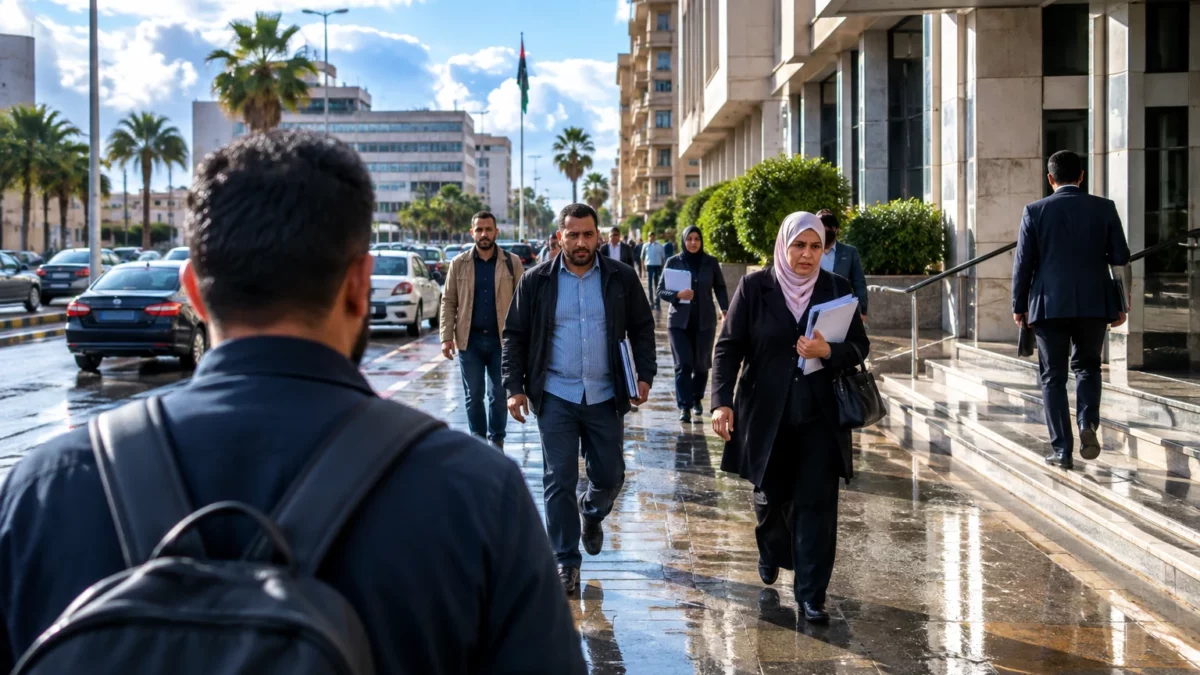
In Libya, dialogue between the two rival centres of power could shift the balance without resolving the central question: who will govern the country, and with what legitimacy? Khalifa Haftar’s meeting with Turkish leaders illustrates Ankara’s change of strategy. It also comes amid heightened tensions, following strikes targeting Russian ships near Benghazi.
A divided country, with a growing number of interlocutors
Since the fall of Muammar Gaddafi in 2011, Libya has struggled to restore unified national authority. The Government of National Unity, led by Abdelhamid Dbeibah, is based in Tripoli. In the east, a rival administration relies on Khalifa Haftar’s forces and on institutions established around Benghazi and Tobruk. Both camps claim national authority, but no lasting agreement has brought their institutions together.
This division is also the product of regional and international power dynamics. Turkey provided military support to the Tripoli authorities during Haftar’s offensive against the capital in 2019-2020. Haftar, for his part, has built ties with Russia and other foreign partners. Since then, Ankara has gradually established contacts with the east, without abandoning its relations with Dbeibah’s government.
Libya is not a member of ECOWAS, the West African organisation often cited in coverage of the continent’s political crises. In North Africa, it belongs to the Arab Maghreb Union, whose integration remains limited. Libya is also an issue for the African Union, which advocates a political solution and the restoration of common national institutions.
First official visit to Ankara
On Wednesday 25 November 2026, Turkish President Recep Tayyip Erdoğan received Khalifa Haftar in Ankara during his first official visit to Turkey, according to the Turkish presidency. Haftar also held talks with senior Turkish officials, including the ministers of foreign affairs, defence and energy, as well as military and intelligence officials. The delegation included two of his sons.
The discussions were held behind closed doors. Public statements from Libya referred to bilateral cooperation and support for international efforts to unify the institutions. However, no public information establishes that a concrete agreement was reached, or specifies any commitments made on security, energy or power-sharing.
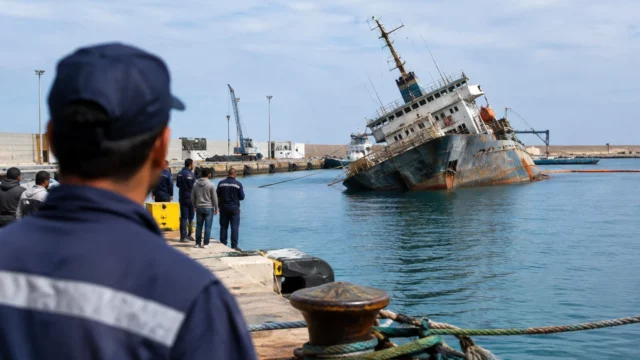
The visit comes a few days after strikes claimed by Ukraine against two Russian ships near Benghazi on 22 November. Ukrainian President Volodymyr Zelensky said his country had carried out the operation. Libyan officials reported an attack on a Russian military ship at the Benghazi naval base and a second ship hit offshore. Accounts of the circumstances and reported damage have varied; they should therefore be attributed rather than presented as a definitive assessment.
The timing does not prove that the Turkish visit was a response to the strikes. It nevertheless highlights the sensitivity of the moment: eastern Libya has ties with Moscow, while Turkey is seeking to expand its influence across the country. An escalation around port facilities could complicate talks between the Libyan camps and heighten tensions in the Mediterranean.
Ankara seeks a role with both camps
By talking to Haftar while maintaining dialogue with Dbeibah, Ankara is opening the way to a mediating role. Turkey can thus safeguard its security and economic interests while positioning itself in discussions on the future of Libya’s institutions. This approach does not mean that disagreements have disappeared: the two camps remain rivals, and their foreign partners’ interests do not necessarily coincide.
The discussions also concern the shape of any potential rapprochement. Bringing officials together or announcing cooperation is not enough to establish a shared executive. Decisive questions remain to be resolved: the rules for an election, the distribution of oil revenues, control of financial institutions and the chain of command of the armed forces. Without guarantees accepted by the various actors, an agreement between leaders could remain fragile and leave local rivalries untouched.
The population is not affected equally by this impasse. In Tripoli and other western cities, residents depend on the services and decisions of the authorities in place. In the east, the administration and Haftar’s forces shape access to security and local institutions. Nationally, the division complicates the management of public resources and economic planning. Informal-economy actors, as well as registered businesses, are exposed to uncertainty over rules and payments.
A precedent illustrates the limits of diplomatic announcements: Haftar’s offensive against Tripoli, launched in 2019, failed to capture the capital and ended with a ceasefire in 2020. Turkey then played a major military role alongside the Tripoli camp. The Ankara meeting therefore marks a change in channels of dialogue, but is not, on its own, national reconciliation.
The Tripoli summit, the next diplomatic test
The visit comes ahead of the Africa-Turkey summit announced for Tripoli on 8 and 9 December 2026. Erdoğan plans to attend. Ankara could use the occasion to bring officials from both camps together, but such a meeting is not certain and would not guarantee an agreement. The summit will mainly test the Turkish diplomacy’s ability to balance its relations with Libya’s east and west.
For the African Union and neighbouring countries, the stakes extend beyond the rivalry between Tripoli and Benghazi. A Libya divided for the long term weighs on regional security, trade and institutional coordination. But a solution depends first on a credible Libyan compromise, backed by verifiable mechanisms. The next steps to watch are the meetings announced in Tripoli, decisions on common institutions and how the Libyan authorities address the consequences of the strikes around Benghazi.