Algeria
 Egypt
 Morocco
 Sudan
 Tunisia
 Benin
 Burkina Faso
 Cabo Verde
 Côte d'Ivoire
 Ghana
 Guinea
 Guinea-Bissau
 Liberia
 Mali
 Mauritania
 Niger
 Nigeria
 Senegal
 Sierra Leone
 The Gambia
 Togo
 Cameroon
 Central African Republic
 Chad
 DR Congo
 Equatorial Guinea
 Gabon
 Republic of the Congo
 São Tomé and Príncipe
 Burundi
 Comoros
 Djibouti
 Eritrea
 Ethiopia
 Kenya
 Madagascar
 Malawi
 Mauritius
 Mozambique
 Rwanda
 Seychelles
 Somalia
 South Sudan
 Tanzania
 Uganda
 Angola
 Botswana
 Eswatini
 Lesotho
 Namibia
 South Africa
 Zambia
 Zimbabwe
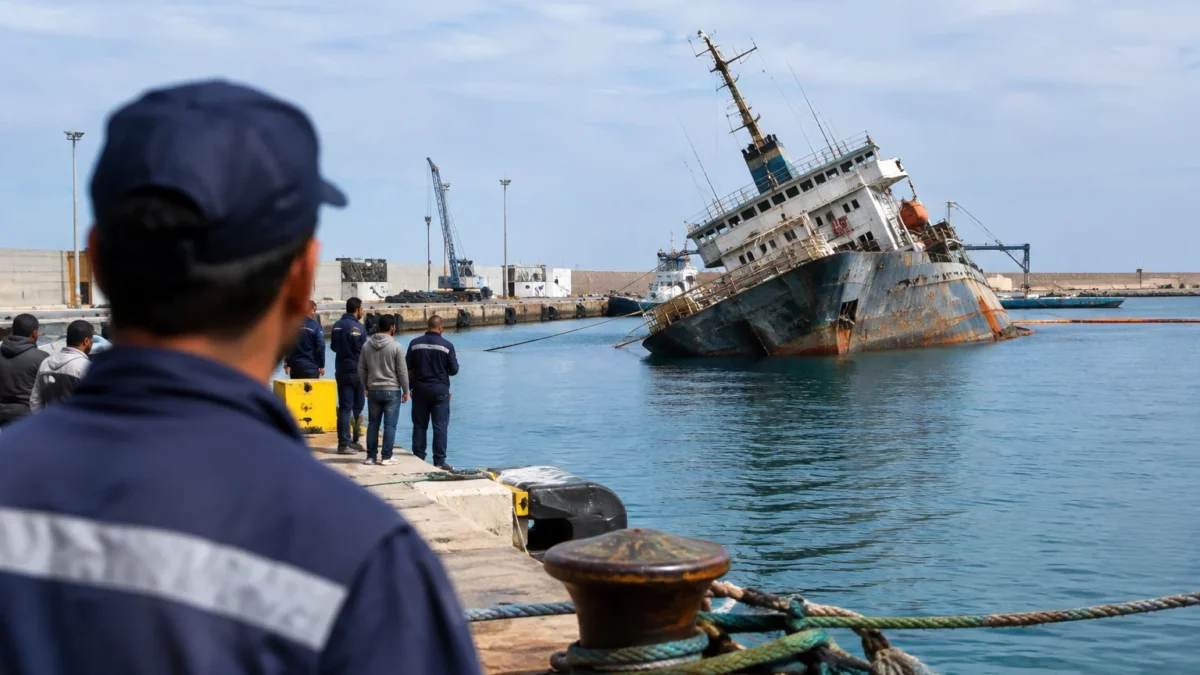
A stop at a Libyan port was enough to bring the Russian-Ukrainian war closer to the shores of North Africa. The 22 November attack in Benghazi raises an immediate question: how can Libyan ports be prevented from becoming staging posts or targets in an external conflict?
A country still divided between two authorities
Since the fall of Muammar Gaddafi in 2011, Libya has remained divided between rival authorities. The UN-recognised Government of National Unity is based in Tripoli. In the east, a rival administration relies on Khalifa Haftar’s forces and controls Benghazi. This fragmentation complicates the management of strategic facilities, including ports and military bases.
Libya belongs to the Arab Maghreb Union, a regional organisation in North Africa, but its internal divisions weigh on relations with its neighbours and on security in the Mediterranean. The country is not a member of ECOWAS, a West African organisation sometimes wrongly cited in regional coverage. Rivalries between Libyan authorities also give foreign actors several interlocutors and several points of entry.
Maritime links between Russia and eastern Libya are not new. A report by the UN Panel of Experts on Libya documented visits by Russian ships to Tobruk in 2024, as well as transfers of military equipment. This precedent helps explain the significance of the agreements invoked in Benghazi, without establishing on its own the nature of the activities of the vessel hit in 2026. The UN report on Russian ship movements in Libya describes these visits.
What happened in Benghazi
At dawn on Sunday 22 November, an explosion struck a Russian vessel moored at the Benghazi naval base. The eastern-based government initially referred to a suspected drone attack, following a preliminary investigation. It said the vessel had called in to take on fuel and provisions, under maritime cooperation agreements with Russia.
Information has evolved since the first statements. On 23 November, Ukrainian President Volodymyr Zelensky said Ukraine had carried out the operation and that seven naval drones had been used. He said the Russian corvette Merkury had been sunk. Satellite images released after the explosion showed the vessel capsized and largely underwater. These details support reports of major damage, but Kyiv’s statement remains a claim by a party to the conflict. The Associated Press report on the Ukrainian statement also covers the satellite observations.
The reported casualty toll has also changed. Initial accounts said there were minor injuries aboard a separate cargo ship, with no casualties reported aboard the Russian vessel. On 23 November, Radio Free Europe/Radio Liberty, citing the eastern authorities, reported that ten Libyan and Russian crew members had been injured. The number and severity of the injuries should therefore be attributed to the authorities that reported them, pending fuller independent confirmation.
The eastern authorities condemned what they called a breach of Libyan sovereignty and announced an investigation with Russia. The Tripoli government, meanwhile, warned against using ports and civilian facilities for activities linked to foreign conflicts. The United Nations Support Mission in Libya called for an “immediate, independent and transparent” investigation, without naming those responsible.
Risks beyond the naval base
The incident first shows the tangible cost of political division. An authority in the east can make maritime arrangements, while the one in Tripoli warns of the dangers of such activities. Without a unified chain of command, the population and port workers may be exposed to the consequences of commitments they do not control.
The vulnerability is not limited to military vessels. On 22 November, the eastern authorities also reported that a Maltese-flagged commercial cargo ship had been targeted off Benghazi. Injured crew members were reportedly rescued. This second, separately reported incident is heightening concerns about the safety of shipping and port operations. The account of the two maritime incidents near Benghazi distinguishes confirmed information from testimony that remains uncertain.
For commercial operators, a threat to ships can cause delays, higher security costs and supply disruptions. Benghazi’s economic activity could also be affected if access to the port or base is restricted. So far, the authorities have not announced any lasting closure of the facilities.
Regional implications, responsibility still to be established
The war between Russia and Ukraine is being fought mainly far from Africa, but its maritime effects are now reaching the Mediterranean and Libyan ports. In March 2026, Moscow accused Kyiv of attacking a Russian gas carrier off the Libyan coast; Ukraine did not comment on the allegation at the time. The Benghazi episode makes the question of how Libyan territory is used in operations linked to the war more pressing.
The Ukrainian claim sheds light on the alleged perpetrator’s identity, but it does not replace an independent investigation into the circumstances, the means used and any consequences for Libyan facilities. The UN has already noted Russian naval movements towards the east of the country; this context is no basis for presuming what the Merkury was carrying or attributing operational responsibility for the attack to the Libyan authorities.
What happens next will depend on the findings of the announced investigations, Moscow’s response and the ability of the two Libyan authorities to co-ordinate the protection of ports. For Mediterranean coastal states and the African Union, there is also an institutional concern: preventing the fragmentation of a state from turning its waters and infrastructure into a secondary theatre of a foreign war.