Algeria
 Egypt
 Libya
 Morocco
 Sudan
 Tunisia
 Benin
 Burkina Faso
 Cabo Verde
 Côte d'Ivoire
 Ghana
 Guinea
 Guinea-Bissau
 Liberia
 Mali
 Mauritania
 Niger
 Nigeria
 Senegal
 Sierra Leone
 The Gambia
 Togo
 Cameroon
 Central African Republic
 Chad
 DR Congo
 Equatorial Guinea
 Gabon
 Republic of the Congo
 São Tomé and Príncipe
 Burundi
 Comoros
 Djibouti
 Eritrea
 Ethiopia
 Kenya
 Madagascar
 Malawi
 Mauritius
 Mozambique
 Rwanda
 Seychelles
 Somalia
 South Sudan
 Tanzania
 Uganda
 Botswana
 Eswatini
 Lesotho
 Namibia
 South Africa
 Zambia
 Zimbabwe
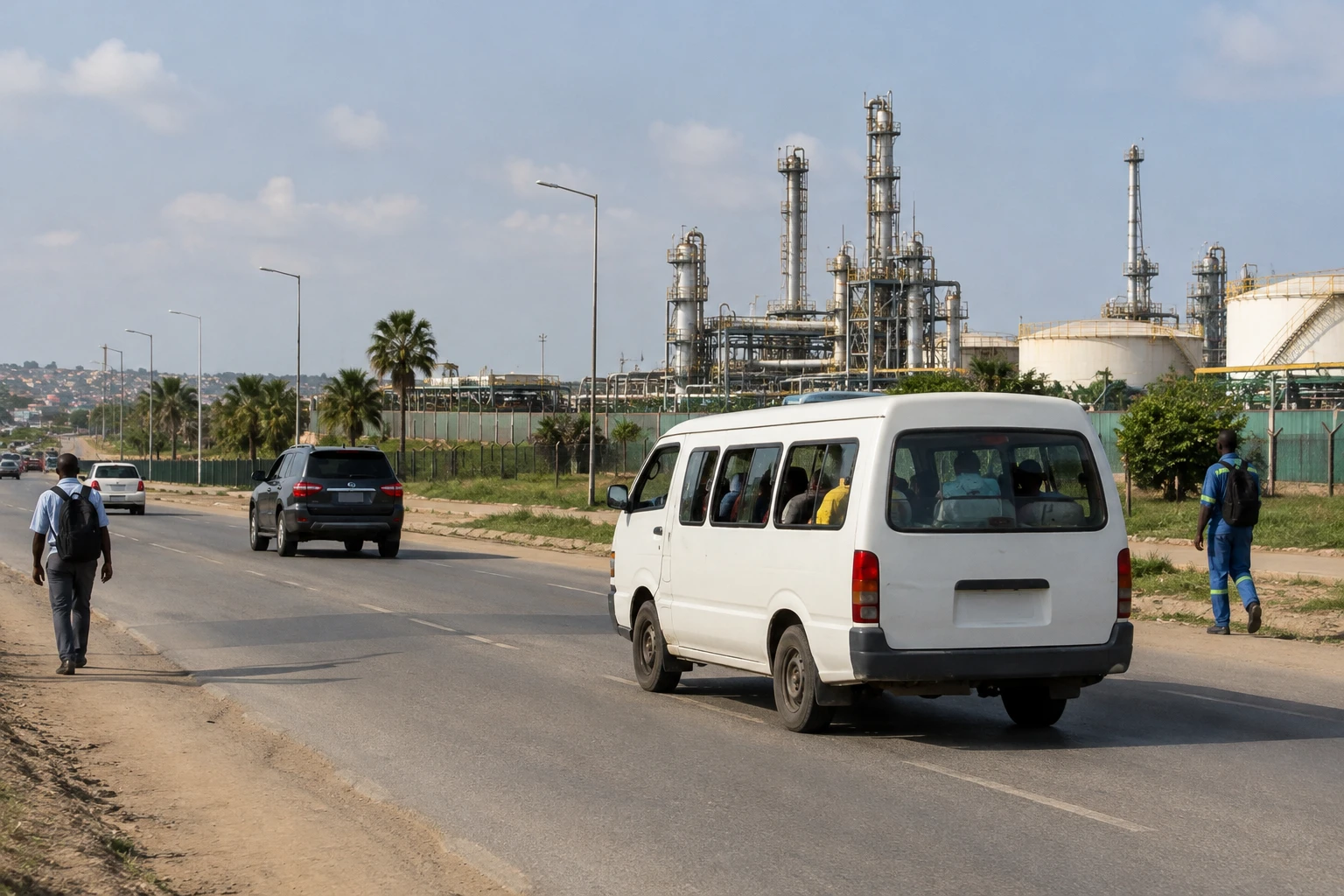
Oil emissions are not reduced by signing an agreement, but by detecting leaks, recovering gas and publishing results. In Angola, a new framework between Sonangol and TotalEnergies puts a practical question centre stage: how can technical expertise be turned into verifiable changes at facilities?
An agreement that must be translated into action on the ground
On 1 November 2026, at a meeting of the Oil and Gas Decarbonization Charter (OGDC) in Abu Dhabi, TotalEnergies announced a memorandum of understanding with Sonangol. It is intended to strengthen technical cooperation on reducing methane and decarbonising oil and gas activities in Angola. The two companies plan to work on detecting, measuring, monitoring and reducing emissions, as well as training and sharing methods.
The agreement also covers reducing flaring — the burning of gas associated with oil extraction —, energy efficiency, the electrification of facilities and carbon management. The partners are exploring financing options, including possible support from the World Bank’s GFMR fund. However, no amount, site, implementation timetable or Angola-specific quantified target has been announced. For now, this is a framework for cooperation, not confirmation of a programme being rolled out at sites.
To detect emissions, TotalEnergies proposes using AUSEA, a drone-mounted measurement system developed with France’s National Centre for Scientific Research. The tool can locate and quantify methane and carbon dioxide at onshore or offshore facilities, including in hard-to-reach areas. Its usefulness will nevertheless depend on the campaigns actually carried out, access to data and repairs made after detection.
An issue already on Angola’s agenda
The subject is not new to cooperation between the two groups. Sonangol says a pilot campaign using AUSEA was launched in November 2023 on block 3/05. Its sustainability report confirms that this first campaign took place. This earlier experience provides a concrete precedent, but does not in itself specify which results will be incorporated into the new agreement or how emissions will be monitored over time.
Satellite data compiled by the World Bank give an indication of the challenge posed by flaring: in Angola, the estimated volume of gas burned fell from 4.5 billion cubic metres in 2016 to 1.7 billion in 2022. These figures do not directly describe methane emissions from the sector, but they show the scale of the gas volumes still involved. The country has also joined the World Bank’s “Zero Routine Flaring by 2030” initiative. This target and the observed decline are useful reference points, but do not replace recent, detailed measurements of methane leaks.
For Luanda, the issue affects revenues, gas use and environmental costs. Reducing leaks can limit a waste of resources and improve understanding of emissions. But capturing or putting gas to use requires equipment, infrastructure and investment. The benefits and costs are not automatically shared equally among the state, companies, workers and communities living near facilities.
From collective commitment to measuring results
Launched at COP28 in 2023, the OGDC brings together oil and gas companies around several operational goals, including near-zero upstream methane emissions by 2030. “Upstream” here refers to exploration and production activities, before transport and refining. This shared commitment provides a timeframe for cooperation, but is not in itself Angolan regulation or proof of reductions on the ground.
Angola also operates within a regional framework: as a member of the Southern African Development Community (SADC), it shares with its neighbours challenges related to energy production, infrastructure and transition. The agreement’s impact will therefore depend on its implementation nationally, but measurement methods and lessons learned could inform regional exchanges on managing oil emissions.
Several elements will be key to assessing progress: publication of a timetable, identification of the facilities concerned, baseline data before intervention, and then measurements after repairs. It will also be important to know whether the proposed financing materialises and whether the results cover only the partners’ operations or a wider scope. Without this information, the 2030 goal remains a collective horizon rather than a verifiable record for Angola.
The 2023 precedent shows that a detection campaign has already taken place. The new agreement broadens the announced scope to include other measures, from flaring to energy efficiency. The next step will be to make operational decisions and measured results visible, so that the climate commitment translates into a documented reduction in emissions.