Algeria
 Egypt
 Libya
 Morocco
 Sudan
 Tunisia
 Benin
 Burkina Faso
 Cabo Verde
 Côte d'Ivoire
 Ghana
 Guinea
 Guinea-Bissau
 Liberia
 Mali
 Mauritania
 Niger
 Nigeria
 Senegal
 Sierra Leone
 The Gambia
 Togo
 Cameroon
 Central African Republic
 Chad
 DR Congo
 Equatorial Guinea
 Gabon
 Republic of the Congo
 São Tomé and Príncipe
 Burundi
 Comoros
 Djibouti
 Eritrea
 Ethiopia
 Kenya
 Madagascar
 Malawi
 Mauritius
 Mozambique
 Rwanda
 Seychelles
 Somalia
 South Sudan
 Tanzania
 Uganda
 Botswana
 Eswatini
 Lesotho
 Namibia
 South Africa
 Zambia
 Zimbabwe
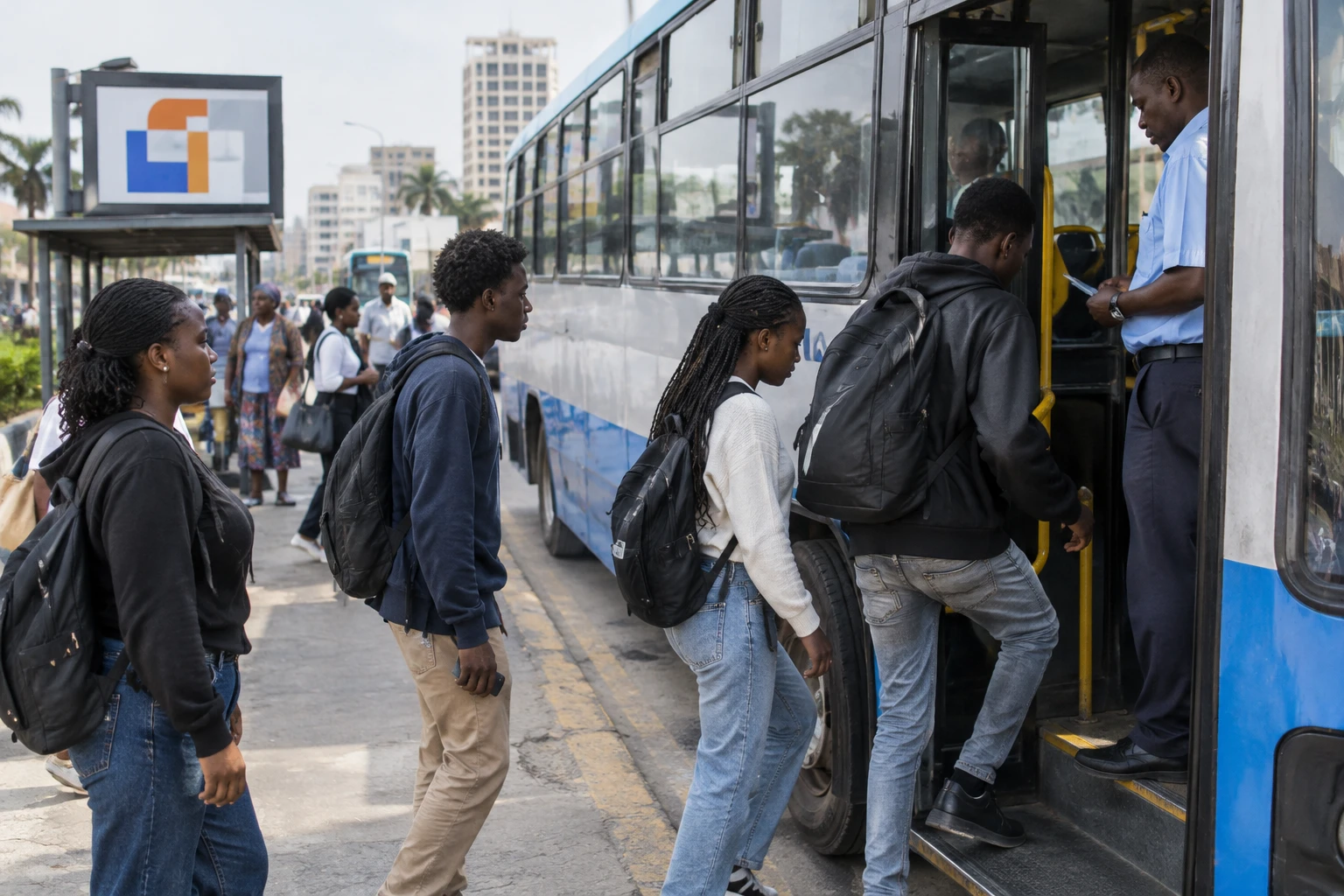
When inflation slows, school expenses do not always follow suit. In Angola, prices in the “Education” category are still rising far faster than the overall index, as families face new fees and public funding remains under strain.
Overall inflation falls, but not at the same pace
The national consumer price index (IPCN), which measures changes in the prices of a basket of goods and services, reached 8.16% year on year in October 2026. It stood at 8.43% in September, a fall of 0.27 percentage points. The National Institute of Statistics (INE) published the data on 6 November. Angolan media outlet Mercado also reported the figures, citing INE results.
Against the direction of this slowdown, education recorded an annual increase of 15.82%. This was the steepest rise among the main spending categories tracked by the INE. It nevertheless slowed from September, when it reached 18.53%.
The next-highest annual increases were in alcoholic beverages and tobacco, at 9.37%; food and non-alcoholic beverages, at 9.28%; and health, at 9.05%. This comparison points to particular pressure on education-related spending, but does not mean that fees at every institution rose by 15.82%.
Private fees linked to inflation
For the 2026/2027 academic year, private higher education institutions are authorised to increase tuition fees and certain charges by up to 10.88%. The review mechanism, in force since the 2023/2024 academic year, links permitted increases to inflation. Angolan business outlet Expansão confirms this ceiling and notes that authorised increases have varied over recent years.
This ceiling is not the same as the 15.82% increase measured by the INE for the “Education” category as a whole. The two figures cover neither exactly the same expenses nor the same scope. The national statistic reflects price movements observed in its category; the ceiling, by contrast, governs fee revisions at the private institutions concerned.
The rule aims to take account of the costs borne by private universities. But it also affects the families paying for these courses, whose budgets are already stretched by other expenses. Students at these institutions are directly exposed to the authorised revisions; pupils in public education are not covered by this private-fee ceiling, although their households are affected by the overall cost of living.
Public funding rises little in nominal terms
Public funding offers another perspective. According to UNICEF Angola’s 2026 budget analysis, the state allocated about 2,299bn kwanzas to education, a nominal increase of 1.74% compared with 2025. A nominal increase refers to the amount budgeted, without adjusting for inflation: it therefore does not directly measure the allocation’s real purchasing power.
UNICEF also notes that education accounts for 6.9% of the state budget and about 1.7% of gross domestic product. The organisation describes an uneven allocation: primary education receives a large share, while the pre-primary budget has fallen by more than 99% compared with 2025. These budget choices matter for public services, schools and families, but do not by themselves determine the cost of private education.
It is also important to distinguish announced allocations from spending actually carried out. UNICEF’s analysis says the execution rate for the education budget had fallen to 58% in 2025, after averaging 72% between 2022 and 2024. The challenge is therefore as much about the implementation of available funds in provinces and institutions as it is about the amounts allocated.
An impact that extends beyond private campuses
Education accounts for a small share of the overall inflation calculation: the INE puts its contribution at 0.32 percentage points in October. Food and non-alcoholic beverages remain the main driver of overall inflation, contributing 5.62 points. The contrast matters: a category can record the fastest price increase without accounting for the largest share of total inflation.
In Luanda, as in Angola’s other provinces, the practical impact depends on the education pathway, use of private institutions and household resources. The pressures differ for students in private higher education, pupils in public schools and families paying for several levels of schooling. Nationally, differences in implementation between administrations and provinces will also affect how the budget translates into educational services.
In the Southern African Development Community (SADC), where Angola takes part in regional exchanges, these figures form part of a wider debate about access to education and the resources devoted to human capital. They do not, by themselves, allow school costs to be compared between countries: statistical categories, fee rules and national budgets differ.
The next points to watch are the course of the IPCN, the fees actually charged by private institutions and execution of the 2026 budget. These will help clarify whether slowing overall inflation is accompanied by a reduction in education expenses for Angolan households.