Algeria
 Egypt
 Libya
 Morocco
 Sudan
 Tunisia
 Benin
 Burkina Faso
 Cabo Verde
 Côte d'Ivoire
 Ghana
 Guinea
 Guinea-Bissau
 Liberia
 Mali
 Mauritania
 Niger
 Nigeria
 Senegal
 Sierra Leone
 The Gambia
 Togo
 Cameroon
 Central African Republic
 Chad
 DR Congo
 Equatorial Guinea
 Gabon
 Republic of the Congo
 São Tomé and Príncipe
 Burundi
 Comoros
 Djibouti
 Eritrea
 Ethiopia
 Kenya
 Madagascar
 Malawi
 Mauritius
 Mozambique
 Rwanda
 Seychelles
 Somalia
 South Sudan
 Tanzania
 Uganda
 Botswana
 Eswatini
 Lesotho
 Namibia
 South Africa
 Zambia
 Zimbabwe
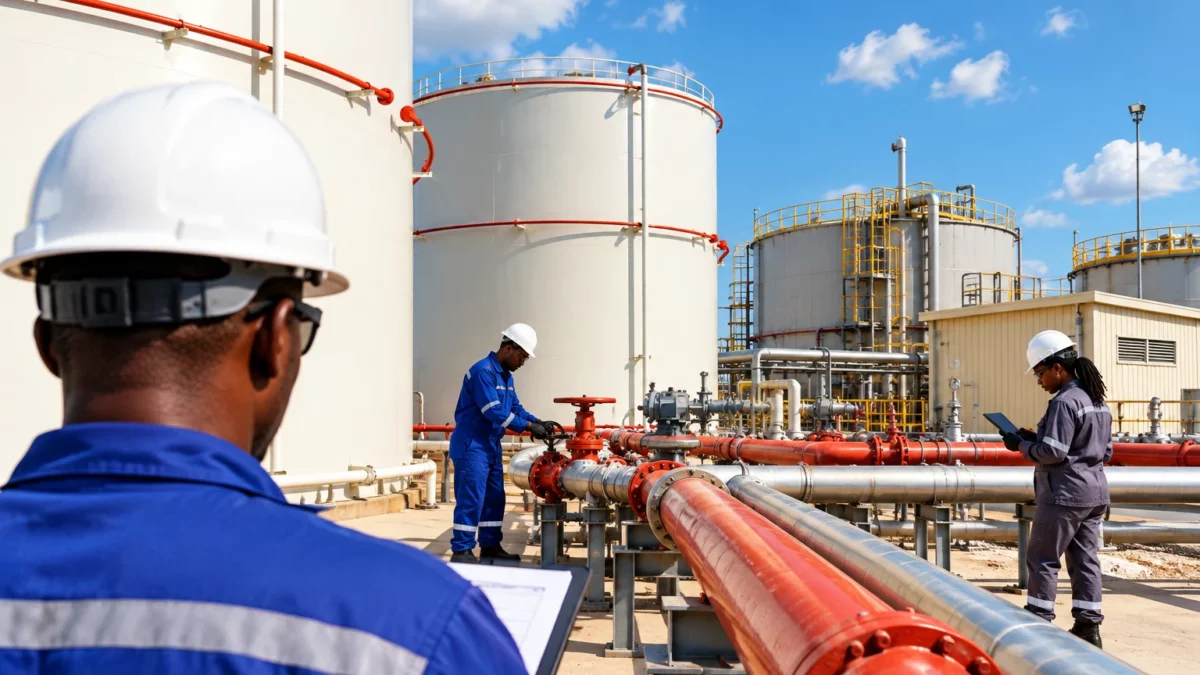
Can a refinery turn a resource that is still scarcely produced into a genuine economic sector? In Angola, the first gold processing and certification facility opens up this possibility. But its capacity today far exceeds the known volumes of gold produced in the country.
A new milestone for Angola’s mining sector
Inaugurated on 20 November 2026 in the Viana industrial hub in Luanda, the refinery was built and financed by Endiama, the state-owned company best known for its role in the diamond industry. Angola’s Ministry of Mineral Resources, Petroleum and Gas says the facility can process up to 25 kilograms of gold a day. It is also intended to enable the metal to be analysed and certified in the country. The ministry sets out the refinery’s functions.
The announced investment amounts to $20.7 million. According to information provided by minister Diamantino Azevedo at the ceremony, installed capacity could reach 75 kilograms a day, depending on the number of shifts. Operations are, however, expected to begin at a more limited pace: current production does not yet justify using several teams. The gap between technical capacity and actual supply is therefore the project’s first test. Lusa reports the details given at the inauguration.
The government is also preparing regulations for artisanal, small-scale and semi-industrial gold mining. The legislation is expected to define access conditions, permitted practices and marketing rules. The announcement addresses a practical challenge: a refinery cannot ensure a steady supply chain without declared production, oversight and identifiable sales channels.
New capacity, production yet to be established
According to figures presented by the minister, Angola has 49 gold exploration licences and four projects in the production phase. These permits indicate interest in the resource, but do not guarantee either substantial output or a regular supply for the plant. Results will depend in particular on projects becoming operational, their profitability and the traceability of the metal.
Available production data should also be treated with caution. Angola’s 2023 EITI report is a public reference on extractive activities, but the organisation notes that transparency around artisanal mining remains a challenge. The figure of 1,246.61 ounces produced in 2023, cited in sector information, gives an indication of the low known volumes. It does not, on its own, make it possible to measure informal activity precisely. The 2023 EITI report on Angola and the EITI country profile highlight the importance of improving the available data on mining activities.
Angola is seeking to broaden a sector in which diamonds remain central. The Tetelo copper mine in Uíge Province marks a first step in modern base-metals mining. The ministry announced its inauguration in October 2025. Another project, Longonjo, focused on rare earths, is presented as a future element of diversification. These resources are considered critical because of their role in several industrial supply chains, including electrical equipment and certain technologies. The ministry details the Tetelo project.
Value added will depend on the entire chain
Local refining could enable Angola to retain some of the processing, analysis and certification work. This does not automatically mean that revenues will stay in the country. Producers will need to be able to sell their gold through transparent channels, oversight services will need adequate resources, and local businesses will need access to the necessary skills and equipment.
The new regulations will therefore be crucial for small-scale operators. A clear framework can make it easier for them to access the legal market and improve the tracking of volumes. Conversely, costly or difficult-to-implement procedures could keep some activity outside declared channels. The issue also concerns communities in mining areas: the benefits will depend on jobs created, safety conditions and compliance with environmental rules, not just the plant’s capacity.
The regional context adds to the significance of this issue. Angola is a member of the Southern African Development Community (SADC), which brings together countries with diverse mining experience. Across the continent, several governments are seeking to process more of their resources before export. Angola’s refinery could also process gold from other countries, according to officials cited by Lusa. This will, however, depend on the competitiveness of the tax regime and credible guarantees about the origin of the consignments.
A key indicator to watch: supply
The project will therefore be measured not only by its equipment or nominal capacity. The next benchmarks will be publication of the announced regulations, tangible progress on gold projects and the volumes the facility can process over time. It will also be important to see whether public statistics clearly distinguish between industrial production, small-scale mining and exports.
For Angola, the stakes extend beyond gold: the aim is to reduce the concentration of mining revenues and strengthen national industrial skills. The refinery provides new infrastructure. Its contribution to diversification will now depend on the resources brought in, the rules applied and the share of value that remains in the Angolan economy.