Algeria
 Egypt
 Libya
 Morocco
 Sudan
 Tunisia
 Benin
 Burkina Faso
 Cabo Verde
 Côte d'Ivoire
 Ghana
 Guinea
 Guinea-Bissau
 Liberia
 Mali
 Mauritania
 Niger
 Nigeria
 Senegal
 Sierra Leone
 The Gambia
 Togo
 Cameroon
 Central African Republic
 Chad
 DR Congo
 Equatorial Guinea
 Gabon
 Republic of the Congo
 São Tomé and Príncipe
 Burundi
 Comoros
 Djibouti
 Eritrea
 Ethiopia
 Kenya
 Madagascar
 Malawi
 Mauritius
 Mozambique
 Rwanda
 Seychelles
 Somalia
 South Sudan
 Tanzania
 Uganda
 Botswana
 Eswatini
 Lesotho
 Namibia
 South Africa
 Zambia
 Zimbabwe
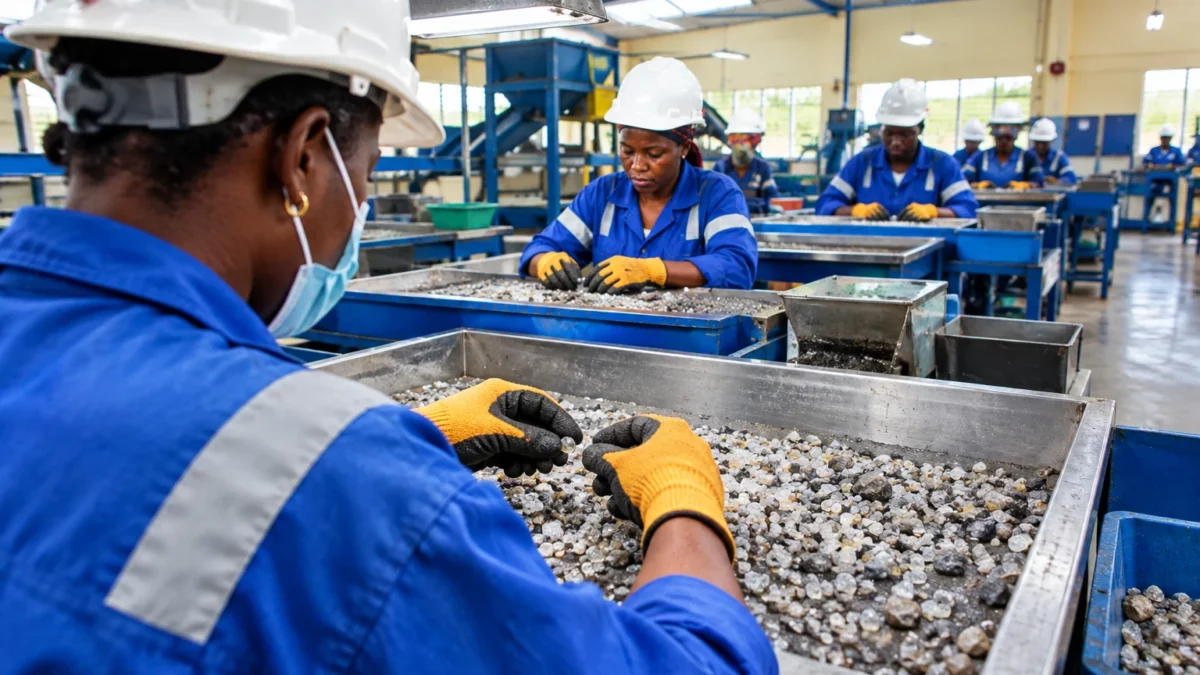
Taking a stake in a global trader does not guarantee that diamonds mined in Angola will fetch better prices. But Luanda wants a greater say in the decisions that shape their sale, as the market experiences a sharp slowdown.
A sector under pressure, producers seeking influence
In southern Africa, ownership of mining companies and the marketing of resources have become strategic issues. Botswana, already a 15% shareholder in De Beers, intends to increase its stake to 30% as part of the sale process. Namibia and Angola are also involved in the discussions.
This is happening as demand for natural diamonds remains fragile. Less expensive lab-grown stones are gaining ground. De Beers is also facing falling prices and stocks that are difficult to sell. Anglo American, its majority shareholder, launched a process in 2024 to sell its 85% stake.
For producer countries, the issue goes beyond share ownership. They want to capture more value in a chain where extraction, sorting, cutting, polishing and sales often take place in different locations. Southern Africa, home to several major players in the sector, is seeking to strengthen its role in commercial decision-making.
Luanda announces a $180 million investment
On 20 November 2026, José Manuel Augusto Ganga Júnior, chief executive of Angola’s state-owned company Endiama, said Angola was ready to pay about $180 million for a 10% stake in De Beers. The announcement was made in Luanda at the opening of the country’s first gold refinery. The amount was given in dollars, not euros.
This is a proposed acquisition linked to the sale of Anglo American’s stake. The overall transaction has not been finalised: the parties still need to conclude their agreements and obtain the necessary regulatory approvals. In September 2025, Angola’s Ministry of Mineral Resources confirmed that Endiama had submitted a funded offer for a minority stake, advocating a pan-African partnership.
The Global Diamond Consortium, led by former De Beers chief executive Gareth Penny, is at the heart of the proposed buyout. Botswana has announced its support for the consortium’s bid and plans to increase its stake. According to information available, Angola and Namibia are also expected to take part in the deal, alongside other partners. The final shareholding structure has yet to be confirmed.
A stake will not settle the question of prices
The announced $180 million has raised questions about the valuation. The consortium is reported to have offered about $1 billion for Anglo American’s 85% stake, implying a total valuation of close to $1.18 billion. On that indicative basis, a 10% stake would represent about $118 million. The gap with the sum cited by Endiama is notable, but the proposals are not necessarily comparable: the final structure, future financial commitments and terms of the agreement are not known.
Anglo American’s accounts show the scale of De Beers’ difficulties. In 2025, the company recorded an underlying loss of $511 million before interest, tax, depreciation and amortisation. Its average realised price fell by 7% to $142 per carat. The group also recorded a $2.3 billion impairment of the asset’s value. These figures illustrate the risk, but do not in themselves establish a market price for the company.
The stake could give the Angolan state a voice in the group’s strategic direction, but it guarantees neither dividends nor higher prices for the country’s stones. It could also expose the shareholder to further funding needs if conditions remain difficult. For public finances, the distinction between strategic influence and a tangible economic return will therefore be crucial.
Production alone does not create local value
Angola already had significant production weight before this announcement. According to the Angolan Ministry of Mineral Resources, the country mined 15.19 million carats in 2025, about 8% more than in 2024. Exports exceeded 17 million carats, with a reported gross value of $1.6 billion. A separate tally by state-owned Sodiam puts the volume sold at 17.7 million carats and revenue at about $1.8 billion. The two figures relate to different indicators: mining production on the one hand and volumes marketed on the other.
Luanda’s stated strategy also targets the stages after extraction. The government says it wants to develop cutting and polishing in the country, strengthen the Angolan Diamond Exchange, and train local businesses and workers. These activities could broaden the benefits beyond mining income and export revenue. Their development will, however, depend on investment, available skills and access to markets.
De Beers also has exploration interests in Angola, in partnership with Endiama. This industrial relationship gives the proposed stake a concrete dimension: the country would be a producer, an exploration partner and a potential shareholder in the group that markets diamonds internationally.
A test for regional mining co-operation
The rapprochement between Angola, Botswana and Namibia highlights co-operation among southern African producer states. It does not mean they will share the same priorities. Botswana already has a longstanding relationship with De Beers through Debswana, while Angola is seeking to increase its influence and develop local processing activities. Governance arrangements and the division of power in the future shareholding structure therefore remain central.
At continental level, the deal raises a fundamental question: can countries that supply resources also influence how they are marketed and processed? Angola’s announced entry into the shareholding would be a signal, not a complete answer. The sale’s completion, the amount actually committed, any calls for additional funds and Luanda’s ability to turn this influence into jobs, expertise and lasting revenue for the Angolan economy will all need to be watched.
Sources consulted: Reuters report on the Endiama chief’s statement, statement from Angola’s Ministry of Mineral Resources, Anglo American’s 2025 results, official review of Angolan diamond production, sector analysis of the transaction and its indicative valuations.