Algeria
 Egypt
 Libya
 Morocco
 Sudan
 Tunisia
 Benin
 Burkina Faso
 Cabo Verde
 Côte d'Ivoire
 Ghana
 Guinea
 Guinea-Bissau
 Liberia
 Mali
 Mauritania
 Niger
 Nigeria
 Senegal
 Sierra Leone
 The Gambia
 Togo
 Cameroon
 Central African Republic
 Chad
 DR Congo
 Equatorial Guinea
 Gabon
 Republic of the Congo
 São Tomé and Príncipe
 Burundi
 Comoros
 Djibouti
 Eritrea
 Ethiopia
 Kenya
 Madagascar
 Malawi
 Mauritius
 Mozambique
 Rwanda
 Seychelles
 Somalia
 South Sudan
 Tanzania
 Uganda
 Angola
 Botswana
 Eswatini
 Lesotho
 Namibia
 Zambia
 Zimbabwe
A repatriation that reopens shared memories
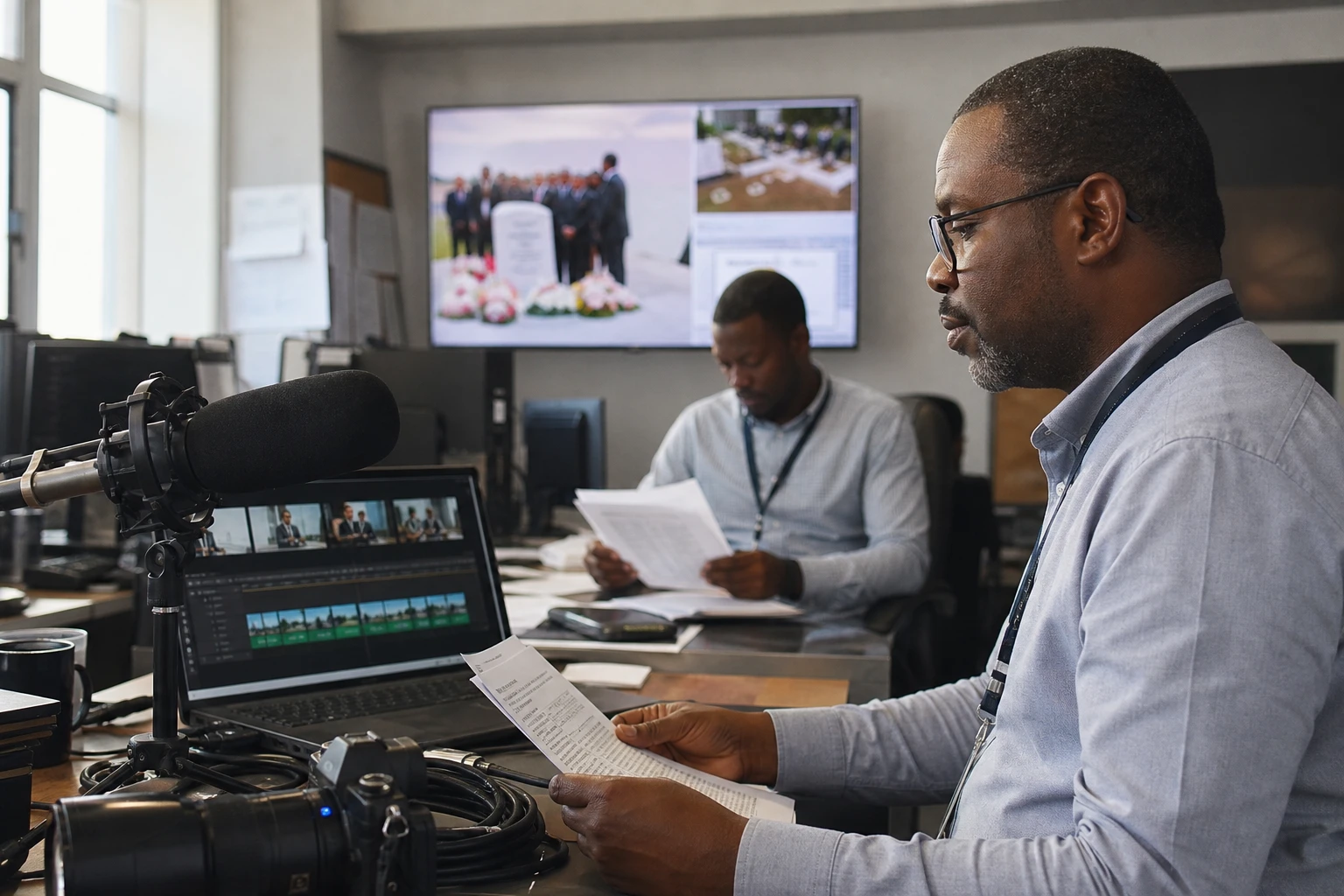
In Pretoria, the return of the remains of anti-apartheid fighters is about more than burial. It is also a way of belatedly closing a geography of exile that linked southern Africa to the struggle against South Africa’s racial regime. Angola occupies a distinctive place in this history. For years, Luanda was at once a rear base, a refuge, a training ground and a place of tension for the ANC and its armed wing, MK.
The South African government has confirmed that a project to repatriate the remains of nationals who died in exile is continuing. After the 2024 ceremony for 49 fighters returned from Zimbabwe and Zambia, a technical mission was due to travel to Angola, Lesotho, Zambia and Zimbabwe to map cemeteries and check records. Pretoria describes the operation as a duty of remembrance and dignity.
Luanda, Angola’s civil war and southern Africa’s front line
To understand Angola’s place in this story, it is necessary to go back to 1975, the year the country gained independence, and then to the civil war that pitted the MPLA against UNITA for many years. In the context of the Cold War, the MPLA received support from Cuba and the USSR, while UNITA was backed by the United States and apartheid South Africa. Angola was then part of the group known as the “front-line states”, southern African countries that challenged the regional order dominated by Pretoria.
It was in this context that South African activists were welcomed in Angola after the 1976 Soweto uprising and the repression that followed. Many young people were fleeing South Africa and entering political or military exile. The choice of Angola was no accident. The country offered strategic depth, but it also exposed refugees and fighters to a very real war. The ANC established several camps there from the second half of the 1970s, including a transit camp near Luanda, Nova Katengue, Benguela, Gabela, Pango and, later, Quibaxe, Funda and Camp 32.
SADC also notes that Angola was a founding member of the regional organisation established in 1980 to reduce dependence on apartheid South Africa, before it was transformed into a development community in 1992. This regional memory explains why the issue of South African exiles still resonates across southern Africa.
Training camps, but also places of harsh discipline
The ANC’s Angolan camps were not solely for training recruits. They were also intended to politicise, organise and prepare fighters to return to South Africa one day. Nova Katengue was even nicknamed the “University of the South”, such was the importance of political and ideological education there. But the other side of this organisation is less illustrious. From the 1980s, mutinies, complaints and rebellions broke out against the ANC leadership in exile. Both the ANC’s internal commission and South Africa’s Truth and Reconciliation Commission documented abuses, detentions and the gradual closure of the camps in Angola in the late 1980s.
These tensions reveal something about armed exile. Some of the young people who arrived in Angola wanted to fight apartheid, not to be kept away from the South African front and drawn into Angolan battles. Others were sent on reconnaissance missions or caught up in fighting between the MPLA and UNITA, a conflict that made Angola a theatre where ideological and military fault lines overlapped. This is where a more nuanced reading of the history emerges: the ANC found a political refuge in Angola, but that refuge was shaped by the constraints of the local war and by an internal discipline that was sometimes brutal.
South African archives indicate that camps in Angola were closed in 1989, after the New York Accords and the gradual withdrawal of foreign forces. The regional turning point was the Battle of Cuito Cuanavale in 1987-1988, often presented in Luanda as a major turning point in the Angolan war and, more broadly, in the strategic balance in southern Africa. Pretoria says the agreements that followed helped bring about the Cuban withdrawal from Angola and Namibia’s independence, before the end of apartheid in South Africa.
Why this memory still matters to southern Africa
The repatriation of the bodies is not merely a symbolic gesture. It also requires states to reopen their archives, find sometimes unmarked graves and recognise the complexity of past solidarities. For South Africa, it means honouring activists who long remained in the shadows of official history. For Angola, it is a reminder that a country which emerged from colonial rule in 1975 paid a heavy price for a prolonged civil war while also hosting neighbouring liberation movements.
Politically, this memory also speaks to relations between generations. Veterans talk of exile, camps and sacrifice. Younger people, meanwhile, are discovering a history in which South Africa’s liberation was not played out only in Johannesburg or Cape Town, but also in Luanda, Cuito Cuanavale, Zambia and Zimbabwe. On a continental scale, the issue is a further reminder that African liberation struggles were often built through movement, welcome, mutual support and, at times, conflict between allies. In today’s southern Africa, this memory remains a diplomatic, historical and moral concern for SADC states.