
 Algeria
 Egypt
 Libya
 Morocco
 Sudan
 Tunisia
 Benin
 Burkina Faso
 Cabo Verde
 Côte d'Ivoire
 Ghana
 Guinea
 Guinea-Bissau
 Liberia
 Mali
 Mauritania
 Niger
 Nigeria
 Senegal
 Sierra Leone
 The Gambia
 Togo
 Cameroon
 Central African Republic
 Chad
 DR Congo
 Equatorial Guinea
 Gabon
 Republic of the Congo
 São Tomé and Príncipe
 Burundi
 Comoros
 Djibouti
 Eritrea
 Ethiopia
 Kenya
 Madagascar
 Malawi
 Mauritius
 Mozambique
 Rwanda
 Seychelles
 Somalia
 South Sudan
 Tanzania
 Uganda
 Angola
 Botswana
 Eswatini
 Lesotho
 Namibia
 Zambia
 Zimbabwe
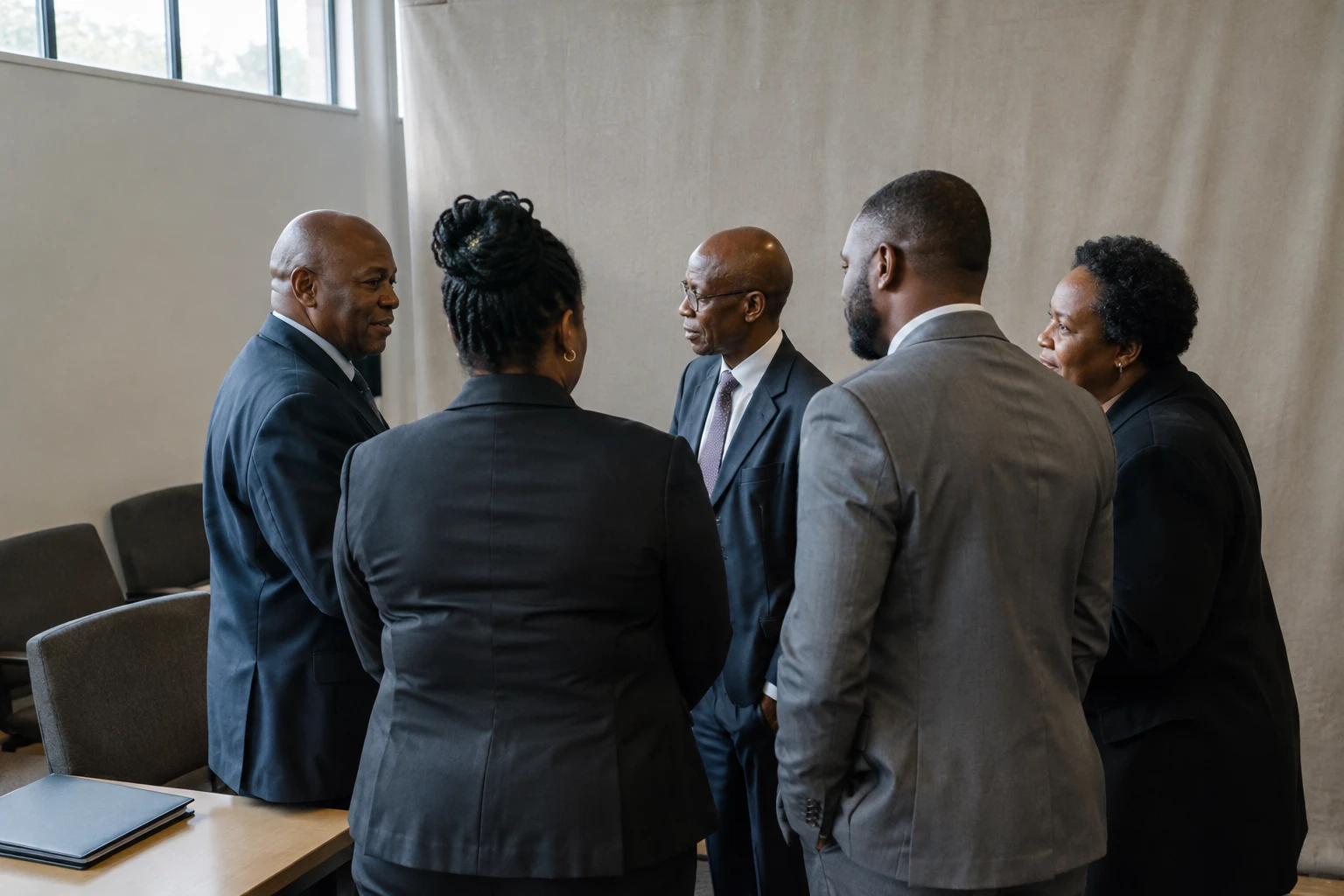
In South African cities, municipal results are also measured by a very practical question: who will be able to make local services work? Following the 4 November 2026 vote, the African National Congress (ANC) remains the country’s largest party, but its support has fallen further. Municipal councils, meanwhile, look set to be more fragmented.
A local election in a transformed political landscape
Municipal elections choose the councils responsible for services including water, electricity, waste and local planning. These issues have a direct impact on residents, from neighbourhoods in major cities to rural municipalities. South African voters went to the polls to elect their representatives for a five-year term, after the previous election, held on 1 November 2021.
The vote comes amid a political shift that began at national level. In 2024, the ANC lost its parliamentary majority for the first time since the end of apartheid. It subsequently formed a government of national unity with the Democratic Alliance (DA) and other parties. This alliance at the top does not eliminate competition between its members or tensions over how municipalities are run.
In southern Africa, South Africa is a member of the Southern African Development Community (SADC), which brings together states in the region. The municipal election does not directly change its regional commitments. It is, however, an important indicator of political stability and of local institutions’ ability to meet everyday needs.
ANC remains in the lead but fails to regain its former support
The Independent Electoral Commission announced the final results on Sunday 8 November. The ANC won around 31% of the vote and retained first place nationally. The DA secured nearly 25%. Exact figures published in reports differ slightly; these rounded results reflect the totals announced after the count. SABC News reports the results announced by the Electoral Commission.
This is the ANC’s weakest municipal election result since 1994. In 2021, the party won around 46% of the vote. The decline marks a further stage in the erosion of its support, following the loss of its parliamentary majority. It does not, however, mean that the ANC has ceased to be a major national force: it remains the largest party, but no longer has the same weight to govern alone.
Turnout stood at 52%, according to the Electoral Commission, compared with 45.9% in 2021. Some 29.2 million people were registered to vote. The higher turnout has therefore not translated into a return to the ANC’s previous scores. For voters, the election was also a way to choose between parties offering different responses to local governance problems.
The uMkhonto weSizwe (MK) party, founded in 2023 around former president Jacob Zuma, took part in municipal elections for the first time. It strengthened its presence in the political arena, particularly in KwaZulu-Natal. The Economic Freedom Fighters (EFF), led by Julius Malema, also stood in the election. The contest is therefore no longer simply a choice between the ANC and the DA.
Coalitions become a matter of everyday governance
In many councils, no party has enough seats to govern alone. Agreements will therefore have to be negotiated after the vote. Unlike the national government, these coalitions determine who runs each municipality and how elected representatives divide responsibilities. Their stability can affect the passage of budgets and the continuity of services.
The consequences vary by area. In major cities, negotiations concern complex networks and significant needs in transport, housing and electricity supply. In small municipalities and rural areas, administrative and financial capacity may be more limited. In both cases, residents will judge the new councils on visible results: accessible services, well-maintained facilities and transparent management.
The ANC faces a dual challenge. The party must understand why some of its voters have turned to other formations or stayed away from the polls in previous elections. It must also negotiate with political partners in councils where it cannot govern alone. The DA, for its part, will have to turn its gains into local influence and show it can govern beyond its strongholds.
Competition among opposition parties adds another dimension. The MK result shows that a new formation can mobilise a substantial electorate, particularly in some regions, without having an even presence across the country. National results therefore do not tell the whole story: the make-up and alliances of each municipal council will matter as much as the overall ranking.
A test for the future of South African politics
The election does not directly choose the next president. It nevertheless reveals the depth of the changes set in motion by the 2024 national elections. The ANC must now win support without being able to rely on an automatic majority. Its partners in the government of national unity are allies at the centre and competitors in cities and municipalities.
The next step will be the formation of municipal executives and the question of how long coalitions can hold together. The first months will show whether agreements lead to budgets and decisions capable of improving services, or whether they run up against rivalries between parties. It is at this level that election results will take on practical meaning for residents.
Within SADC and the African Union, the result is a reminder that historic dominance can erode at the ballot box, even when the party concerned remains the country’s largest. For South Africa, the issue goes beyond the ANC’s decline: it is about making local institutions work in a more competitive landscape. Trust will depend less on speeches than on councils’ ability to meet everyday needs.



