
 Algeria
 Egypt
 Libya
 Morocco
 Sudan
 Tunisia
 Benin
 Burkina Faso
 Cabo Verde
 Côte d'Ivoire
 Ghana
 Guinea
 Guinea-Bissau
 Liberia
 Mali
 Mauritania
 Niger
 Nigeria
 Senegal
 Sierra Leone
 The Gambia
 Togo
 Cameroon
 Central African Republic
 Chad
 DR Congo
 Equatorial Guinea
 Gabon
 Republic of the Congo
 São Tomé and Príncipe
 Burundi
 Comoros
 Djibouti
 Eritrea
 Ethiopia
 Kenya
 Madagascar
 Malawi
 Mauritius
 Mozambique
 Rwanda
 Seychelles
 Somalia
 South Sudan
 Tanzania
 Uganda
 Angola
 Botswana
 Eswatini
 Lesotho
 Namibia
 Zambia
 Zimbabwe
In Johannesburg, the campaign is also being fought in party corridors
Months before the local election, the ANC has chosen to control the pace rather than reveal the definitive face of its municipal campaign all at once. The ruling party wants to project a disciplined organisation, but the delay invites a reading that is more political than technical: in South Africa’s major cities, a candidate’s name matters as much as the platform they represent. And in Johannesburg, where voters judge first by water cuts, the state of the roads and the reliability of services, every internal hesitation immediately sends a signal to the public.
The context is weighty. In South Africa, local elections are due to be held between 2 November 2026 and 30 January 2027, with 4 November 2026 at the centre of the sequence being prepared by the ANC. The country is also emerging from a national reshuffle since the May 2024 general election, which imposed a coalition at the national level, while local government remains the main point of contact between the state and residents. In this context, SADC metropolises, in the Southern African Development Community, have become regional showcases for governance as well as battlegrounds for partisan politics.
The party unveiled shortlisted candidates, not its lead candidates
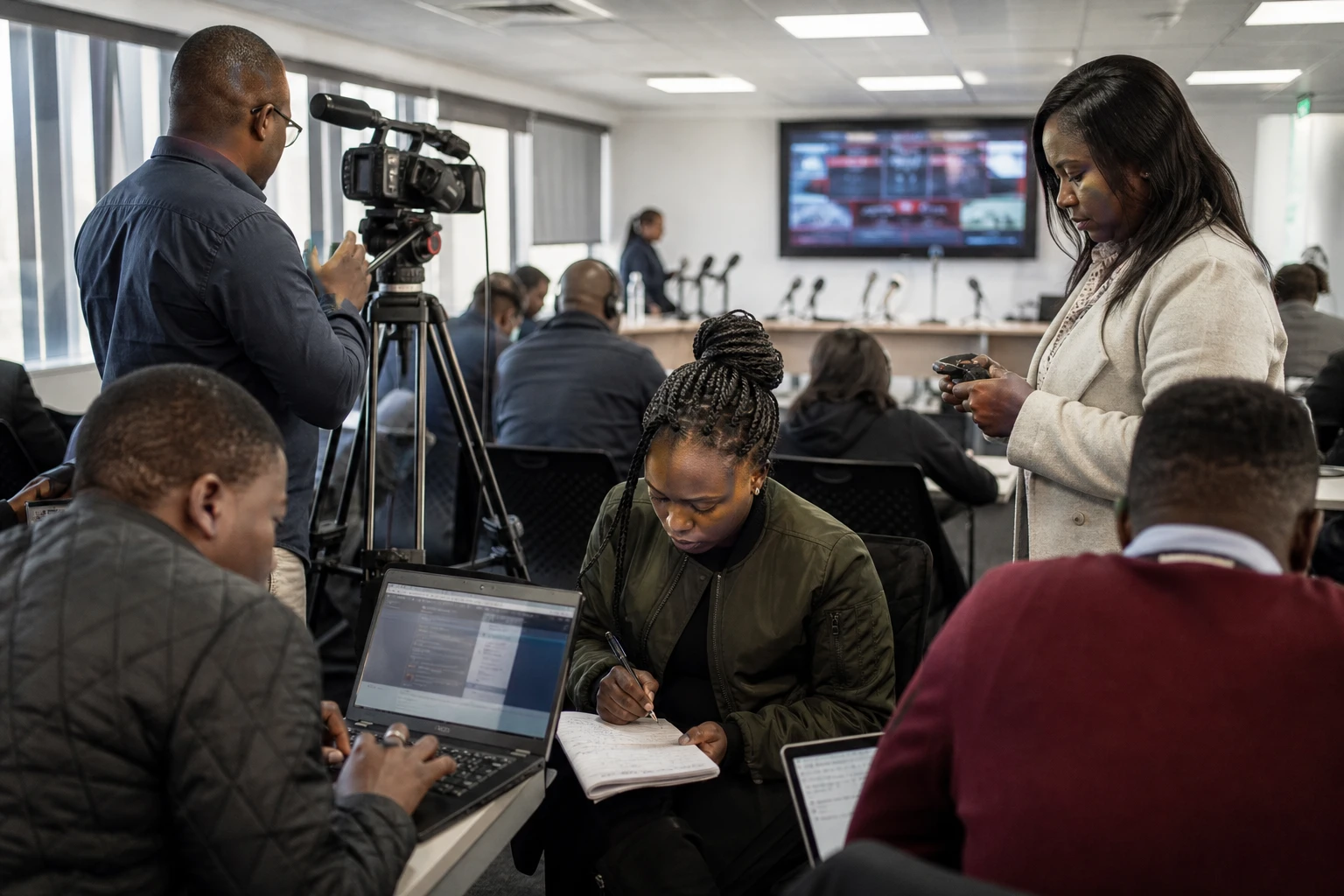
On Saturday 22 August 2026, the ANC had called a press conference to announce its candidates for metropolitan mayoralties. The event ultimately produced a partial admission about its strategy: Fikile Mbalula confirmed that the final selection would be postponed until September, while presenting the names already chosen in the internal process. The stated aim is to put the political organisation ahead of individuals. In practice, the party is above all acknowledging that it wants to avoid exposing its most sensitive decisions too early.
This choice is not insignificant. The ANC launched a public nominations portal as early as May to select candidates to lead the country’s eight metropolises and other strategic cities. The party also stated in its own documents that the process involved a centralised selection led by its national officials. In other words, the ANC wanted to demonstrate a more open method. But the postponement of the final decision shows that the process remains tightly controlled internally, especially when local balances of power are fragile.
In Johannesburg, tensions are more pronounced than elsewhere. The country’s economic capital remains a major test for the ANC, which governs there in a fragile municipal coalition and faces intense pressure over the quality of services. In May, the city presented a budget of 97.1 billion rand for 2026/27, with substantial sums allocated to Johannesburg Water and City Power, two key entities for water and electricity. The budget signals an ambition to turn things around, but it also confirms the scale of the repairs needed.
Johannesburg, a testing ground for municipal fragility
The debate over the candidate is therefore not limited to a rivalry between individuals. It says something deeper: the ANC is seeking a figure capable of holding together party discipline, the day-to-day management of a metropolis and a campaign in which the opposition has already gained ground. The names mentioned in the internal process, including Dada Morero, Loyiso Masuku and Frank Chikane, point to different readings of the same problem. Should the party reward continuity, back a face already familiar in local government, or seek a credibility boost with a more consensual figure?
The case of Johannesburg is particularly sensitive because it brings several fault lines together. The city’s finances are under pressure, its infrastructure backlog is substantial, and its residents expect visible results on water, waste, roads and street lighting. The municipal budget refers to reallocating funds to historically neglected neighbourhoods, but residents mainly measure the difference between promises and repeated outages. In this equation, the incumbent mayor and those around him are judged both on their record and on their ability to reassure an urban electorate that is more volatile than in the past.
The postponement of the final announcement could also be read as an attempt to prevent an open rupture before the campaign. Several South African media outlets have already reported internal tensions over Johannesburg, with factions watching and sizing one another up as the election approaches. In a party that remains powerful in parts of the country but is losing ground in major cities, even the slightest division can quickly exact a price at the ballot box. The ANC knows this. Hence this unusual caution, which looks less like a simple setback than a tight management of political risk.
What the delay says about the ANC, and what to watch
Beyond Johannesburg, this episode says something about the South African municipal campaign as a whole. The ANC is seeking to defend its image as a party of government at a time when it now governs at several levels with different partners. At the same time, it wants to retain top-down control over its candidates, while metropolitan voters expect concrete answers, not just displays of unity. The battle is therefore twofold: to win municipalities and to stop internal rivalries becoming the real issue in the election.
The continental significance is clear. In Southern Africa, where major cities carry considerable weight in growth, municipal management is becoming a major political marker. Johannesburg is not just a South African city; it is also an indicator of whether a historic party can renew itself without falling apart. The next steps are now clear: finalisation expected in September, the launch of a manifesto, then the final push towards the local vote. That is when the true balance of power will become clear, far beyond the name that emerges at the top.



