
 Algeria
 Egypt
 Libya
 Morocco
 Sudan
 Tunisia
 Benin
 Burkina Faso
 Cabo Verde
 Côte d'Ivoire
 Ghana
 Guinea
 Guinea-Bissau
 Liberia
 Mali
 Mauritania
 Niger
 Nigeria
 Senegal
 Sierra Leone
 The Gambia
 Togo
 Cameroon
 Central African Republic
 Chad
 Equatorial Guinea
 Gabon
 Republic of the Congo
 São Tomé and Príncipe
 Burundi
 Comoros
 Djibouti
 Eritrea
 Ethiopia
 Kenya
 Madagascar
 Malawi
 Mauritius
 Mozambique
 Rwanda
 Seychelles
 Somalia
 South Sudan
 Tanzania
 Uganda
 Angola
 Botswana
 Eswatini
 Lesotho
 Namibia
 South Africa
 Zambia
 Zimbabwe
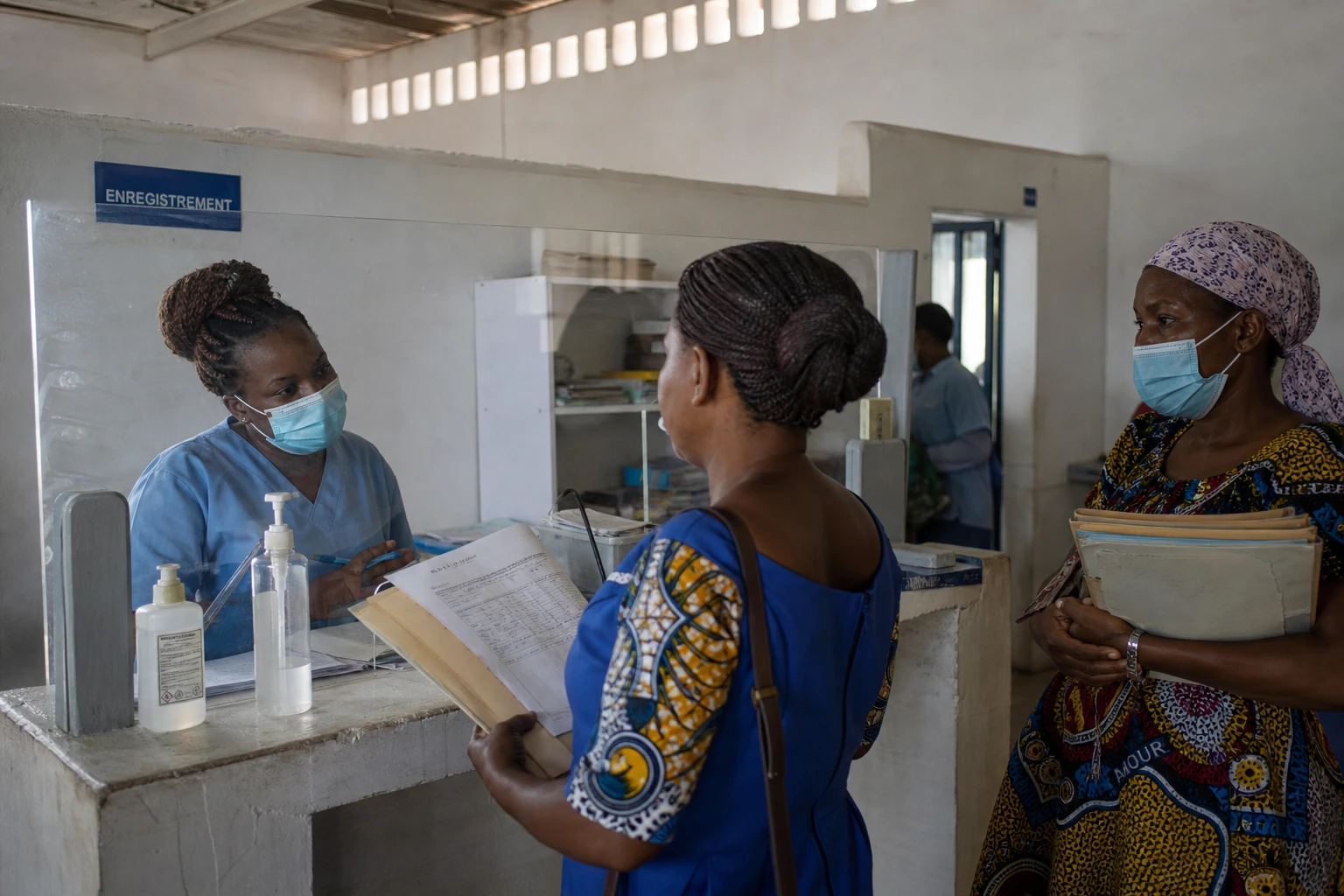
When treating patients without exposing others becomes imperative
In Ituri, the battle against Ebola is not being fought solely through tests and vaccines. It is also about how to provide care without turning a hospital into a danger zone. In Rwampara, in the Democratic Republic of the Congo, the answer lies in a transparent treatment unit designed to maintain human contact while improving safety for healthcare workers and patients.
This choice is not insignificant. The current outbreak, caused by the Bundibugyo Ebola virus, is the 17th declared in DR Congo since the virus was discovered in 1976. It began in Ituri before spreading to other areas in the country’s north-east, where movement, surveillance and access to healthcare remain complicated by insecurity.
Ituri, a health hotspot under pressure
Ituri is among the provinces in eastern DR Congo most exposed to health and security crises. In this area, health authorities, field teams and humanitarian partners have to contend with deteriorating roads, mobile populations and sometimes fragile trust in healthcare facilities. Regional coordination also matters: in spring 2026, DR Congo strengthened cross-border exchanges with Uganda and South Sudan to limit the risk of spread.
This response is part of a longer history. DR Congo has already experienced several Ebola outbreaks, including the 2018-2020 outbreak in the east of the country. And the memory of West Africa remains central: the 2014-2016 epidemic there caused more than 11,000 deaths, according to the World Health Organization. This precedent profoundly changed how treatment centres are designed.
The CUBE: biosafety and patient care
In Rwampara, the international NGO ALIMA is using a CUBE, an acronym for Biosecure Emergency Room for Epidemics. The idea is simple to explain, but more demanding to put into practice: create a self-contained, transportable and transparent unit where care can be provided with less exposure to the virus. The clear walls allow patients to see and communicate with their loved ones, limiting the absolute isolation often associated with conventional Ebola facilities.
The facility does not replace the entire medical system. It supplements it. ALIMA says the CUBE combines integrated gloves, continuous monitoring and remote care. The aim is to reduce the need for full personal protective equipment while maintaining a high standard of care. The organisation also says the solution can cut intervention costs by up to 75% compared with conventional facilities. This saving matters in a country where any delay in funding can slow the response on the ground.
The technological choice addresses a very practical constraint: during Ebola outbreaks, conventional treatment centres take time to set up, require a great deal of equipment and can discourage families. CUBEs were developed after the West African epidemic to better adapt care to highly contagious viruses. Their rationale is as much about the organisation of care space as it is about medicine.
What a facility like this changes
During an Ebola outbreak, the speed of diagnosis remains decisive. The longer results take, the greater the risk that the chain of transmission will grow. That is why the response in Ituri also relies on surveillance, the safe transport of samples and coordination with the National Institute for Biomedical Research, based in Kinshasa. Rwampara hospital is therefore not just a place of care; it is part of a broader national response system.
For healthcare workers, the challenge is clear: limit exposure without compromising the quality of medical care. For patients, especially the most vulnerable, the benefit is immediate. The system can accommodate cases requiring specialised care, including newborns and critically ill patients, broadening the scope of treatment. In an Ebola epidemic, this expanded access can make the difference between a triage facility and a genuine treatment centre.
For families, finally, the innovation has a less visible but essential significance. Isolation for health reasons must not become a total severing of ties. In Ebola centres, distance often fuels fear. Care that allows people to see, talk and offer reassurance also makes treatment easier to accept. This is a public health issue, but also one of dignity.
A Congolese response extending beyond Ituri
The Democratic Republic of the Congo is confronting this epidemic with accumulated expertise, but also with persistent vulnerabilities. The Ministry of Health monitors the outbreak daily and publishes regular situation reports. On the ground, OCHA and humanitarian funds support partners with rapid and flexible funding, to prevent administrative delays from obstructing a response already under pressure in the field.
The continental significance is clear. When an Ebola outbreak hits eastern DR Congo, it also concerns neighbouring countries in the Great Lakes region and, more broadly, Africa’s health architecture. Regional ministerial meetings, WHO alerts and the involvement of Africa CDC show that an epidemic never remains strictly local. It tests the flow of information, preparedness at borders and the ability of African health systems to act together.
In Rwampara, the CUBE therefore tells a story not only of technical innovation. It points to something broader about the response in DR Congo: the need to devise solutions compatible with realities on the ground, family ties, staffing constraints and the regional spread of the virus. That is where part of the future of the Ebola response in Central Africa will be shaped.



