Algeria
 Egypt
 Morocco
 Sudan
 Tunisia
 Benin
 Burkina Faso
 Cabo Verde
 Côte d'Ivoire
 Ghana
 Guinea
 Guinea-Bissau
 Liberia
 Mali
 Mauritania
 Niger
 Nigeria
 Senegal
 Sierra Leone
 The Gambia
 Togo
 Cameroon
 Central African Republic
 Chad
 DR Congo
 Equatorial Guinea
 Gabon
 Republic of the Congo
 São Tomé and Príncipe
 Burundi
 Comoros
 Djibouti
 Eritrea
 Ethiopia
 Kenya
 Madagascar
 Malawi
 Mauritius
 Mozambique
 Rwanda
 Seychelles
 Somalia
 South Sudan
 Tanzania
 Uganda
 Angola
 Botswana
 Eswatini
 Lesotho
 Namibia
 South Africa
 Zambia
 Zimbabwe
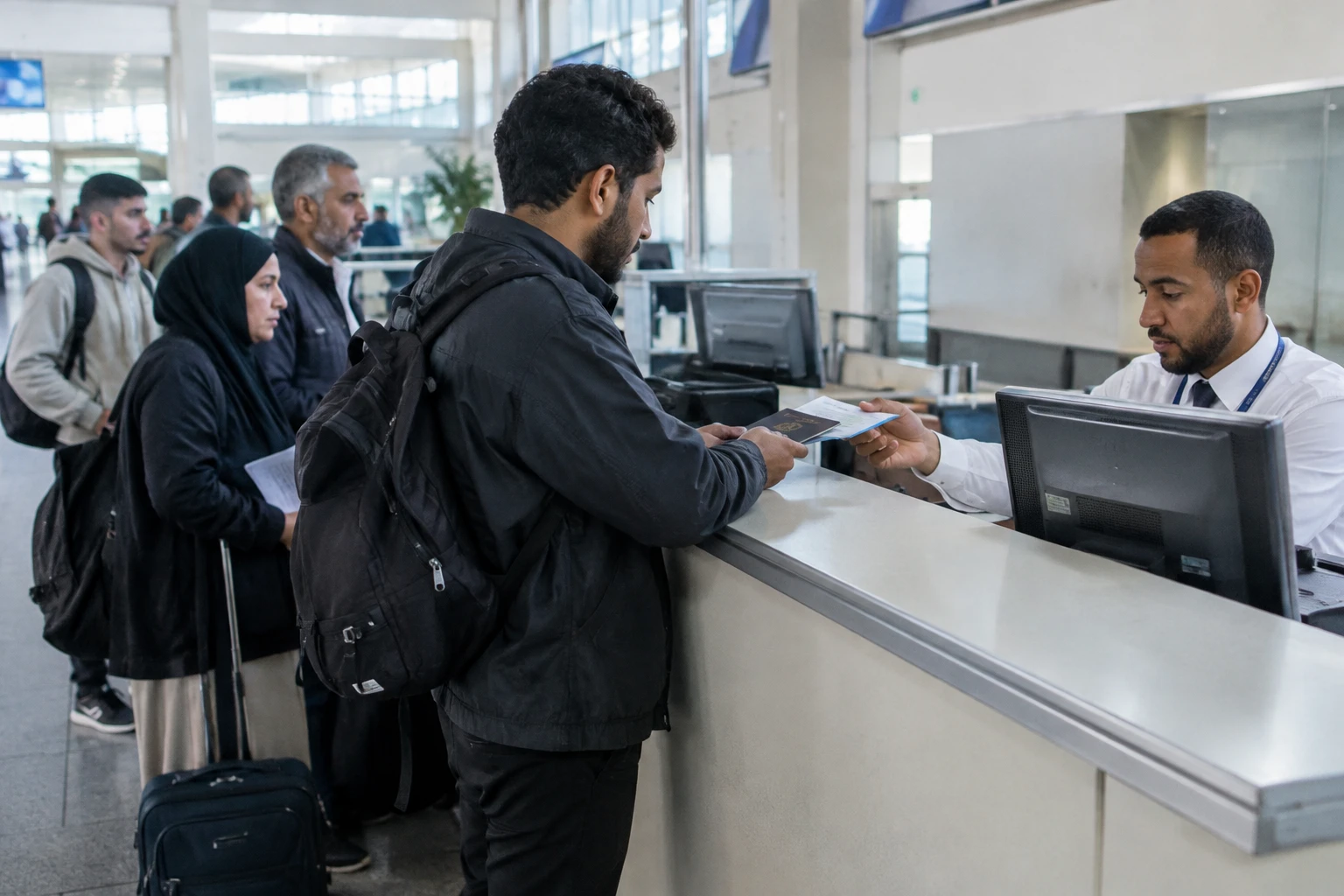
A direct flight between Algiers and Tripoli can shorten a journey, but its significance goes beyond passenger convenience. For Libya, where international air links remain fragile, each new service tests the country’s capacity to become a regional hub again.
A new link under agreements between Algiers and Tripoli
Air Algérie plans to resume flights to Mitiga Airport in Tripoli on Wednesday 28 October 2026. The airline is expected to operate two rotations a week, on Wednesdays and Fridays. The announcement was reported by the Algerian Press Service (APS), and the published flight schedules confirm the planned launch date. As with any airline schedule, the timetable may be subject to change.
The resumption is part of a bilateral framework prepared in the spring. On 12 April 2026, the Algerian and Libyan civil aviation authorities initialled an air transport agreement and signed a memorandum organising the return of services. The text provides for each designated airline to operate up to 14 passenger flights a week, with cargo flights also permitted. This ceiling creates a regulatory possibility; it does not mean that all these frequencies have already been scheduled.
For Air Algérie, Tripoli expands the African network served from Algiers. The Algerian capital can serve as a connecting point for other destinations, but the practical value will depend on schedules, fares and flight regularity. For Libyans, the link could facilitate travel to Algeria and connections beyond, particularly for business, family or administrative trips.
Gradual resumption in a country with divided institutions
Since the fall of Muammar Gaddafi in 2011, Libya has been marked by political divisions and periods of conflict. These tensions have affected infrastructure and the continuity of transport services. In Tripoli, Mitiga Airport handles a significant share of the capital’s flights, following the suspension of operations at the former international airport in 2014.
Air Algérie’s return is part of a series of phased reopenings. Turkish Airlines resumed flights to Mitiga on 28 March 2024, after an interruption of about ten years, according to Turkish and Libyan aviation authorities. The resumption shows that foreign carriers are prepared to return when operational and security arrangements are in place. However, on its own, it is not enough to establish lasting stability across the national network.
Infrastructure is also part of the challenge. In 2024, the Libyan Airports Authority announced discussions on the rehabilitation and development of Tripoli International Airport. This project is distinct from Mitiga: it reflects a broader effort to upgrade facilities, but its progress and impact will depend on funding, construction work and co-ordination between institutions.
European restrictions remain another factor. In a decision published in June 2026, the European Commission maintained restrictions on carriers certified in Libya, citing safety oversight conditions that did not justify removing them from the list. The measure applies to airlines certified in the country for their operations in the European Union. It does not block foreign carriers such as Air Algérie from flying to Tripoli.
Impact will depend on regularity
Two flights a week represent a measured resumption, not yet a transformation of the market. Maintaining the service will matter as much as launching it. Travellers need to be able to rely on the flights; businesses, meanwhile, assess journey times, costs and reliability before arranging regular exchanges.
The effects will also vary by location and group. Tripoli residents will benefit directly from access to the service, while people in eastern and southern Libya will often have to travel to the capital or use other hubs. Formal businesses will find it easier to incorporate the flights into work travel. For small traders and families, ticket prices and the availability of connections will carry greater weight.
The announced frequency remains below the ceiling set out in the Algerian-Libyan agreement. If demand holds up and operational conditions allow, the two countries therefore have room to expand passenger and cargo services. But that growth will require sustained co-ordination between aviation authorities, airport operators and airlines.
A North African signal that remains to be confirmed
Across the Maghreb, the link could strengthen exchanges between two neighbouring countries and connect Tripoli more closely to Algiers’ network of onward connections. It is also a reminder that the revival of regional mobility depends as much on agreements between states as on the security of facilities, air traffic control and operators’ confidence.
Progress will be measured against concrete indicators: whether flights continue after the planned launch on 28 October, whether frequencies increase, whether Libyan airlines open services and whether air safety oversight improves. For now, Air Algérie’s announced return is a limited step forward. Its significance will depend on regularity and its ability to become part of a more widely reconnected Libyan network.