Algeria
 Egypt
 Morocco
 Sudan
 Tunisia
 Benin
 Burkina Faso
 Cabo Verde
 Côte d'Ivoire
 Ghana
 Guinea
 Guinea-Bissau
 Liberia
 Mali
 Mauritania
 Niger
 Nigeria
 Senegal
 Sierra Leone
 The Gambia
 Togo
 Cameroon
 Central African Republic
 Chad
 DR Congo
 Equatorial Guinea
 Gabon
 Republic of the Congo
 São Tomé and Príncipe
 Burundi
 Comoros
 Djibouti
 Eritrea
 Ethiopia
 Kenya
 Madagascar
 Malawi
 Mauritius
 Mozambique
 Rwanda
 Seychelles
 Somalia
 South Sudan
 Tanzania
 Uganda
 Angola
 Botswana
 Eswatini
 Lesotho
 Namibia
 South Africa
 Zambia
 Zimbabwe
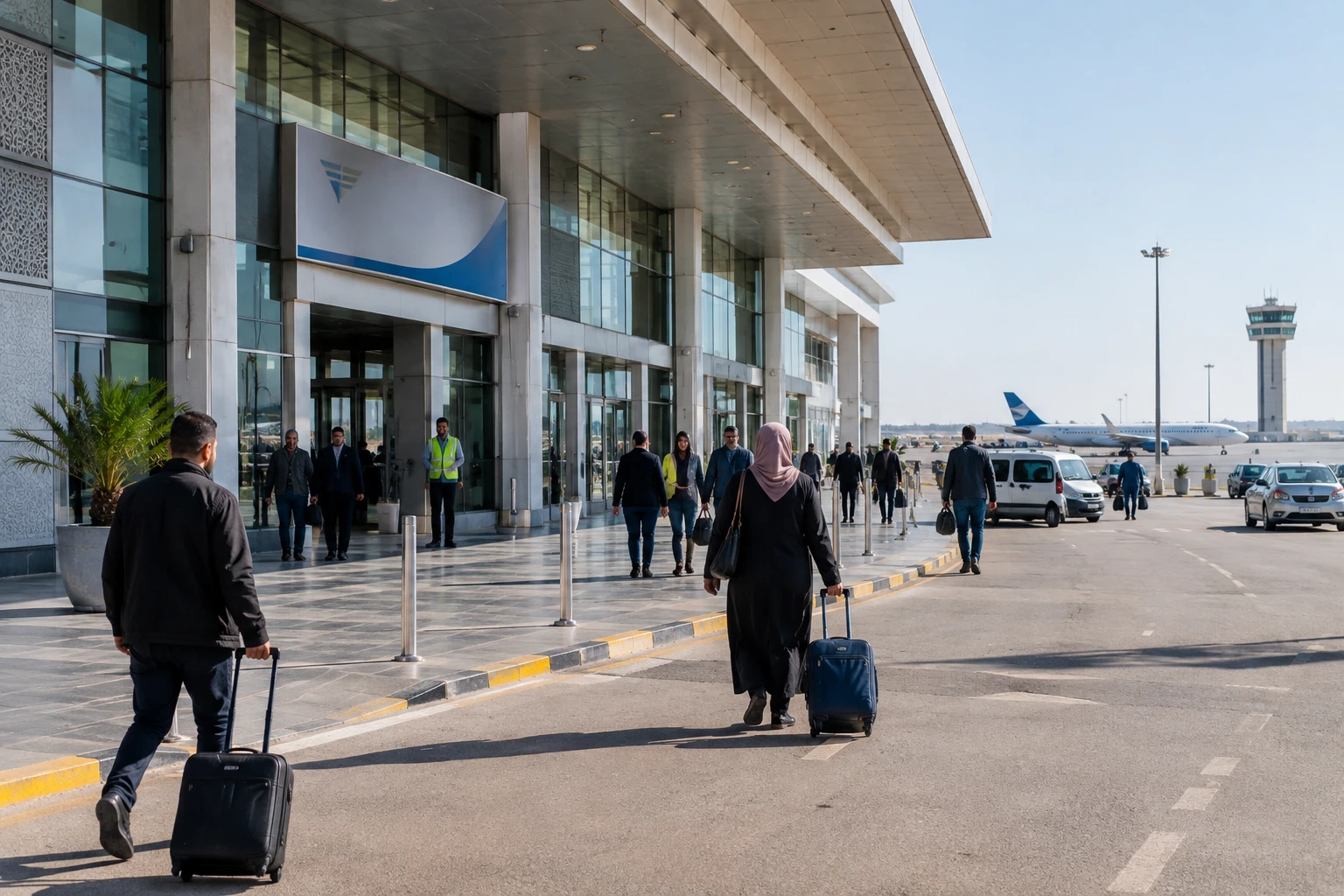
For travellers departing from Tripoli, the return of a route is measured not only by the number of seats available. It also depends on departure days, connections and destinations accessible without a detour. Since 28 October 2026, a new option has linked the Libyan capital directly with Algiers.
Algiers–Tripoli route restored
Air Algérie has resumed flights between Houari Boumédiène Airport in Algiers and Mitiga in Tripoli after more than 12 years of disruption. The first aircraft landed at Mitiga on Wednesday 28 October, a date confirmed by the Algerian Press Service and the Libyan News Agency.
The schedule announced by Libya’s Ministry of Transport provides for two weekly rotations, on Wednesdays and Fridays, using Boeing 737-800 aircraft. The airline is once again serving Libya, while Algiers is seeking to strengthen its role as a connecting platform, or “hub”, for travellers continuing on to other cities.
The route was suspended amid the 2014 security crisis, when operations were halted as the situation deteriorated rapidly. The resumption is based on an air services agreement concluded by the Algerian and Libyan authorities in April 2026. It restores a direct link between two neighbouring countries, but does not yet indicate how many passengers it will attract.
Competing routes, with different frequencies
Air Algérie is entering a market where several carriers already connect Mitiga with regional hubs. Turkish Airlines flies via Istanbul, EgyptAir via Cairo and Royal Jordanian via Amman. These connections give Libyan travellers options for reaching more distant destinations, but their appeal depends on schedules, fares and waiting times.
For London, routes listed by Google Flights in October show, among other options, two weekly services with Air Algérie and six with Royal Jordanian. These figures illustrate the difference in frequency for this destination, but are not a comprehensive record of all flights departing from Tripoli.
The comparison must also take direct routes into account. ITA Airways resumed its Rome–Tripoli service on 12 January 2025, according to Italy’s Ministry of Foreign Affairs. Travellers therefore do not depend solely on connections via Algiers, Istanbul, Cairo or Amman to reach Europe.
Libyan airlines nevertheless face a regulatory constraint. In its update of 9 June 2026, the European Commission kept carriers certified in Libya on the list of airlines banned from operating in the EU. The measure addresses shortcomings identified in the oversight of aviation safety by the Libyan authority. It does not apply to foreign carriers such as Air Algérie or ITA Airways.
Libya’s connectivity remains tied to regional dynamics
The resumption comes against a national backdrop of political and institutional divisions that have persisted since the fall of Muammar Gaddafi in 2011. Tripoli is home to the Government of National Unity, but the country’s authorities remain fragmented. In this context, continuity of air services depends as much on bilateral agreements and operational capacity as on commercial demand.
For travellers, a direct route can reduce detours and make journeys between Algeria and Libya easier. For businesses and government bodies, it can simplify exchanges and work-related travel. Passengers from regions far from Tripoli must first reach the capital and Mitiga, however, so the opening of a route does not guarantee equal access across the country.
The air network also reveals a relationship of dependence. As long as Libyan airlines cannot operate European routes, foreign carriers will retain an important role in the country’s international connections. This increases the importance of external transit hubs, while leaving Libyan authorities with the challenge of rebuilding regulatory confidence and strengthening safety oversight.
A resumption to be assessed over time
Air Algérie’s return adds a direct route and a new gateway to connections across its network. But two flights a week remain a limited offer alongside established operators and direct routes to some European cities. Schedules, operational reliability and aircraft load factors will show the route’s actual significance.
At regional level, the development affects links between the Maghreb and air networks in the Middle East and Europe. The next step to watch is less the announcement of a service than its consolidation: sustained frequency, demonstrated demand and verifiable progress in Libyan aviation oversight. For now, the resumption confirms that the Algiers–Tripoli link has been restored, but not yet its economic weight or its ability to transform Libya’s access to international destinations.
Sources consulted: Algerian Press Service on the inaugural flight, Libyan News Agency on the announced frequencies, European Commission on the air safety list, Italy’s Ministry of Foreign Affairs on the Rome route, Google Flights on Tripoli–London routes.