Egypt
 Libya
 Morocco
 Sudan
 Tunisia
 Benin
 Burkina Faso
 Cabo Verde
 Côte d'Ivoire
 Ghana
 Guinea
 Guinea-Bissau
 Liberia
 Mali
 Mauritania
 Niger
 Nigeria
 Senegal
 Sierra Leone
 The Gambia
 Togo
 Cameroon
 Central African Republic
 Chad
 DR Congo
 Equatorial Guinea
 Gabon
 Republic of the Congo
 São Tomé and Príncipe
 Burundi
 Comoros
 Djibouti
 Eritrea
 Ethiopia
 Kenya
 Madagascar
 Malawi
 Mauritius
 Mozambique
 Rwanda
 Seychelles
 Somalia
 South Sudan
 Tanzania
 Uganda
 Angola
 Botswana
 Eswatini
 Lesotho
 Namibia
 South Africa
 Zambia
 Zimbabwe
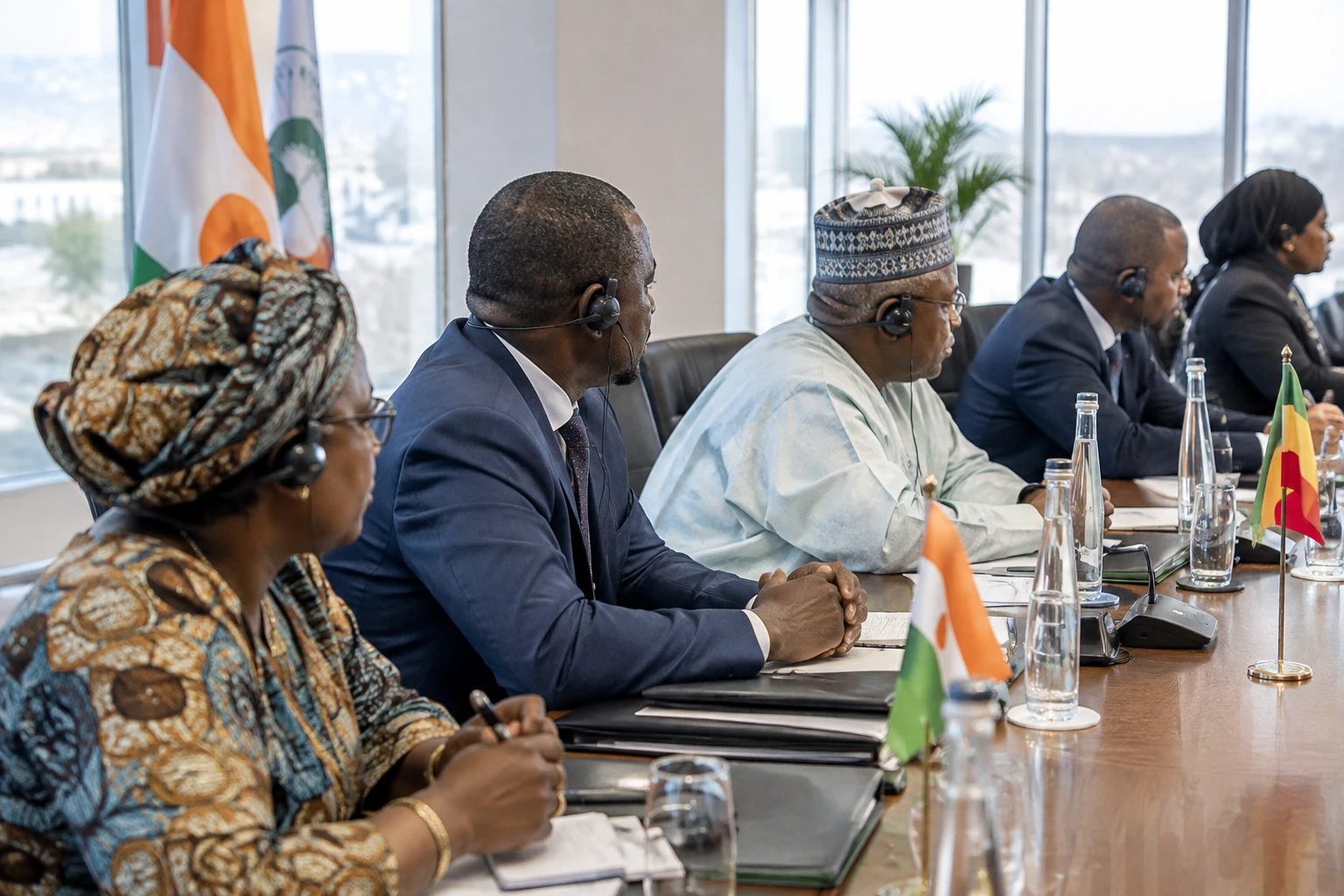
On the border between the Maghreb and the Sahel, protecting an energy project can now mean sending in soldiers. Algeria has crossed a significant threshold by authorising the deployment of military units to Niger, as the two countries strengthen their economic and security ties.
A strategic shift decided in Algiers
On 25 October 2026, both houses of the Algerian parliament approved the deployment of detachments from the People’s National Army to Niger. President Abdelmadjid Tebboune confirmed his decision the following day. The Algerian presidency says the mission is intended to protect shared economic and energy interests.
The vote marks a notable step for a country long committed to the principle of non-intervention beyond its borders. However, Algeria’s constitution, revised in 2020, provides for the possibility of sending units abroad, subject to parliamentary approval. Both houses have now given the green light to an option that had rarely been used.
The authorities have not disclosed how many soldiers are involved, where they will be deployed or how long the mission will last. Its operational scope therefore remains unclear. An Algerian senator said it would protect economic and oil infrastructure, but no details have been made public.
The decision follows the signing of a military co-operation protocol between the two countries in Algiers on 21 October. The text has not been disclosed. In August, after unrest within the Nigerien army in Niamey, Algeria had already sent four fighter jets to support Nigerien forces, according to the Algerian defence ministry. The new agreement gives the co-operation a more lasting framework, though its terms remain unknown.
Energy, borders and influence in the Sahel
The energy sector offers one concrete point of reference. Sonatrach, Algeria’s state-owned company, is involved in exploring the Kafra oil field in northern Niger. The Trans-Saharan Gas Pipeline project, meanwhile, is intended to transport Nigerian gas to Algeria across Niger. These infrastructure projects could strengthen regional trade, but their security also depends on conditions in areas far from the capitals.
For Algiers, the stakes therefore go beyond protecting a site or investment. Routes run through southern Libya and the borderlands of Niger, while armed groups and smuggling networks operate in a region of vast borders. Analysts quoted in the press have also pointed to the growing presence of forces linked to Khalifa Haftar in southern Libya. This is a strategic assessment, not a mission officially announced by Algiers.
The regional significance is also reflected in changing relations between Algiers and Niamey. Ties cooled in 2025 during a diplomatic crisis between Algeria and Mali. Niger, a member of the Alliance of Sahel States (AES) alongside Mali and Burkina Faso, recalled its ambassador at the time. Recent high-level visits and economic and military agreements point to a rapprochement, without removing the tensions running through the region.
The situation in Niger also shapes the calculations. The country has been governed by military authorities since the overthrow of President Mohamed Bazoum in July 2023. In August 2026, mutinous soldiers sparked clashes in Niamey. The army regained control, reportedly with the support of Russian forces. Algeria had then expressed its support for the Nigerien authorities. Its latest move therefore comes amid political and security fragility, rather than a stable environment.
Foreign forces in Niger subject to conditions
The deployment raises a procedural question in Niamey. Niger’s Charter of Refoundation provides that the temporary or permanent presence of foreign forces must be authorised by the president after a public consultation by referendum. In cases of proven urgency, an exceptional procedure allows authorisation by decree, following an opinion from the Consultative Council of the Refoundation (CCR), an advisory body for the transitional period.
The Nigerien authorities describe their co-operation with Algeria as a partnership between national forces. Yet the application of the Charter and the role of the CCR will be closely watched. The debate goes to the heart of the sovereignty claimed by the authorities in Niamey: can citizens and transitional institutions control the conditions under which a foreign force enters the country? So far, public announcements have not specified which procedure was followed.
The possible effects will not be the same for everyone. Securing infrastructure could reassure project partners and support energy trade. For people in the northern regions, it could also mean a greater military presence and more restrictions around transport routes. In urban centres such as Niamey, the immediate issue is the stability of institutions. The available information is not yet sufficient to assess the mission’s rules of engagement or oversight mechanisms.
A precedent watched beyond the two capitals
For Algeria, the vote turns a constitutional option into a concrete decision. It does not in itself mean an end to all military restraint: the authorities describe a mission limited to protecting shared interests. But without details of its mandate and duration, its real scope remains to be established. A short-term security mission would not have the same effects as a lasting deployment on Nigerien territory.
The issue is also of interest to other countries in the region. Niger, Mali and Burkina Faso have left the Economic Community of West African States (ECOWAS) and grouped together within the AES. Algeria belongs to neither ECOWAS nor the AES, but shares a long border with Niger and plays a diplomatic and energy role in North Africa and the Sahel. Its choice could therefore influence the balance between Sahelian authorities and external partners.
The next steps will be decisive: any publication of the mandate, the location and duration of the detachment, and clarification of the Nigerien procedure that authorised its presence. These will show whether Algiers intends to protect specific projects or establish broader security co-operation. For now, one thing is certain: Algeria has opened a new path, but its contours remain to be defined.