Egypt
 Libya
 Morocco
 Sudan
 Tunisia
 Benin
 Burkina Faso
 Cabo Verde
 Côte d'Ivoire
 Ghana
 Guinea
 Guinea-Bissau
 Liberia
 Mali
 Mauritania
 Niger
 Nigeria
 Senegal
 Sierra Leone
 The Gambia
 Togo
 Cameroon
 Central African Republic
 Chad
 DR Congo
 Equatorial Guinea
 Gabon
 Republic of the Congo
 São Tomé and Príncipe
 Burundi
 Comoros
 Djibouti
 Eritrea
 Ethiopia
 Kenya
 Madagascar
 Malawi
 Mauritius
 Mozambique
 Rwanda
 Seychelles
 Somalia
 South Sudan
 Tanzania
 Uganda
 Angola
 Botswana
 Eswatini
 Lesotho
 Namibia
 South Africa
 Zambia
 Zimbabwe
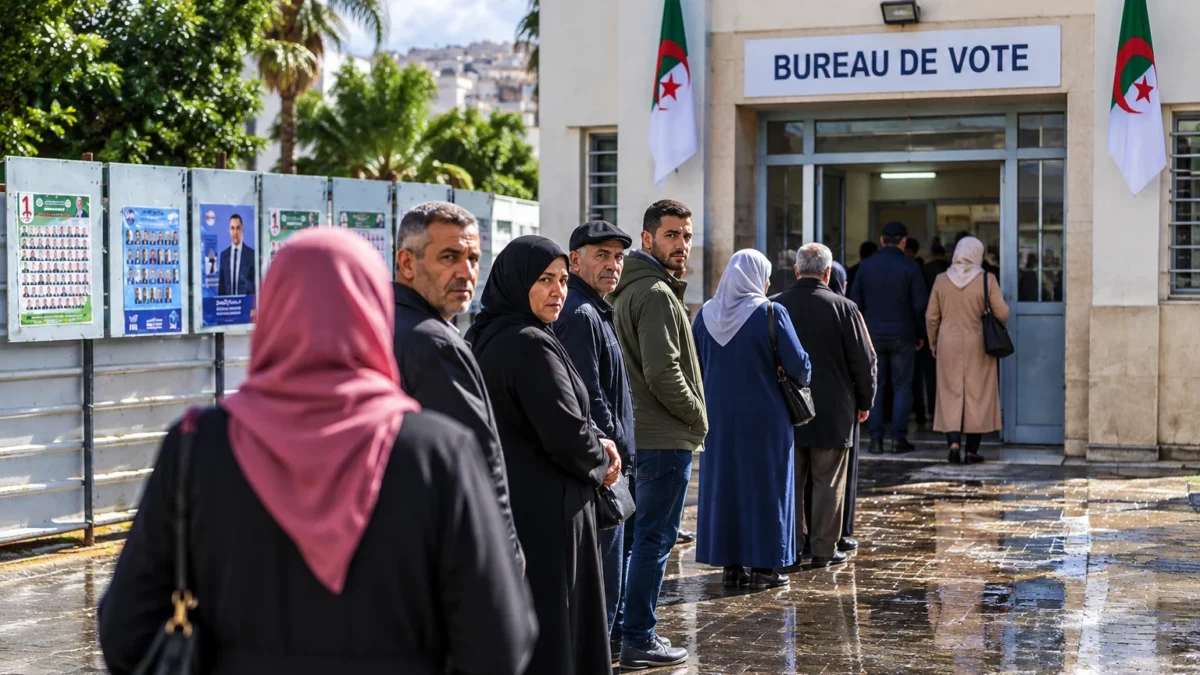
At municipal level, elected representatives’ choices affect everyday services: road maintenance, public facilities and development priorities. In Algeria, the local elections on 28 November will renew the assemblies responsible for these decisions, as the country’s new territorial map takes effect.
Local elections in redrawn territories
Algerians are electing members of the People’s Communal Assemblies (APCs) and People’s Wilaya Assemblies (APWs). The former represent municipalities; the latter sit at wilaya level, the country’s administrative divisions. The elections are to fill their seats for a five-year term.
The vote is part of a national electoral sequence marked by the legislative elections of 2 July 2026. President Abdelmadjid Tebboune called the electorate to the polls by presidential decree at the end of August. The National Independent Electoral Authority (ANIE) is overseeing the process. An exceptional revision of the electoral rolls took place from 6 to 17 September.
The vote also comes as a new territorial division takes effect. This changes the constituencies concerned and the allocation of seats. The renewal of the assemblies must therefore be seen both as an election and as the establishment of local institutions under a restructured administrative organisation. Algeria Press Service has highlighted the link between the vote and the new territorial division.
Many lists, competition to be assessed
According to figures from the ANIE reported on polling day, 24,236,959 voters are registered inside the country. This figure therefore does not represent the total number of voters living abroad. The election date and number of registered voters were also reported by Algerian media outlet TSA, which confirms that the previous local elections took place on 27 November 2021. The election timetable and the 2021 precedent.
The ANIE lists 6,052 competing lists: 428 for the APWs and 5,624 for the APCs. Of these, 5,765 are presented by political parties, 24 by coalitions and 263 by independent candidates. These figures describe the electoral field, but are not enough to establish the degree of effective pluralism or how voters have received the lists.
The candidacies include 87,995 people under 40, or 54.02% of the total reported by the ANIE. Women account for 19,327 candidacies, or 11.86%. Finally, 78,959 candidates, or 48.48%, have a higher education qualification. These proportions provide information about the profiles in the contest; on their own, they do not show what place these groups will occupy in the assemblies once the results are known.
The figures for lists and candidacies were published by the ANIE and reported by Algerian media outlet ABNews. As no second independent publication was found for each of these detailed figures, they should be understood as attributed official figures, rather than independently verified counts. Details of the electoral data attributed to the ANIE.
Decisions that directly affect residents
Local assemblies deal with practical issues, although their room for manoeuvre depends on their legal powers, available resources and relations with the administrative authorities. For residents, the quality of representation is measured in part by elected representatives’ ability to raise local needs and follow up on projects. Priorities differ from place to place: those of a large city such as Algiers are not the same as those of a rural municipality or a locality in the south.
The high number of young candidates could bring new profiles into the contest. It does not, however, guarantee either their election or their influence in the deliberative bodies. Similarly, the share of women among candidates is a reminder that access to local office remains a separate issue from the simple right to stand for election. The vote will show whether their presence on the lists translates into greater representation among elected members.
Turnout is another decisive indicator. A large electorate does not automatically mean strong mobilisation. Turnout, results by wilaya and the distribution of seats will provide more concrete evidence of the response to the vote and of which political forces will be able to influence local councils.
A test of governance beyond the ballot box
At regional level, Algeria is in North Africa and belongs to the Arab Maghreb Union, a regional co-operation organisation. Communal and wilaya elections are not a contest run by an economic community such as ECOWAS or SADC. Their regional significance lies instead in how a Maghreb state organises territorial representation and links national authorities with local authorities.
The new territorial division will make the first months of work for the renewed assemblies particularly important: setting up the councils, identifying priorities and aligning projects with the resources available. The significance of the vote will therefore not be summed up by the number of lists or the composition of the candidates. It will also depend on turnout, the distribution of seats and elected representatives’ ability to turn local concerns into decisions that are followed through.