Algeria
 Egypt
 Libya
 Morocco
 Sudan
 Tunisia
 Benin
 Burkina Faso
 Cabo Verde
 Côte d'Ivoire
 Ghana
 Guinea
 Guinea-Bissau
 Liberia
 Mali
 Mauritania
 Niger
 Nigeria
 Senegal
 Sierra Leone
 The Gambia
 Togo
 Cameroon
 Central African Republic
 Chad
 Equatorial Guinea
 Gabon
 Republic of the Congo
 São Tomé and Príncipe
 Burundi
 Comoros
 Djibouti
 Eritrea
 Ethiopia
 Kenya
 Madagascar
 Malawi
 Mauritius
 Mozambique
 Rwanda
 Seychelles
 Somalia
 South Sudan
 Tanzania
 Uganda
 Angola
 Botswana
 Eswatini
 Lesotho
 Namibia
 South Africa
 Zambia
 Zimbabwe
In Manono, in Tanganyika province, lithium has already entered the mining statistics of the Democratic Republic of Congo. But west of the operating site, the existence of a viable deposit remains to be proven. It is this gap between geological potential and confirmed wealth on which Lithium Africa’s latest bet rests.
A mining district in the midst of change
Manono lies in the south-east of DR Congo, far from the main export ports. The region was best known for tin and tantalum. It is now attracting companies seeking to secure lithium, which is used in batteries, among other things. This shift could broaden Congo’s mining base, but does not in itself guarantee that value will be added in the country.
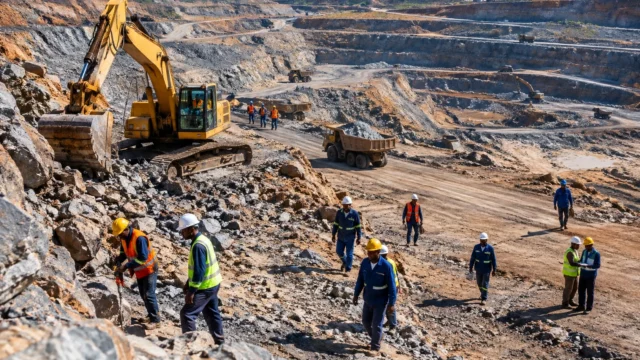
The change is already tangible. The Congolese Press Agency, citing provisional statistics from the Ministry of Mines, reports that Manono Lithium produced nearly 37,788 tonnes of concentrate in the third quarter of 2026, while exports reached about 12,932 tonnes. These administrative figures do not mean that the entire district is being mined: they relate to the Manono Lithium operation, which is majority-controlled by Zijin Mining, alongside state-owned Cominière and the Congolese state.
The first shipments of concentrate to China, reported in July, also highlight logistical constraints. The ore must reach distant export corridors. Electricity, roads and transport capacity will therefore weigh on the pace of development just as much as the quality of the subsoil.
What Lithium Africa’s agreement entails
On 27 November 2026, Lithium Africa announced agreements to take control of Sandstone Worldwide, which holds a stake in United Cominière, the holder of the Manono West permits. The initial amount announced is US$8.15 million. The company plans to increase its stake in Sandstone thereafter, which would bring its indirect interest in the project to about 48.5%, while giving it operational control.
The takeover has not yet been completed. It is dependent, among other things, on Congolese approvals, the planned financing and acceptance by the Toronto Stock Exchange’s Venture Exchange. Lithium Africa is aiming to close the deal in the first quarter of 2027. The company plans to raise between US$10 million and US$15 million to fund the transaction and initial activities. Glencore has announced a US$1 million investment; Ganfeng could contribute up to US$3.5 million.
The partners have different interests. Glencore is already active in copper and cobalt in DR Congo and has also funded commitments related to Manono West. Ganfeng, a Chinese lithium producer and Lithium Africa shareholder, would strengthen its presence in African exploration. Their support brings capital and industry experience, but also places the project at the intersection of international commercial interests and Congolese regulatory decisions.
Potential is not yet a resource
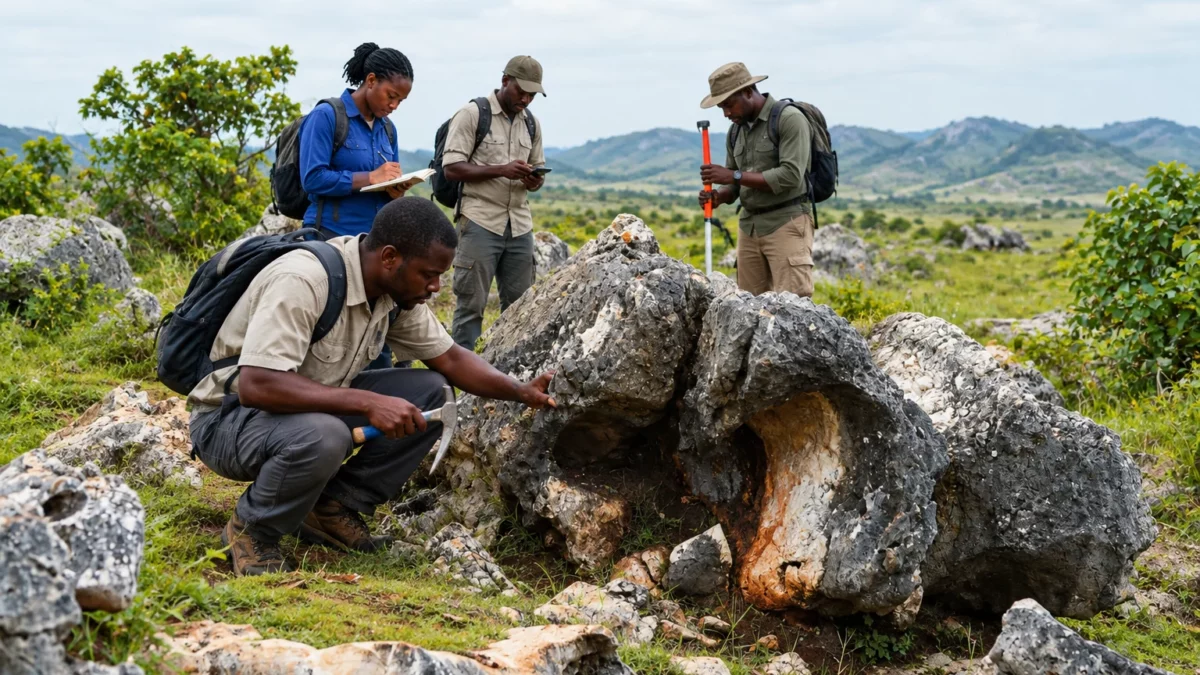
Manono West covers about 782 square kilometres, close to areas where lithium has been identified. Geophysical data collected in 2017 reportedly suggest that some rock formations could extend beneath the perimeter. Lithium Africa plans reconnaissance work, followed by drilling if initial analyses identify promising targets.
So far, no mineral resource estimate has been published for Manono West. Geographical proximity proves neither the presence of a mineable deposit nor its profitability. Drilling results, infrastructure costs, lithium prices and access to energy will determine whether the project can move beyond exploration. The company also says that lithium must be added to the substances authorised under the relevant permits.
Tin and tantalum are already being mined on one of the permits, at Lubule. Lithium Africa says the operation has produced about 94 tonnes of concentrate since the start of 2026 and is considering using its revenues to help fund exploration. But no public production or profitability forecast has been put forward. This activity therefore does not yet show that lithium exploration can finance itself.
Benefits to be measured beyond the announcements
For residents and local businesses, the issue is not simply the amount invested. The impact will depend on the jobs actually created, purchases from Congolese suppliers, public revenues and services mobilised around the project. Mining activities can also put pressure on land, water and infrastructure. At this stage, the announcement of an acquisition does not make it possible to assess these consequences.
DR Congo will need to monitor changes in control, developments in the permits and the publication of geological results. Transparency over Cominière’s and the state’s stakes, as well as investors’ obligations, will be crucial to assessing how benefits are shared. The government will also need to ensure that mining procedures are applied consistently to the different operators in Manono.
The project is part of regional and global competition for minerals associated with batteries. DR Congo, a member of the Southern African Development Community (SADC), is seeking to diversify an economy heavily focused on copper and cobalt mining. For countries in the region, the experience of Manono raises a shared question: how can extraction and exports be turned into lasting benefits, rather than simply supplying raw materials to external industrial supply chains?
The next step will therefore be less dramatic than a funding announcement, but more decisive in judging the project: obtaining permits, carrying out fieldwork and publishing verifiable results. Until those elements are in place, Manono West remains an exploration prospect, not a confirmed new lithium mine.