Egypt
 Libya
 Morocco
 Sudan
 Tunisia
 Benin
 Burkina Faso
 Cabo Verde
 Côte d'Ivoire
 Ghana
 Guinea
 Guinea-Bissau
 Liberia
 Mali
 Mauritania
 Niger
 Nigeria
 Senegal
 Sierra Leone
 The Gambia
 Togo
 Cameroon
 Central African Republic
 Chad
 DR Congo
 Equatorial Guinea
 Gabon
 Republic of the Congo
 São Tomé and Príncipe
 Burundi
 Comoros
 Djibouti
 Eritrea
 Ethiopia
 Kenya
 Madagascar
 Malawi
 Mauritius
 Mozambique
 Rwanda
 Seychelles
 Somalia
 South Sudan
 Tanzania
 Uganda
 Angola
 Botswana
 Eswatini
 Lesotho
 Namibia
 South Africa
 Zambia
 Zimbabwe
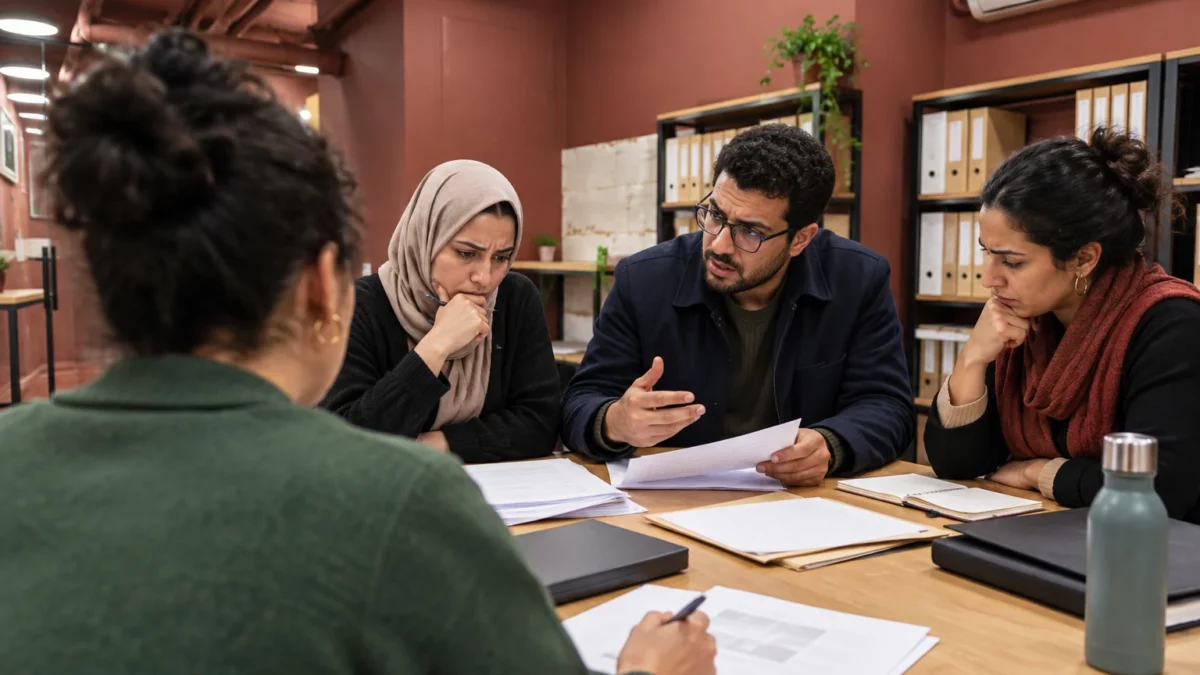
In Algeria, can an official award advance human rights if the organisations defending them contest the conditions in which they work? The question accompanies the creation of a new presidential prize, whose first award ceremony is scheduled for 10 December.
An annual competition run by the National Council
Presidential decree No. 26-365, signed by Abdelmadjid Tebboune on 16 November 2026, was published in the Official Gazette on 25 November. It establishes the “President of the Republic’s Human Rights Prize”, intended to reward research, work and initiatives to raise awareness of or promote human rights. The official text and the public news agency Algeria Press Service confirm its creation and arrangements.
The competition is open to Algerian citizens living in the country or abroad, as well as legal entities governed by Algerian law. The National Human Rights Council (CNDH), the body responsible for organising it, will publish the participation rules and put forward candidates. It may also submit work to the jury on its own initiative.
The award ceremony is to be held each year on World Human Rights Day, 10 December. The decree provides for three prizes: one million dinars for first place, 700,000 dinars for second place and 500,000 dinars for third place. Works must be submitted at least six months before the ceremony, according to the timetable to be published by the Council.
An award facing scrutiny over the state of civil liberties
The timing gives the prize symbolic significance, but does not dispel criticism of Algeria’s civic space. In its review of 2025, Amnesty International describes persistent restrictions on freedom of expression, peaceful assembly and association. The organisation cites, in particular, prosecutions of activists, journalists and trade unionists, as well as gatherings that were not authorised.
Human Rights Watch has also documented convictions of activists linked to social media posts and concerns about the legal framework governing associations. These organisations express their own assessments; their reports do not replace court rulings or responses from the Algerian authorities. They nevertheless provide independent context for understanding why an official award has prompted reservations.
The Algerian League for the Defence of Human Rights (LADDH), a long-established organisation, was dissolved by court order in 2022. The dissolution and its grounds are described differently by the authorities and the League’s defenders. Human Rights Watch and Amnesty International have called for the decision to be overturned, while the Algerian authorities cited issues relating to the association’s operations and statutes.
Saïd Salhi, a former LADDH vice-president who has taken refuge in Belgium, called the award “derisory” and “indecent”, according to remarks reported in the material on which this story is based. He believes that a celebration of human rights cannot be separated from the treatment of fundamental freedoms and their defenders. This is an activist’s assessment; it is not an independent evaluation of the competition, whose jury and criteria have yet to be specified.
The Council’s role will be scrutinised
The prize’s credibility will depend in part on how the CNDH selects the winners. The decree provides for a jury and states that its decisions are to be made according to rules set by the Council. It nevertheless gives the Council an important role in putting forward candidates and in the overall organisation. The jury’s composition, its assessment criteria and the transparency of its decisions will therefore be crucial in judging the scheme’s independence.
A public prize can raise the profile of research, human rights education or local initiatives. It can also encourage Algerian actors to document legal protections and the difficulties encountered in different regions of the country. But its reach will depend on the diversity of the entries selected and on whether independent organisations can take part without hindrance. Institutional recognition alone does not address the concerns raised about freedoms.
This issue plays out in a national context shaped by the aftermath of the 2019 Hirak, a protest movement that mobilised Algerians around calls for political change. Since then, the authorities have emphasised stability and national sovereignty; NGOs, for their part, have raised the alarm over limits imposed on certain forms of expression and organisation. Presenting these two perspectives helps to frame the debate without conflating official announcements, activists’ criticism and facts established by public documents.
An Algerian issue with regional resonance
Regionally, Algeria is part of North Africa and the Arab Maghreb Union (AMU), a cooperation organisation among Maghreb countries. The announced prize stems first and foremost from a national decision; no AMU mechanism is involved in awarding it. Its continental significance lies instead in the question it poses to African institutions: how can human rights be promoted while ensuring associations and critical voices have a genuine place?
The first milestone is approaching. On 10 December 2026, the ceremony will reveal the winners and provide an opportunity to observe how the rules set out in the decree are implemented. Beyond the financial awards, observers will be able to follow the jury’s composition, the range of work honoured and independent actors’ effective access to the competition. These concrete elements will determine the reach of the new prize.