Algeria
 Egypt
 Libya
 Sudan
 Tunisia
 Benin
 Burkina Faso
 Cabo Verde
 Côte d'Ivoire
 Ghana
 Guinea
 Guinea-Bissau
 Liberia
 Mali
 Mauritania
 Niger
 Nigeria
 Senegal
 Sierra Leone
 The Gambia
 Togo
 Cameroon
 Central African Republic
 Chad
 DR Congo
 Equatorial Guinea
 Gabon
 Republic of the Congo
 São Tomé and Príncipe
 Burundi
 Comoros
 Djibouti
 Eritrea
 Ethiopia
 Kenya
 Madagascar
 Malawi
 Mauritius
 Mozambique
 Rwanda
 Seychelles
 Somalia
 South Sudan
 Tanzania
 Uganda
 Angola
 Botswana
 Eswatini
 Lesotho
 Namibia
 South Africa
 Zambia
 Zimbabwe
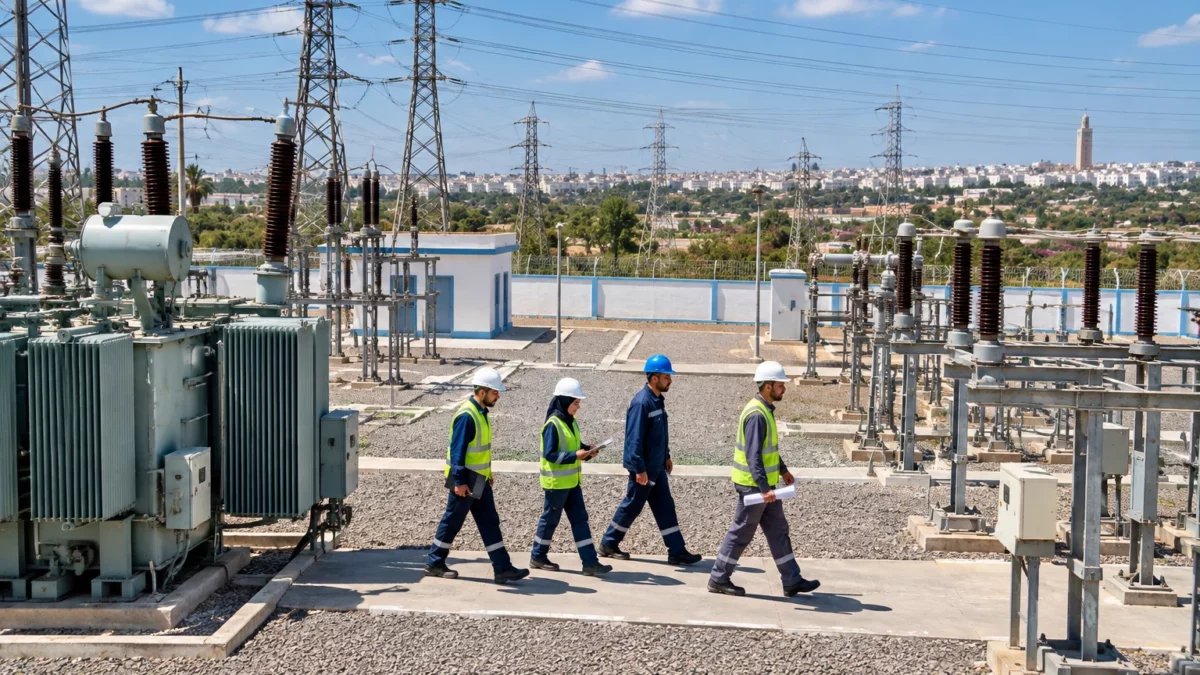
A solar power plant cannot keep a factory running if the grid cannot absorb its output. Morocco and several African partners put this link between energy, infrastructure and economic activity at the heart of discussions held in Rabat on 23 and 24 November 2026.
In Morocco, the challenge goes beyond electricity generation
The Huawei Northern Africa Inclusive Energy Summit, organised by Huawei and the Energy Federation, brought together public officials and energy sector stakeholders from several countries. Organisers had announced a meeting on access to reliable and affordable electricity, grid modernisation, storage and renewables. Morocco’s Ministry of Energy Transition confirmed the participation of African officials and financial partners.
The summit comes amid a significant shift in Moroccan energy policy. The kingdom aims for renewables to account for 52% of its installed electricity capacity by 2030. Installed capacity refers to the power plants can supply, not the actual share of electricity consumed that comes from renewables. According to data published in the Official Bulletin, renewables accounted for 45.3% of installed capacity in 2024. This gap between capacity and output is a reminder that the intermittency of solar and wind power, as well as electricity transmission, remain central challenges.
Morocco’s challenge is also one of energy security and industrial competitiveness. New capacity will deliver lasting benefits only if grids, storage and access rules keep pace. For businesses, a stable power supply can affect costs and continuity of production. For households and rural activities, the issue is instead the availability and price of the service.
From grids to end uses: what is at stake in the discussions
Discussions covered microgrids — small local systems capable of supplying a neighbourhood or an isolated site — and how they can be coordinated with the national grid. These solutions can complement large-scale infrastructure, particularly where grid connections are difficult. Their effectiveness, however, depends on funding, maintenance, local training and affordable tariffs. Equipment alone does not guarantee a lasting service.
Morocco’s ministry also presented energy inclusion as a matter of social and regional benefits. Minister Charafat Afailal referred to rural electrification, whose rate she said exceeded 99.9%, according to remarks reported by her department, and to the need to continue efforts through decentralised solutions and battery storage. This official figure should be distinguished from the quality and continuity of supply, which are not measured by connection alone.
Huawei, for its part, advocates integrating digital technologies and power electronics to manage grids. The company presents this approach as a way to improve stability and optimise supply. These are solutions offered by a private supplier: their suitability will depend on results on the ground, their cost and the ability of public operators to manage the systems deployed.
Remarks attributed to Equatorial Guinea’s Deputy Minister of Electricity, César Augusto Hinestrosa Gómez, and Guinean Energy Ministry Secretary-General Moussa Koulibaly highlighted another criterion: electricity must support health services, small businesses, learning and employment. These benefits require a regular supply, not merely an increase in installed capacity.
Regional cooperation and industrial benefits
Electricity interconnections can enable countries to trade energy and better balance supply and demand. But they require infrastructure, agreements between states and technical coordination. In the north of the continent, Morocco is connected to the European grid by submarine cables with Spain. For African energy integration, cross-border projects and cooperation between neighbouring countries remain crucial, but announcements still need to translate into funding and operational work.
Morocco is a member of the Arab Maghreb Union, a regional organisation in North Africa, although regional economic integration remains limited. Rabat is also seeking to strengthen its African partnerships through South-South cooperation. The summit highlighted this dimension, particularly through interconnections, experience-sharing and energy projects. Such exchanges, however, do not replace public cooperation frameworks or decisions taken by states.
The industrialisation being promised will also depend on the role given to local businesses and skills. Building and maintaining infrastructure can create economic activity, but the benefits are not automatic. They vary according to contracts, available training and the level of participation by domestic stakeholders. The question, therefore, is whether technology partnerships will transfer expertise and support African value chains, beyond the supply of equipment.
Implementation will be the test
The summit brought governments, power companies and industrial firms together around shared goals: access, reliability, renewables and modernisation. But the meeting alone does not establish which projects have been funded or what capacity will actually be installed. Morocco’s ministry said the country was preparing a new national energy strategy. The next steps — funding, timelines, connection rules and the role of operators — will show the discussions’ practical impact.
For Morocco, the challenge is twofold: accelerate investment while ensuring that energy supports local communities and the domestic economy. Across Africa, the same issue takes different forms depending on each country’s grids, resources and institutions. Regional cooperation can help secure supplies, provided projects genuinely connect electricity systems and address the priorities set by the countries concerned.