Algeria
 Egypt
 Libya
 Morocco
 Sudan
 Tunisia
 Benin
 Burkina Faso
 Cabo Verde
 Côte d'Ivoire
 Ghana
 Guinea
 Guinea-Bissau
 Liberia
 Mali
 Mauritania
 Niger
 Nigeria
 Senegal
 Sierra Leone
 The Gambia
 Togo
 Cameroon
 Central African Republic
 Chad
 Equatorial Guinea
 Gabon
 Republic of the Congo
 São Tomé and Príncipe
 Burundi
 Comoros
 Djibouti
 Eritrea
 Ethiopia
 Kenya
 Madagascar
 Malawi
 Mauritius
 Mozambique
 Rwanda
 Seychelles
 Somalia
 South Sudan
 Tanzania
 Uganda
 Angola
 Botswana
 Eswatini
 Lesotho
 Namibia
 South Africa
 Zambia
 Zimbabwe
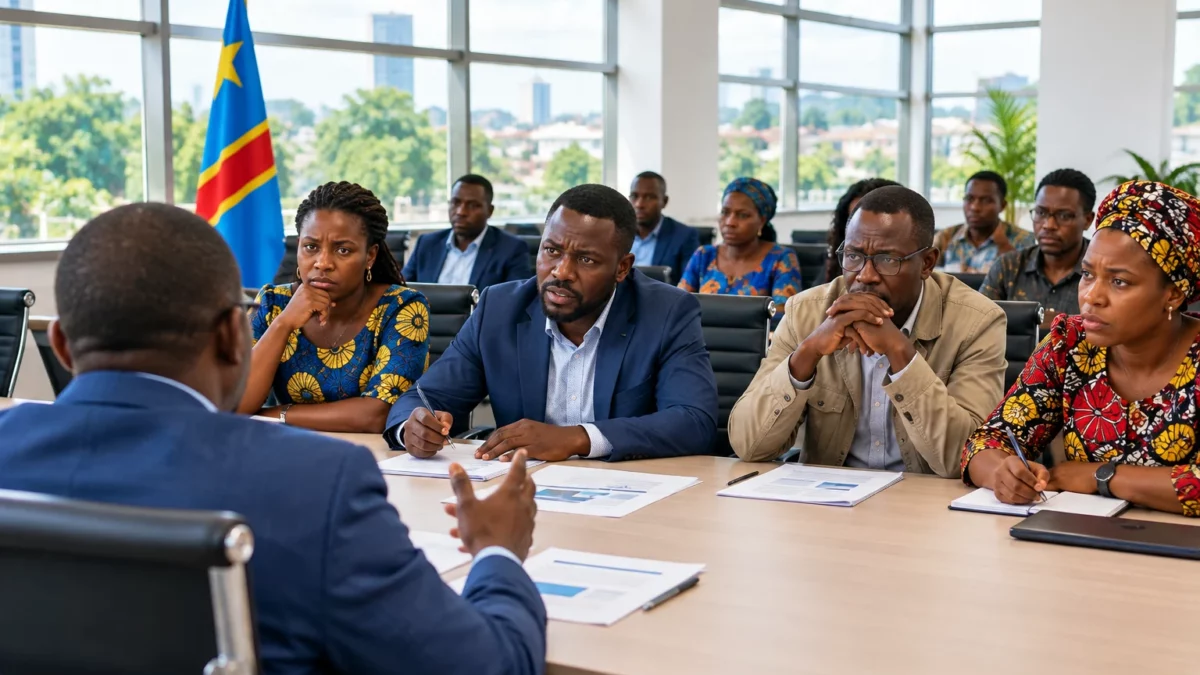
In Kinshasa, demanding accountability for military spending is both a matter of public debate and a delicate political balancing act. The controversy within the Union for the Congolese Nation (UNC) shows how the conduct of the war in the east is now weighing on relations between allies of the government.
A military question becomes a party debate
On 20 November 2026, at a political reflection day in Kinshasa, Vital Kamerhe called for a reassessment of the Congolese military strategy. The UNC president also called for an accounting of the sums spent on operations and questioned their results. In particular, he asked which cities had been retaken. His remarks, reported by several Congolese media outlets, were aimed at challenging President Félix Tshisekedi and those responsible for defence.
The issue touches on two imperatives that sometimes clash: maintaining unity around the forces deployed and allowing public scrutiny of the state’s actions. Kamerhe presented his criticism as a call for a change of approach and for accountability, not as a break with the head of state.
Eleven UNC officials, acting under the name “Current of the Conservatives”, distanced themselves from the intervention in a statement published on 25 November. They said these questions should have been debated within the party and majority’s bodies. They reaffirmed their support for Félix Tshisekedi and called on Kamerhe to retract his remarks. Signatories include MPs Jean Baudouin Mayo Mambeke, Gaborian Mboma Kumeza and Michel Moto Muhima.
The UNC leadership, however, challenged the legitimacy of this group, saying it was not an official party structure. This clarification matters: the statement reveals public dissent, but does not justify presenting it as a formal decision by the UNC as a whole. Secretary-General Billy Kambale, for his part, reaffirmed his support for Kamerhe, according to the Congolese press.
The war in the east, a national and regional issue
The Democratic Republic of the Congo faces persistent conflicts in its eastern provinces, particularly North Kivu and South Kivu. Fighting between the Armed Forces of the DRC (FARDC) and the Congo River Alliance and March 23 Movement (AFC/M23), as well as their respective allies, was still under way in the summer of 2026, according to the United Nations Secretary-General’s report. The clashes continue to threaten civilians and cause displacement.
Diplomatic efforts have not dispelled tensions. The Doha process includes a ceasefire monitoring and verification mechanism, while the Washington accords provide a framework for discussions between Kinshasa and Kigali on security issues. The UN reports that verification missions were carried out in Minembwe and Masisi Territory in August and September 2026. It also notes that fighting is continuing and political gains remain fragile.
The DRC is a member of the Southern African Development Community (SADC) and the East African Community (EAC). These organisations have been involved in regional efforts to address the crisis. Security in the east therefore goes beyond domestic politics: it concerns relations between neighbouring countries, population displacement and the credibility of African mediation mechanisms.
Transparency, loyalty and power dynamics
The controversy within the UNC is as much about the substance as about how the war is discussed. The signatories fear that public criticism of the military hierarchy could affect troop morale and national cohesion. Conversely, the call to assess spending and results raises the question of political oversight of the war effort. None of the statements published by the party provides figures for the spending Kamerhe referred to or a detailed account of military results.
For Congolese people living in conflict zones, the debate over strategy translates into immediate concerns about security, movement and access to services. In Kinshasa, it also takes the form of a discussion about leaders’ accountability and the use of public funds. This difference in experience is a reminder that a dispute among party officials does not sum up the concerns of the people affected.
Politically, Kamerhe faces a classic dilemma for an ally of the government: voicing criticism on the basis of his experience and his party, while avoiding its being interpreted as a break with the government’s line. The dissenting officials, meanwhile, are seeking to preserve a position of support for Tshisekedi and to challenge their president’s right to speak for the party alone on such a sensitive issue. For now, the disagreement is public, but the sources consulted report no disciplinary sanctions.
Internal dialogue, the UNC’s next test
The party leadership has favoured dialogue and disputed the signatory group’s status. A meeting or disciplinary process remains possible, but no outcome has been established at this stage. The episode will test the UNC’s ability to arbitrate its disagreements without conflating party discipline with debate over security policy.
At regional level, the issue extends beyond this political party. Ceasefires and verification mechanisms cannot deliver lasting progress without decisions followed by action and the tangible protection of civilians. In the coming months, attention will need to be paid to developments in peace talks, the situation on the ground and how the Congolese authorities account for their strategy. For the UNC, the first indication will be its response to dissenting officials and the space it allows for debate on the war.