Algeria
 Egypt
 Libya
 Morocco
 Sudan
 Tunisia
 Benin
 Burkina Faso
 Cabo Verde
 Côte d'Ivoire
 Ghana
 Guinea
 Guinea-Bissau
 Liberia
 Mali
 Mauritania
 Niger
 Nigeria
 Senegal
 Sierra Leone
 The Gambia
 Togo
 Cameroon
 Central African Republic
 Chad
 Equatorial Guinea
 Gabon
 Republic of the Congo
 São Tomé and Príncipe
 Burundi
 Comoros
 Djibouti
 Eritrea
 Ethiopia
 Kenya
 Madagascar
 Malawi
 Mauritius
 Mozambique
 Rwanda
 Seychelles
 Somalia
 South Sudan
 Tanzania
 Uganda
 Angola
 Botswana
 Eswatini
 Lesotho
 Namibia
 South Africa
 Zambia
 Zimbabwe
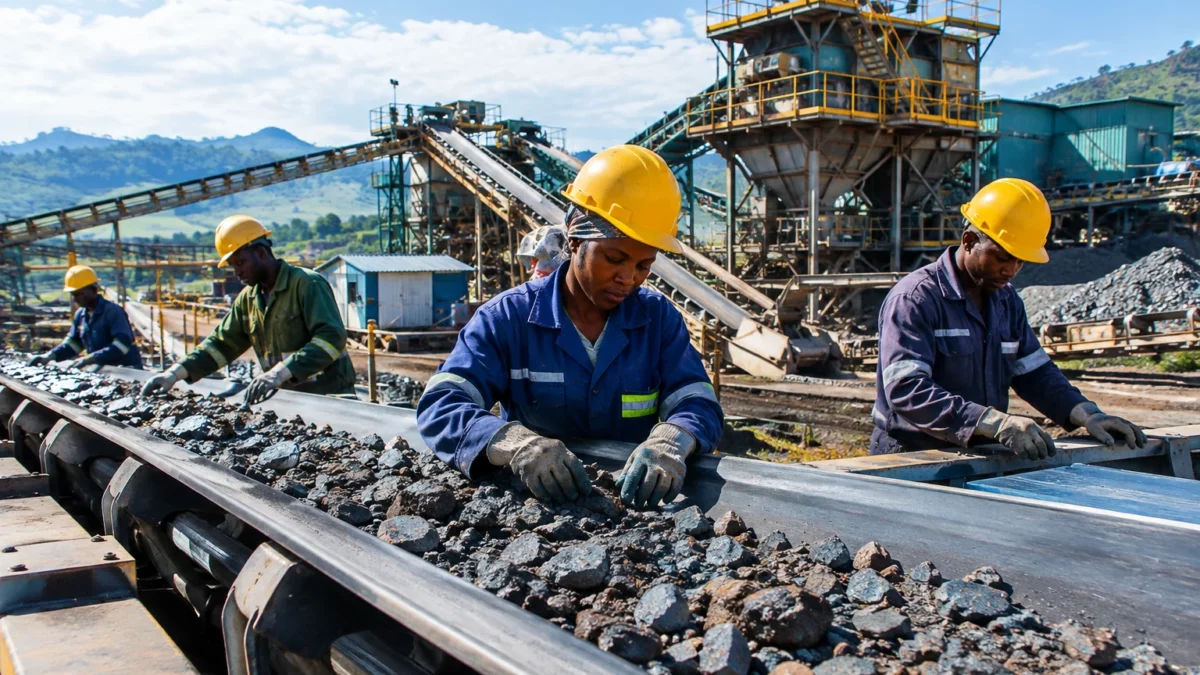
For the Democratic Republic of the Congo, cobalt is both a major export resource and a negotiating tool in global markets. But restricting sales alone does not guarantee higher revenues: everything will depend on how long the measure lasts, the stocks available and how buyers respond.
A market under pressure, from Kinshasa to industrial supply chains
Cobalt is used to make some rechargeable batteries and materials used by industry. The DRC is the world’s leading mined cobalt producer. Its export decisions can therefore affect the expectations of traders and manufacturers even before available volumes actually fall.
That influence is nevertheless exerted within a value chain in which extraction is only one stage. Congolese ore is processed and consumed internationally. Manufacturers can also draw on their stocks, adjust their purchases or change the composition of their batteries. Kinshasa’s power is real, but not absolute.
On 23 November 2026, the Regulatory and Control Authority for Strategic Mineral Substances Markets (ARECOMS) announced the temporary suspension of cobalt exports from 30 November. The Congolese public news agency ACP and business news outlet S&P Global report that the measure will remain in force until a new decision authorises exports to resume. It covers cobalt from different forms of mining, according to the statement carried by ACP. The ARECOMS statement carried by ACP sets 29 November as the deadline for export operations in the current month.
The regulator justifies its decision by citing falling prices, rising stocks and slowing global consumption. It also intends to review the quota mechanism introduced after the previous suspension. Volumes already allocated but not exported will not automatically be carried over, ACP says. The resumption of exports will depend on a new decision setting out the rules and authorised quantities.
The 2025 precedent highlights the limits of the lever
The measure recalls the export halt introduced in February 2025 in response to excess supply and low prices. After several extensions, Kinshasa replaced the suspension with a quota system from October 2025. The timeline is documented by the International Energy Agency, which records the decision and the shift to quotas. The timeline of Congolese cobalt measures puts that change into context.
The market then rallied, before the resumption of shipments under quotas helped ease supply. This sequence does not prove that a suspension automatically triggers a lasting price rise. Prices also depend on demand, stocks and the decisions of other producers. It does, however, show that Congolese announcements can shape expectations.
On 27 November, the market data provided put the three-month price at $44,300 a tonne, against $33,525 on Monday 23 November, a reported rise of 32%. Market information published the same day by Shanghai Metals Market also described prices strengthening after the announcement, while noting that some buyers were waiting for prices to stabilise before resuming purchases. Both suggest an immediate reaction, but are not enough to establish the price trajectory in the weeks ahead. The market update published on 27 November highlights the gap between rising prices and buyers’ caution.
Different effects for different players
For the Congolese state, reduced supply could support prices and strengthen the influence of national regulation. But a rise in prices does not automatically translate into a proportional increase in public revenues. The outcome will depend on the volumes actually exported, contracts, taxation and the length of the interruption.
Mining companies, meanwhile, must complete shipments before the deadline or hold back volumes while they await new rules. This uncertainty could weigh on their cash flow and planning. The impact on workers and mining communities will depend on how companies respond: the suspension applies to exports and does not, by itself, mean that all mining activity will stop.
Buyers have several options. They can use their stocks, delay orders or seek alternative supplies. Indonesia, which is expanding cobalt production alongside its nickel industry, is one producer to watch. In the longer term, manufacturers may also reduce the amount of cobalt used in some batteries or opt for other chemistries. A price surge that is too rapid could therefore curb the demand Kinshasa is seeking to secure greater value from.
A national decision with regional repercussions
The measure puts the DRC at the centre of a broader debate about the added value of strategic minerals. For Kinshasa, regulating exports is not just about price levels: it is also about gaining greater influence over commercial terms and the processing of resources. The challenge is to turn this mining clout into national benefits without simply shifting purchases to other producers.
At regional level, the decision is of interest to the economies of Central and Southern Africa, which are linked by mining corridors and cross-border trade. It also resonates with continental discussions on local processing and control of value chains. But the announcement comes from a Congolese authority: it does not, in itself, constitute a shared regional policy.
The next milestone will be a new ARECOMS decision. It will need to specify when exports will resume, under what quotas and according to which reallocation rules. In the meantime, prices, buyers’ stocks and developments in Indonesian supply will help show whether this pause genuinely rebalances the market or merely shifts supply sources.