Egypt
 Libya
 Morocco
 Sudan
 Tunisia
 Benin
 Burkina Faso
 Cabo Verde
 Côte d'Ivoire
 Ghana
 Guinea
 Guinea-Bissau
 Liberia
 Mali
 Mauritania
 Niger
 Nigeria
 Senegal
 Sierra Leone
 The Gambia
 Togo
 Cameroon
 Central African Republic
 Chad
 DR Congo
 Equatorial Guinea
 Gabon
 Republic of the Congo
 São Tomé and Príncipe
 Burundi
 Comoros
 Djibouti
 Eritrea
 Ethiopia
 Kenya
 Madagascar
 Malawi
 Mauritius
 Mozambique
 Rwanda
 Seychelles
 Somalia
 South Sudan
 Tanzania
 Uganda
 Angola
 Botswana
 Eswatini
 Lesotho
 Namibia
 South Africa
 Zambia
 Zimbabwe
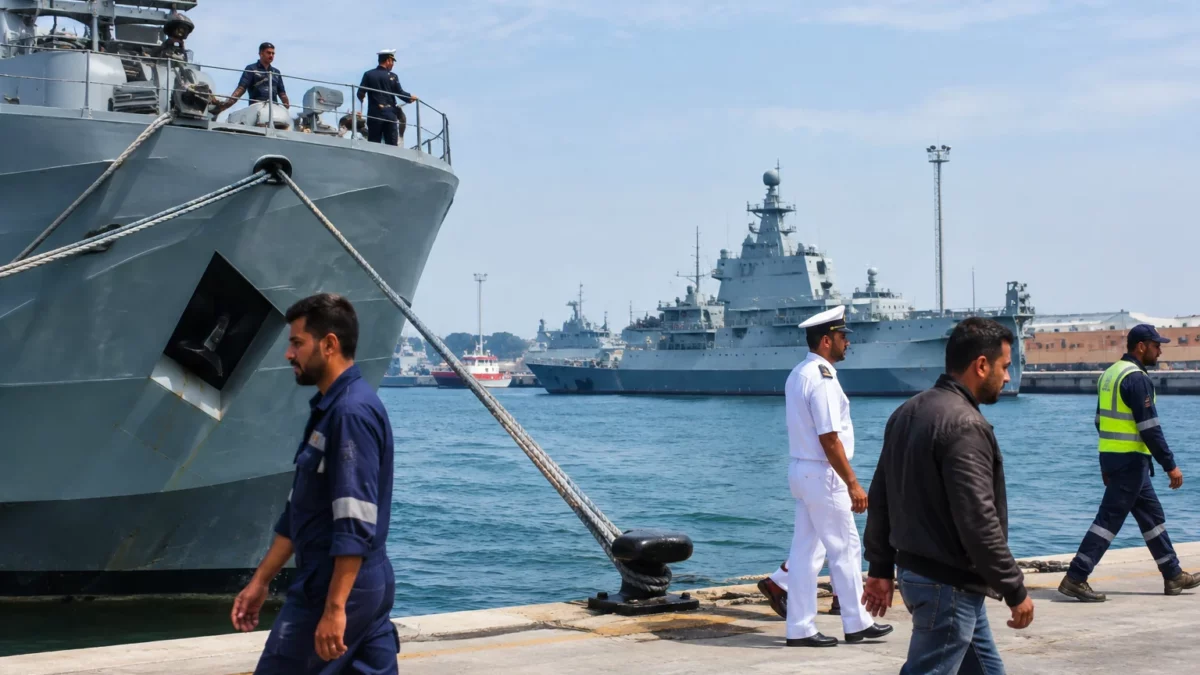
Russia’s war against Ukraine has crossed a geographical threshold, with drones striking Russian ships in Benghazi, in eastern Libya. For Algeria, Libya’s neighbour, the stakes go beyond maritime security: they concern the sovereignty of a divided country and the risk of its crisis becoming internationalised once again.
A Libyan conflict already shaped by foreign rivalries
Libya remains divided between rival authorities based in Tripoli and in the east of the country. Despite the 2020 ceasefire, institutions remain fragmented and foreign actors retain political and security influence. This division complicates the management of ports, armed forces and agreements concluded with external partners.
However, a diplomatic step forward was recorded on 30 August 2026. Under the auspices of the United Nations Support Mission in Libya (UNSMIL), Libyan representatives concluded an agreement aimed at restarting stages of the electoral process. The UN mission presented the text as progress towards national elections, but it does not end divisions between rival institutions. The Benghazi attack therefore comes as the country tries, without any guarantee of success, to reopen a political path.
For Algiers, the issue also concerns its immediate neighbourhood. Algeria and Libya belong to the Arab Maghreb Union, a regional organisation that also brings together Morocco, Mauritania and Tunisia. Weak regional cooperation makes common responses to cross-border crises all the more difficult.
What is known about the attacks
On Sunday 22 November, an explosion struck a Russian ship moored at the Benghazi naval base. Authorities in eastern Libya reported the incident. Ukrainian President Volodymyr Zelensky later said that Ukraine had carried out an operation with naval drones against a Russian corvette, the Merkury. Kyiv also claimed an attack on a Russian cargo ship, the Angara, off the coast of Libya.
Available information distinguishes between the two incidents: the corvette was struck in the port of Benghazi, while the cargo ship was reportedly targeted at sea. Several international media outlets reported that the Merkury had sunk or capsized. The extent of the damage to the cargo ship and the precise circumstances of each attack remain less clearly established. It is therefore important to distinguish between reported facts, Ukrainian claims and statements by local authorities.
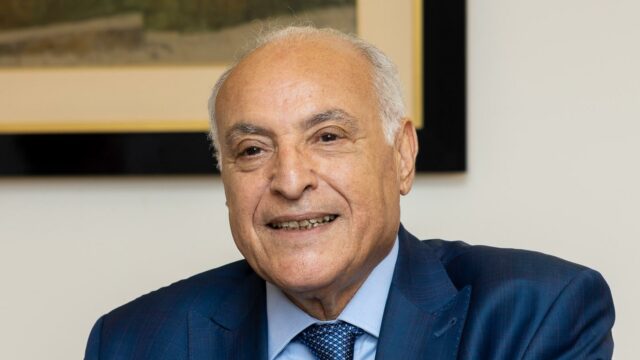
On 26 November, at a press conference in Algiers, Algerian Foreign Minister Ahmed Attaf said: “We do not accept the war between Russia and Ukraine spreading to our region.” He condemned the attacks, describing them as a violation of Libya’s sovereignty and an assault on its territorial integrity. He also called for a political solution and unified Libyan institutions, without foreign interference.
These remarks were reported by Algeria’s APS news agency and the Algerian media outlet TSA. The Ukrainian claim and the attack on the ship in Benghazi were also reported by the Associated Press. These corroborating reports confirm the main points, without publicly establishing all the operational details.
Algiers treads carefully amid the risk of escalation
The position expressed by Ahmed Attaf combines two principles: opposition to the war spreading across the region and defence of Libya’s sovereignty. It does not amount to support for Moscow’s objectives. Rather, it emphasises the consequences of a military operation carried out on the territory or in the waters of an already fragile country, whatever justification its perpetrator may offer.
Algeria’s top diplomat also drew parallels between the Libyan and Sahel crises. In his view, external interference fuels Algiers’ concerns in both regions. This interpretation is consistent with a foreign policy that places considerable importance on the stability of neighbouring countries. It also reflects a geographical reality: a deterioration in Libya’s security could complicate efforts to control borders and relations with Sahel countries.
The effects of an escalation would not be limited to the authorities or armed groups. Libya’s population, already facing divided institutions and unevenly administered public services, risks greater uncertainty if tensions reignite fault lines. Economic actors, particularly in ports and trade-related sectors, could also be affected. For neighbouring countries, the risk is less that the fighting will automatically spread than that pressure on borders and trade routes will increase.
Algeria’s diplomatic context is itself strained. On 10 September 2026, Algiers announced that it was severing diplomatic relations with the United Arab Emirates, a decision confirmed by APS. Ahmed Attaf has also denounced foreign interference in the Sahel. These developments shed light on the sensitivity of Algerian diplomacy to external rivalries, but are not enough to establish a direct link between the severing of ties and the Benghazi attacks.
What happens next will also depend on Libya’s political process
The incident’s regional significance will depend on what follows. A new confrontation over the foreign military presence could complicate efforts to bring the authorities in Tripoli and the east closer together. Conversely, keeping political channels open and implementing the steps agreed under UNSMIL’s auspices would provide a framework for addressing disagreements without deepening the division.
Algiers’ message thus reflects a broader concern in North Africa: preserving states’ ability to decide on their own security without becoming the stage for conflicts originating elsewhere. But calls for sovereignty will remain fragile as long as Libyan institutions are not reunified and local actors lack an accepted political framework. For now, Algeria’s condemnation sets out a diplomatic position; it resolves neither the operational responsibility for the attack nor the divisions that leave Libya vulnerable.
Ahmed Attaf’s remarks as reported by APS · Algeria’s response as reported by TSA · Associated Press reporting on the Benghazi incident · The Libyan political agreement announced by UNSMIL