Egypt
 Libya
 Morocco
 Sudan
 Tunisia
 Benin
 Burkina Faso
 Cabo Verde
 Côte d'Ivoire
 Ghana
 Guinea
 Guinea-Bissau
 Liberia
 Mali
 Mauritania
 Niger
 Nigeria
 Senegal
 Sierra Leone
 The Gambia
 Togo
 Cameroon
 Central African Republic
 Chad
 DR Congo
 Equatorial Guinea
 Gabon
 Republic of the Congo
 São Tomé and Príncipe
 Burundi
 Comoros
 Djibouti
 Eritrea
 Ethiopia
 Kenya
 Madagascar
 Malawi
 Mauritius
 Mozambique
 Rwanda
 Seychelles
 Somalia
 South Sudan
 Tanzania
 Uganda
 Angola
 Botswana
 Eswatini
 Lesotho
 Namibia
 South Africa
 Zambia
 Zimbabwe
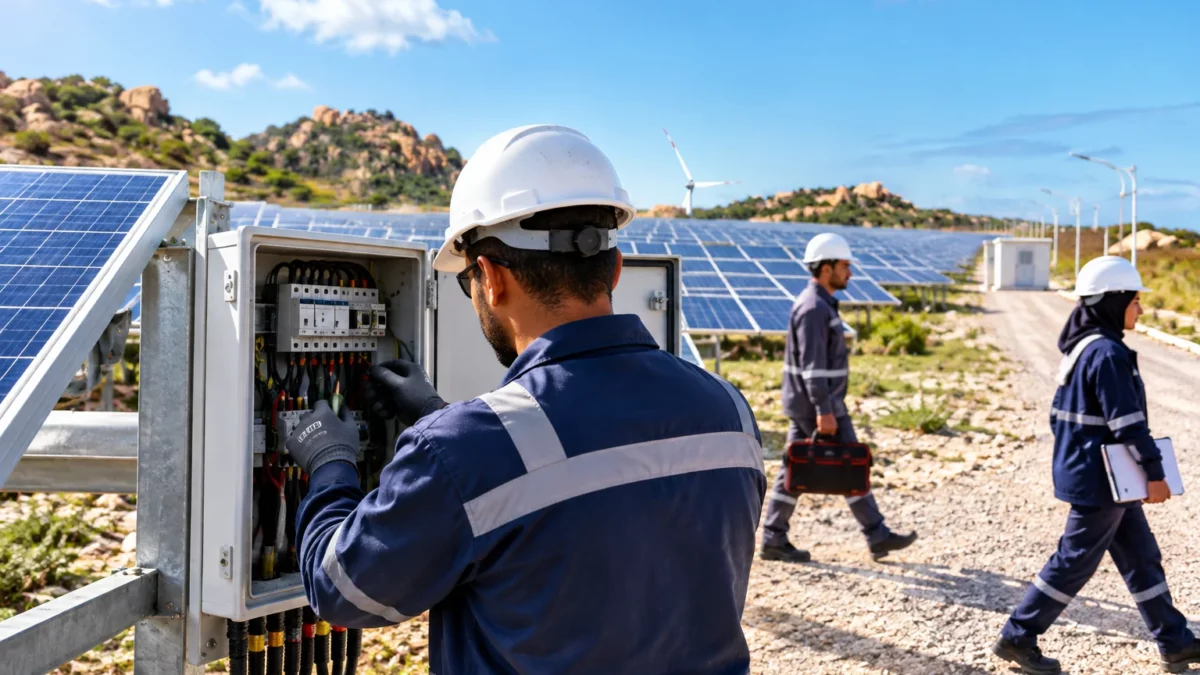
A battery plant is more than an assembly line. It requires materials, skills, suppliers and sustainable markets. For Algeria, the project announced in Algiers is therefore testing a broader ambition: to turn resources and energy into high-value industrial products.
An industrial ambition beyond hydrocarbons
Algeria’s economy remains heavily tied to hydrocarbons, which account for a major share of its export revenues. Developing a battery industry could help diversify this base. But announcing a plant does not yet mean that a complete industry exists: investment, timing, suppliers and the skills involved will all need to be specified.
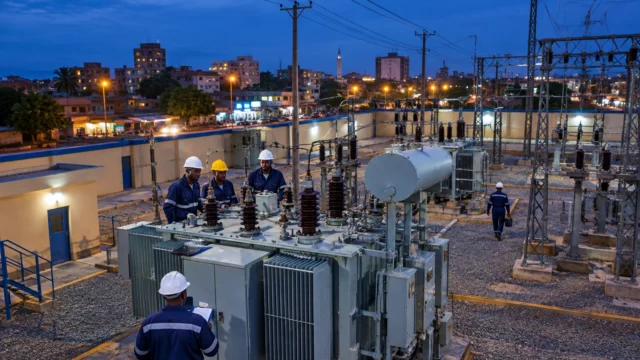
The project also comes amid a changing energy landscape. Batteries can power electric vehicles, but they can also store electricity generated from renewable sources. This storage helps balance the grid when solar or wind power output varies. For households and businesses, however, the benefits will depend on the uses chosen, costs and equipment availability.
In North Africa, these industrial choices are being made in a region shaped by limited trade and difficult political relations between neighbours. The Arab Maghreb Union, which brings together Algeria, Morocco, Tunisia, Libya and Mauritania, has not managed to build a fully integrated regional market. Companies will therefore have to contend with borders, trade rules and national supply chains, as well as external demand.
A project launched, but still to be defined
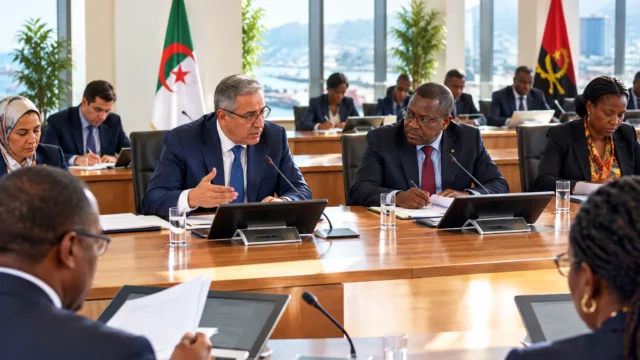
On 23 November 2026, President Abdelmadjid Tebboune chaired a meeting in Algiers devoted to launching the lithium battery plant project. He tasked Karim Zaghib, an Algerian-Canadian battery specialist and researcher, with studying and monitoring its technical and technological stages. The Ministry of Energy and Renewable Energy will oversee the project through Sonelgaz International, according to the announcement by Algeria Press Service.
Karim Zaghib referred to a capacity of 5 gigawatt-hours, or GWh. This unit measures an amount of energy, not an installation’s instantaneous power. The batteries would serve both electric vehicles and electricity storage. The researcher also mentioned lithium iron phosphate (LFP) chemistry: it uses iron and phosphate, among other materials, to make the cathode, an essential battery component. These details were reported by APS in French.
At this stage, the public information consulted does not specify the plant’s location, cost or construction schedule. Nor does it detail what share of the raw materials would be extracted or processed in Algeria. The announced capacity gives an initial indication of the scale envisaged, but is not, on its own, enough to assess actual output or the project’s economic viability.
Another challenge will be linking the plant to upstream activities. The announcement refers to processing a mixture of iron and phosphate into cathode material. This does not mean that all components, including lithium, will be of Algerian origin. Local material availability, processing, necessary imports and recycling will need to be clarified as the studies progress.
Regional competition demands tangible results
Morocco is also advancing in this industry. The African Development Bank announced in July 2026 €100 million in financing to support a battery plant in Kenitra, led by Gotion Power Morocco. The project includes a stated capacity of 20 GWh and the production of cathode materials. The gap with the 5 GWh mentioned for Algeria gives a sense of the ambitions on display, but the two projects are at different stages and their figures alone are not enough to compare their future results.
This Moroccan initiative adds to an industrialisation strategy linked to the automotive sector and exports. For Algeria, the question is therefore not simply how to compete on plant size. It will also need to attract industrial partners, train technicians, develop suppliers and secure sufficiently strong markets. The regional comparison is documented by the African Development Bank.
The benefits would not be shared equally. Skilled jobs and suppliers could be concentrated around the industrial site, whose location has yet to be announced. The impact on employment in other regions will depend on links with universities, research centres and local businesses. Motorists, electricity grid operators and renewable energy producers could benefit from locally made batteries only if prices and volumes meet their needs.
From announcement to industry: the next steps
The appointment of Karim Zaghib marks the start of technical study and monitoring, not the commissioning of a plant. Future announcements will need to demonstrate the project’s solidity: site selection, financing structure, partners, schedule, material sources and how it will fit with electricity generation capacity. Training and the transfer of expertise will be just as important as the equipment.
At continental level, the Algerian project touches on a central question for Africa’s energy transition: how can the continent capture more value, rather than limiting its role to supplying raw materials or buying finished products? The African Union has an interest in seeing complementary industrial capacities emerge, but this also requires smoother regional trade and compatible standards.
For Algeria, the political signal has been sent. Success will now be measured by the ability to turn this announcement into facilities, skills and orders. The 5 GWh figure opens up a prospect; investment decisions and concrete steps will determine whether that prospect becomes an industry.