Algeria
 Egypt
 Libya
 Sudan
 Tunisia
 Benin
 Burkina Faso
 Cabo Verde
 Côte d'Ivoire
 Ghana
 Guinea
 Guinea-Bissau
 Liberia
 Mali
 Mauritania
 Niger
 Nigeria
 Senegal
 Sierra Leone
 The Gambia
 Togo
 Cameroon
 Central African Republic
 Chad
 DR Congo
 Equatorial Guinea
 Gabon
 Republic of the Congo
 São Tomé and Príncipe
 Burundi
 Comoros
 Djibouti
 Eritrea
 Ethiopia
 Kenya
 Madagascar
 Malawi
 Mauritius
 Mozambique
 Rwanda
 Seychelles
 Somalia
 South Sudan
 Tanzania
 Uganda
 Angola
 Botswana
 Eswatini
 Lesotho
 Namibia
 South Africa
 Zambia
 Zimbabwe
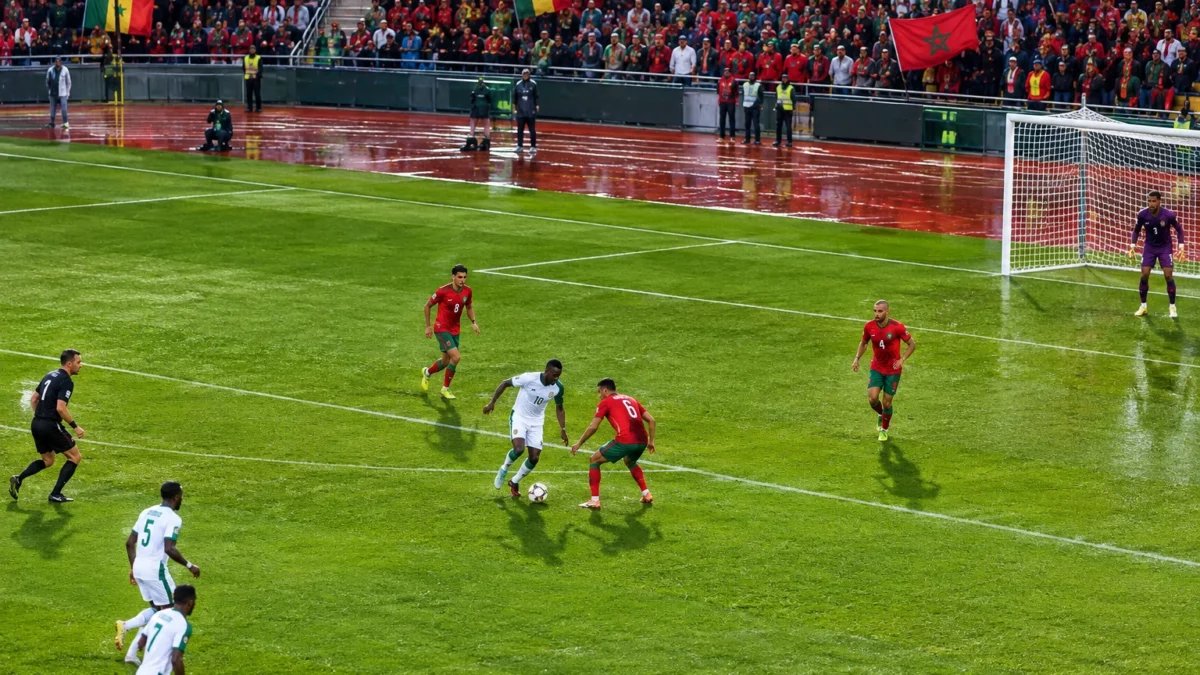
Nearly ten months after the final in Rabat, Senegal retain the title they won on the pitch. But the decision that closes this sporting chapter has not dispelled the controversy: it has shifted the debate towards the interpretation of the rules and confidence in African football’s governing bodies.
One final, two opposing decisions
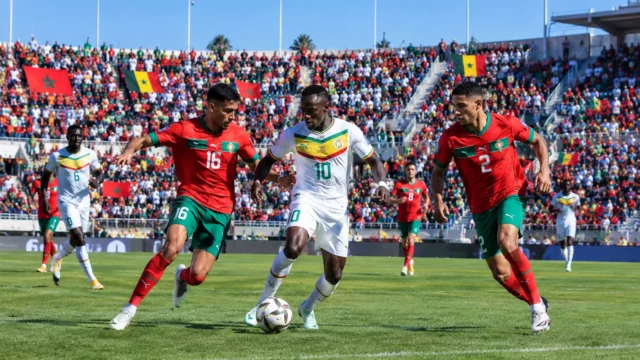
On 18 January 2026, Senegal beat Morocco 1-0 after extra time. Pape Gueye scored the only goal of the match. The final had become tense in stoppage time, however, after a penalty was awarded to Morocco. Senegal’s players temporarily left the pitch before returning. Congolese referee Jean-Jacques Ngambo Ndala had the match resume, and it subsequently ended on the pitch. The CAF had then presented Senegal as the winners.
The case took on a new dimension on 17 March. The appeal jury of the Confederation of African Football (CAF), the governing body of continental football, declared Senegal to have forfeited and awarded Morocco a 3-0 victory. The Senegalese Football Federation (FSF) challenged the decision before the Court of Arbitration for Sport (CAS), an independent court based in Lausanne, Switzerland.
On 24 November 2026, the CAS unanimously upheld Senegal’s appeal. It overturned the decision of the CAF appeal jury and reinstated the ruling of its disciplinary jury, which had not awarded the final to Morocco. The match result, a 1-0 win for Senegal, is therefore confirmed. The official CAS statement specifies that Senegalese coach Pape Thiaw, the FSF and some players remain subject to disciplinary sanctions imposed separately by the CAF.
The referee’s authority at the heart of the dispute
The court did not rule on the basis that Senegal’s temporary withdrawal had no consequences. It focused its review on a more specific question: could the referee decide to resume the match? In the panel’s view, that decision fell within his discretion. When play resumed, both teams had returned to the pitch and indicated their willingness to continue.
The CAS relied on the so-called “field of play” doctrine. In practice, it limits a court’s review of decisions made by the referee during a match, unless they are arbitrary or made in bad faith. The court found that Articles 82 and 84 of the AFCON regulations did not apply in this case: they set out the consequences of a match being abandoned when the referee brings it to a definitive end. In Rabat, the match resumed and was completed.
This interpretation addresses the main argument put forward by the Royal Moroccan Football Federation (FRMF). It argued that Senegal’s withdrawal should have led to the match being stopped permanently and a forfeit being declared, in accordance with Articles 82 and 84. The court did not accept this interpretation. For details of the reasoning, the Senegalese press has also reported on the ruling and the sanctions that remain in place.
Relief in Dakar, opposition in Morocco
In Senegal, the decision reinstates the result celebrated after the final. FSF president Abdoulaye Fall hailed it as “justice for sport”. Players also thanked their team-mates, staff and supporters, while calling for ties between the two peoples to be preserved. These reactions express the relief of a team and its supporters after months of uncertainty; they do not mean that debate over the final is over.
The FRMF, for its part, announced that it intended to pursue the legal remedies available. The Moroccan federation is contesting, in particular, the interpretation of the competition rules. Any appeal to the Swiss Federal Supreme Court would not, however, constitute a fresh appeal on how the match was played: it would be limited to specific legal grounds. The CAS award remains the ruling that currently confirms the final’s result.
The disagreement therefore goes beyond the rivalry between two national teams. For the federations, the issue is the predictability of the regulations and the referee’s authority. For Senegalese and Moroccan supporters, it concerns recognition of a result and a sense of fairness. The CAF, meanwhile, must preserve confidence in its procedures, after two successive decisions by its own bodies reached different conclusions.
A credibility test for African football
The AFCON brings together teams from across Africa, but its organisation and rules are primarily the responsibility of the CAF. The dispute is a reminder that regulations alone are not enough: federations must also be able to understand how they are applied, and decisions must be consistent across disciplinary and appeal bodies. The CAS has ruled on the specific case of the final. It has not overturned the sanctions imposed on Senegalese participants or, by itself, resolved the governance questions raised by the case.
The timeline also matters. The final was played on 18 January 2026, the CAF’s decision came on 17 March, and the CAS issued its award on 24 November, after a hearing in Lausanne on 8 October. During those months, the title changed hands, fuelling uncertainty around a competition followed in both countries and across their diasporas. The ruling now provides legal clarity on the result, without guaranteeing an immediate reconciliation between Senegalese and Moroccan interpretations.
For the next AFCON, the institutional lesson will be as important as the result in Rabat. The CAF will have to show that its regulations and appeal mechanisms produce decisions that are understandable and well-founded. Senegal officially regain the title won on the pitch. Morocco retains the right to challenge the award through the available channels. Between these two positions, the credibility of African governing bodies will remain one of the key issues in the aftermath of the final.