Algeria
 Egypt
 Libya
 Morocco
 Sudan
 Tunisia
 Benin
 Burkina Faso
 Cabo Verde
 Côte d'Ivoire
 Ghana
 Guinea
 Guinea-Bissau
 Liberia
 Mali
 Mauritania
 Niger
 Nigeria
 Senegal
 Sierra Leone
 The Gambia
 Togo
 Cameroon
 Central African Republic
 Chad
 DR Congo
 Equatorial Guinea
 Gabon
 Republic of the Congo
 São Tomé and Príncipe
 Burundi
 Comoros
 Djibouti
 Eritrea
 Ethiopia
 Kenya
 Malawi
 Mauritius
 Mozambique
 Rwanda
 Seychelles
 Somalia
 South Sudan
 Tanzania
 Uganda
 Angola
 Botswana
 Eswatini
 Lesotho
 Namibia
 South Africa
 Zambia
 Zimbabwe
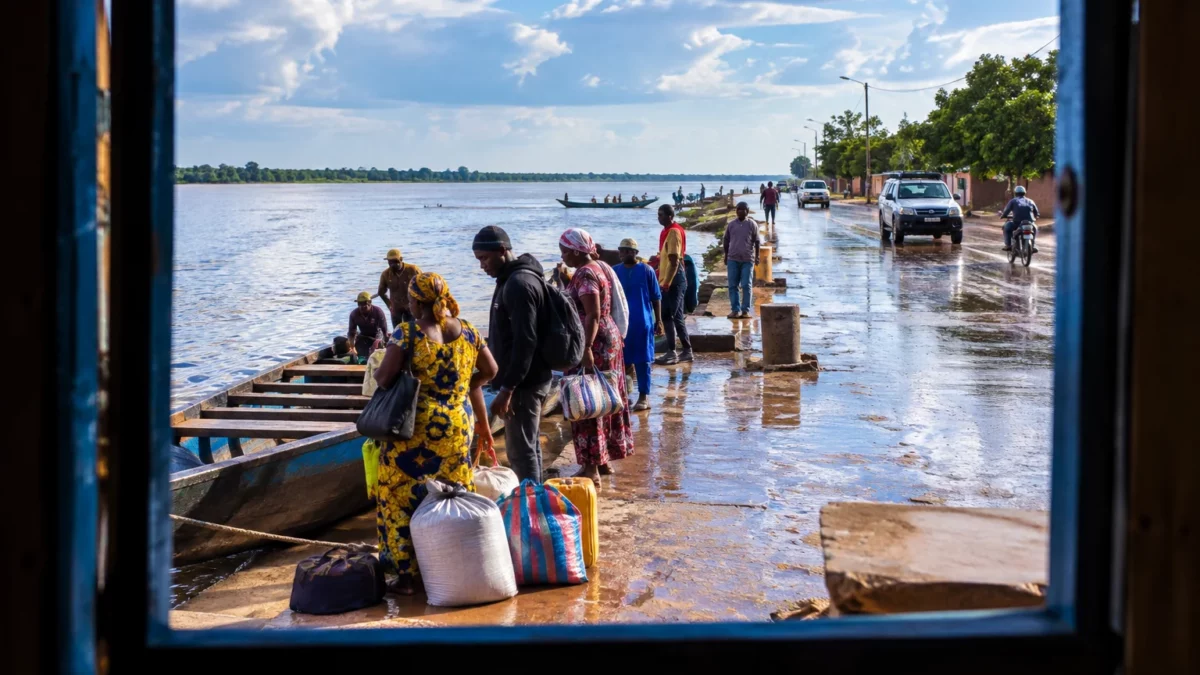
In Tonka, leaving could mean abandoning livelihoods and loved ones. Staying could expose residents to isolation and new risks. On 22 November 2026, Al-Qaeda-affiliated Group for the Support of Islam and Muslims (JNIM) gave them until Friday 27 November to leave the town, in the Timbuktu region. The group has threatened to block access to it after that.
A threat targeting roads and the river
Tonka lies about 100 kilometres south-west of Timbuktu, on the banks of the Niger River. Messages attributed to JNIM are said to have circulated as voice recordings in several national languages. The group has threatened to prevent vehicles from entering or leaving the town. It has also said that canoes will be forbidden from docking and that anyone who breaks the blockade will be considered a “military target”.
The threat comes after a detachment of the Malian Armed Forces and Africa Corps, a Russian military structure, was deployed at the entrance to Tonka. Available reports differ on the exact date of the deployment: some point to the end of the summer, others to a more recent presence. The army and the governorate of Timbuktu have not publicly confirmed the reported details.
Local sources cited by the media say the military is calling for calm and considers the situation under control. No mass departures had been reported when the first accounts were published. These details remain difficult to verify independently and do not establish whether residents can actually leave safely.
A population already scarred by violence
The ultimatum comes amid a series of attacks on civilians in Tonka. Reports published by several media outlets cite at least four killings attributed to JNIM between November 2025 and July 2026. The victims are said to have been accused of supporting or providing information to the army. These are accusations made by the armed group and do not constitute proof of collaboration.
Among the victims was Mariam Cissé, a young blogger executed in public in November 2025. Other reported killings in 2026 claimed the lives of a member of the municipal youth council, a Koranic teacher and a head of the butchers’ association. This succession of attacks sheds light on the local dilemma: residents had called for a more enduring military presence, but JNIM is now invoking that presence to justify threats against the entire town.
A blockade is not simply a military operation. It can cut off access to markets, healthcare and transport, while undermining the livelihoods of traders, transport operators and families dependent on informal work. In Tonka, blocking both roads and river links could also isolate residents who are unable to leave. Older people, children, the sick and households without access to transport would be particularly exposed.
A recent precedent in the Timbuktu region
Mali has already experienced the consequences of restrictions on movement. In its 2025 annual report, the National Human Rights Commission of Mali says a blockade on the Léré–Niono road, which began in October 2025, was followed by an ultimatum to leave. According to figures from the Malian Red Cross cited in the report, 13,693 people, from 1,869 households, were displaced between 8 and 15 November in several localities, including Tonka. This figure describes an earlier episode, not displacement linked to the current threat.
The same commission reports that thousands of people crossed the Mauritanian border from the area around Léré at the time. These precedents show that the effects of a blockade extend beyond the town targeted: displaced families turn to neighbouring localities and countries, while regional trade is disrupted.
JNIM has also used blockades against other Malian towns and roads. Timbuktu faced restrictions in 2023. More recently, Léré endured a prolonged blockade, lifted at the end of August 2026 according to available reports. Pressure on Bamako and its supply routes illustrates the spread of this tactic: disrupting movement can challenge the state without an armed group openly controlling every institution.
The state’s response put to the test
For the Malian authorities, the immediate challenge is twofold: to protect civilians and keep routes to Tonka open after 27 November. A permanent military presence may address residents’ calls for security. But by itself, it is not enough to guarantee movement, supplies or protection for those who stay.
The response must also take account of the constraints specific to this area: river transport matters as much as roads, and evacuation options are not available to everyone. Without reliable public information on routes, available assistance and security guarantees, residents must decide amid uncertainty. The reported official silence on the details of the deployment leaves these questions without verifiable answers.
The situation also has regional implications. Mali belongs to ECOWAS, a West African organisation for economic and political cooperation, although its relations with the bloc have become deeply strained in recent years. Displacement to Mauritania and trade links along the river are reminders that the consequences of a local crisis can cross borders. The deadline on Friday 27 November will show whether the threat turns into an actual blockade, whether civilians can move freely and whether the authorities can maintain access to this town in northern Mali.