Algeria
 Egypt
 Libya
 Morocco
 Sudan
 Tunisia
 Benin
 Burkina Faso
 Cabo Verde
 Côte d'Ivoire
 Ghana
 Guinea
 Guinea-Bissau
 Liberia
 Mali
 Mauritania
 Niger
 Nigeria
 Senegal
 Sierra Leone
 The Gambia
 Togo
 Cameroon
 Central African Republic
 Chad
 Equatorial Guinea
 Gabon
 Republic of the Congo
 São Tomé and Príncipe
 Burundi
 Comoros
 Djibouti
 Eritrea
 Ethiopia
 Kenya
 Madagascar
 Malawi
 Mauritius
 Mozambique
 Rwanda
 Seychelles
 Somalia
 South Sudan
 Tanzania
 Uganda
 Angola
 Botswana
 Eswatini
 Lesotho
 Namibia
 South Africa
 Zambia
 Zimbabwe
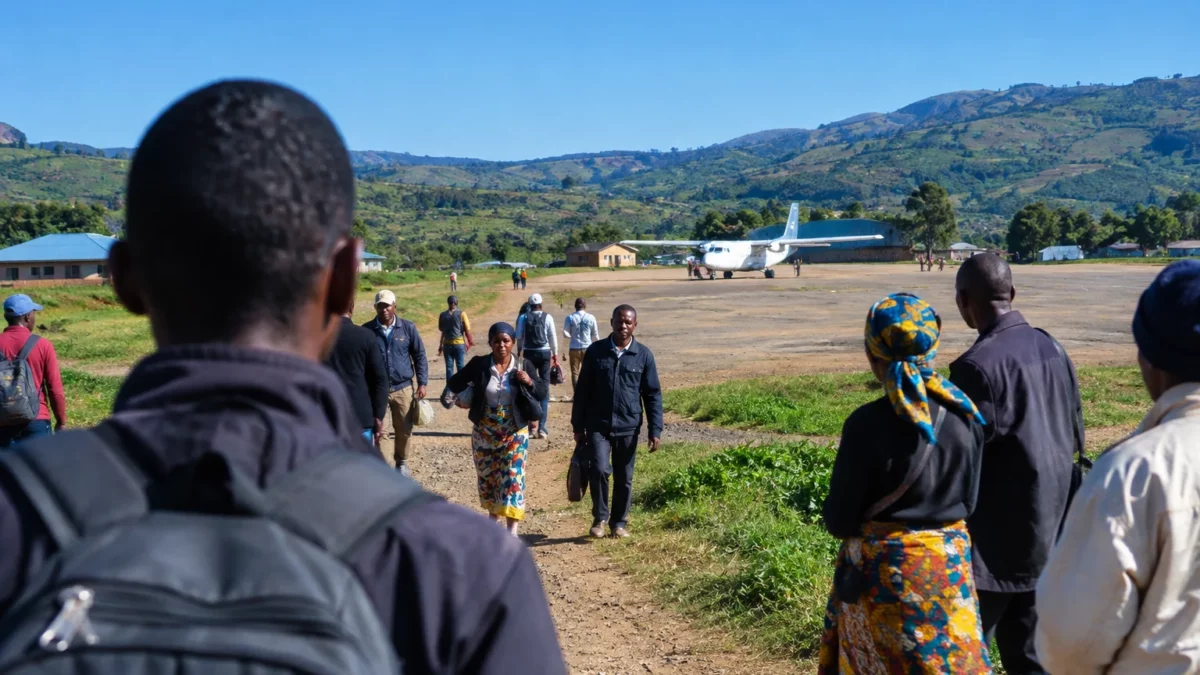
In the South Kivu Highlands, the disappearance of a military aircraft raises two immediate questions: where is the aircraft, and what is actually known about its fate? For now, the Armed Forces of the Democratic Republic of the Congo (FARDC) and the Front for the Refoundation of the Nation (FRN) are giving different accounts. No independent public evidence has yet emerged to reconcile them.
An incident at the heart of a contested area
Minembwe is in Fizi territory, in South Kivu, a province in eastern DR Congo where clashes have shifted control lines and made access to localities more difficult. In these high plateaux, roads are difficult and air travel plays an important role. Control of the airspace around Minembwe therefore has military significance, but also a direct bearing on residents and services seeking to reach the area.
The conflict is part of a broader realignment. On 12 October 2026, the Congo River Alliance and the March 23 Movement were brought together under the FRN banner, according to information released at the time about the new movement. Kinshasa and the armed groups are at odds over control of territory and the legitimacy of their operations. In this context, statements about the conflict are also narratives directed at populations and regional actors: they must therefore be distinguished from verified facts.
DR Congo is a member of the East African Community (EAC), a regional integration organisation, and the Southern African Development Community (SADC). These regional frameworks matter because instability in the east of the country affects border areas and involves security relations between neighbouring states. However, they cannot, on their own, determine what happened in the air.
Two accounts that do not yet match
On 22 November 2026, the FRN claimed that one of its fighters had shot down a military aircraft near Minembwe at about six o’clock in the morning. Its spokesperson, Lawrence Kanyuka, said the aircraft was preparing to bomb the locality. This allegation has not been independently confirmed. Nor does it, on its own, establish the aircraft’s mission or the cause of its crash.
The FARDC general staff, for its part, announced that it had lost contact with a Cessna 208 cargo aircraft. According to the statement carried by the Congolese Press Agency, the aircraft was operating a route between Beni, in North Kivu, and Kalemie, in Tanganyika province. The army cited bad weather and said that searches were under way. The crew’s fate had not been established in that communication.
The FRN also said there were four people on board and claimed that two foreigners — a Ugandan national and a South African pilot — had survived and were being held. These identities and this account remain claims attributed to the movement. A video circulated on social media shows a man who identifies himself as Ugandan and says he was sent by his government. His identity, the circumstances in which the recording was made and the authenticity of his statements have not been independently verified.
Congolese and regional media have reported both accounts, but the information available does not resolve the central question: was the aircraft the FARDC are searching for the one the FRN says it shot down near Minembwe? The Ugandan army has denied any involvement in the incident, according to published reports. The denial confirms neither the identity of the man shown in the video nor the status of the other occupants.
What the uncertainty means on the ground
In a conflict zone, the delay between an incident and its verification can fuel rumours. It also makes it harder for families trying to find out whether relatives were on board. Without the wreckage being located, a confirmed passenger list and independent access to the site, casualty figures and circumstances must remain attributed. A loss of contact reported by an army must also be distinguished from a shoot-down claimed by an armed group: these are not equivalent conclusions.
The difference between the descriptions of the aircraft also needs to be clarified. The FARDC refer to a Cessna 208 cargo aircraft. The FRN describes it as an aircraft involved in an attack. These terms alone do not prove that the accounts refer to two different aircraft or to the same aircraft being used on a combat mission. Technical identification and an independent investigation would be needed to establish the exact model, flight path and circumstances of the incident.
For residents of Minembwe and nearby localities, the issue goes beyond a battle of statements. If air operations are taking place in an area with limited access, civilians may be exposed to strikes or ground fighting, while insecurity hinders movement and access to services. But without independent confirmation of the aircraft’s mission, it would be premature to claim that it was targeting civilians or civilian infrastructure.
A case to follow beyond South Kivu
The incident is testing the flow of information in a conflict where several armed actors are seeking to impose their version of events. The next decisive developments in establishing the facts will be the location of the aircraft, confirmation of the crew’s identities and fate, and a fuller statement from the FARDC. External verification of images and testimony could also help resolve outstanding questions.
The regional dimension is equally important. Claims involving foreign nationals may strain relations between Kinshasa and neighbouring countries if they are not verified. They are not, however, enough to conclude that a government was involved. For regional organisations, the incident is a reminder that de-escalation also depends on credible communication and verification mechanisms, beyond statements from the parties to the conflict.
At this stage, the established facts are limited: the FARDC say they lost contact with a Cessna 208 on 22 November, while the FRN claims to have destroyed an aircraft near Minembwe on the same day. The link between the two accounts, the cause of the incident and the fate of those on board remain to be confirmed.