Algeria
 Egypt
 Libya
 Morocco
 Sudan
 Tunisia
 Benin
 Burkina Faso
 Cabo Verde
 Côte d'Ivoire
 Ghana
 Guinea
 Guinea-Bissau
 Liberia
 Mali
 Mauritania
 Niger
 Nigeria
 Senegal
 Sierra Leone
 The Gambia
 Togo
 Cameroon
 Chad
 DR Congo
 Equatorial Guinea
 Gabon
 Republic of the Congo
 São Tomé and Príncipe
 Burundi
 Comoros
 Djibouti
 Eritrea
 Ethiopia
 Kenya
 Madagascar
 Malawi
 Mauritius
 Mozambique
 Rwanda
 Seychelles
 Somalia
 South Sudan
 Tanzania
 Uganda
 Angola
 Botswana
 Eswatini
 Lesotho
 Namibia
 South Africa
 Zambia
 Zimbabwe
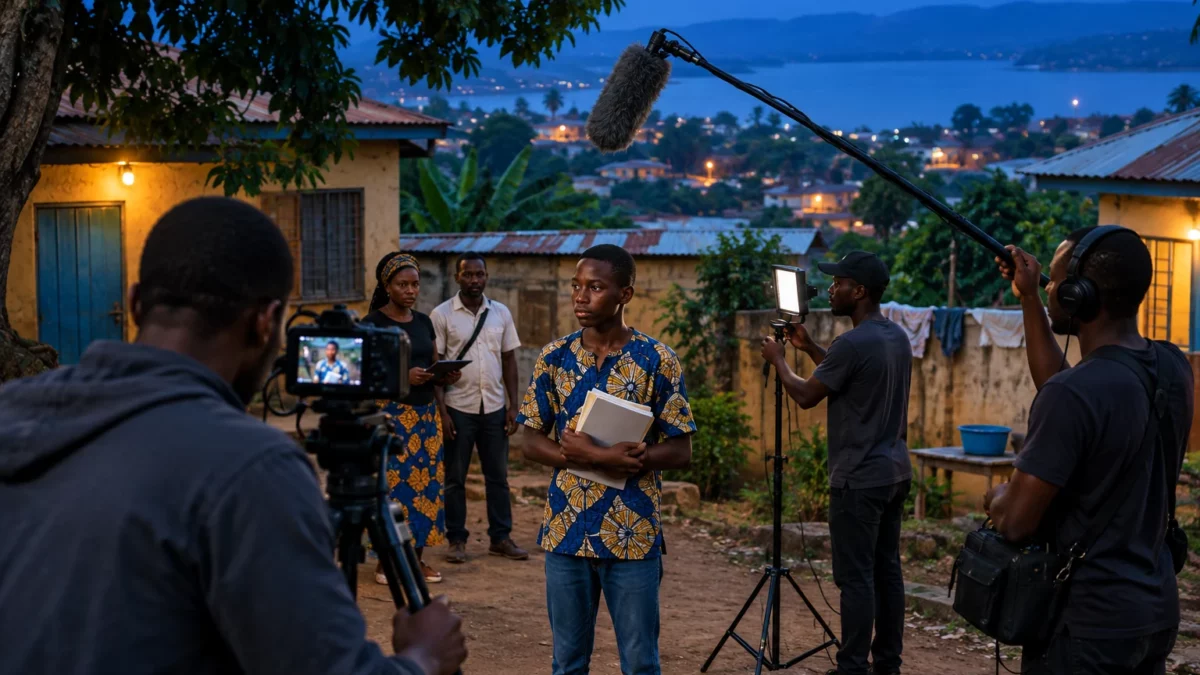
In Bangui, the dream of becoming a musician does not always play out in a studio. It can run up against exams, odd jobs and family responsibilities. Filmmaker Rafiki Fariala puts this crossroads between ambition and everyday life at the heart of his first fiction feature.
A personal story rooted in Bangui
Released in cinemas on Wednesday 25 November 2026, Congo Boy follows Robert, a Congolese teenager who has taken refuge in the Central African Republic. He dreams of a music career, but must also look after his brothers and sisters after his parents are arrested, according to the Cannes Film Festival synopsis. The character is also preparing for his baccalaureate and looking for ways to provide for his family.
The story draws on an episode from Rafiki Fariala’s youth. Born in 1997 in Uvira, in the east of the Democratic Republic of the Congo, he grew up in Bangui after his family found refuge in the Central African Republic. This closeness to the story gives the film a precise setting: that of a teenager torn between music, studies and household emergencies.
Robert is played by Bradley Fiomona Dembeasset. On 22 May 2026, the jury of the Un Certain Regard section at the Cannes Film Festival awarded him the best actor prize. The distinction recognises his performance, not the section’s top prize.
Central African cinema takes centre stage
The film was shot in Bangui and produced with Central African company Makongo Films, alongside partners from the Democratic Republic of the Congo, France and Italy. The co-production links several cinematic spheres, but the story remains set in the Central African capital and is carried by a team that includes local professionals.
The visibility gained at Cannes matters in a country where cinema infrastructure and funding remain limited. It does not, by itself, mean that an industry is now established. It does, however, bring existing skills into the spotlight: acting, writing, filming and production, as well as collaborations built locally.
Fariala’s previous documentary, We, Students!, had already explored the everyday lives of young people at university. With this fiction feature, the filmmaker shifts his focus to a secondary-school pupil and his family. Cinema therefore does more than showcase Bangui: it also becomes a way to tell stories of Central African lives and of people who have taken refuge in the country.
Family, school and informal work
Robert is pulled between several competing demands on his time. Classes and the baccalaureate offer the prospect of a future. Odd jobs and caring for his younger siblings, meanwhile, meet immediate needs. This contrast brings into view a reality often missing from stories focused solely on institutions or crises: the everyday choices facing young people and their families.
The film does not present artistic ambition as an easy solution. Music draws Robert in, but it does not automatically pay the household bills. Conversely, family responsibilities do not extinguish his desire to create. The story holds these two dimensions together without reducing its character to his status as a refugee.
The story also speaks to the place of Congolese refugees in the Central African Republic. The film shows them in their everyday lives, in neighbourhoods and social networks shared with the people of Bangui. It does not claim to sum up every experience of displacement; it follows one family and the particular constraints it faces.
A regional reach beyond the awards
The film’s journey links the Central African Republic and the Democratic Republic of the Congo, two neighbouring countries whose human and cultural histories intersect. Across Central Africa, this co-production is a reminder that stories, artists and crews move across borders, even when production resources remain scarce.
Recognition at Cannes draws attention, but lasting progress will also depend on production and distribution: who can fund the next films, train crews, pay professionals and ensure audiences can see their work? The cinema release is a tangible step. On its own, it does not guarantee access to screens across the country or sustained funding.
For Central African cinema, Congo Boy thus opens a window without ending the debate about the conditions for creating films. The prize awarded to Bradley Fiomona Dembeasset recognises the work of a young actor; the film itself puts Bangui at the heart of a story about family, school and music. Its impact will also be measured by whether more works can be produced and distributed from the region.