Algeria
 Egypt
 Libya
 Morocco
 Sudan
 Tunisia
 Benin
 Burkina Faso
 Cabo Verde
 Côte d'Ivoire
 Ghana
 Guinea
 Guinea-Bissau
 Liberia
 Mali
 Mauritania
 Niger
 Nigeria
 Senegal
 Sierra Leone
 The Gambia
 Togo
 Cameroon
 Central African Republic
 Chad
 Equatorial Guinea
 Gabon
 Republic of the Congo
 São Tomé and Príncipe
 Burundi
 Comoros
 Djibouti
 Eritrea
 Ethiopia
 Kenya
 Madagascar
 Malawi
 Mauritius
 Mozambique
 Rwanda
 Seychelles
 Somalia
 South Sudan
 Tanzania
 Uganda
 Angola
 Botswana
 Eswatini
 Lesotho
 Namibia
 South Africa
 Zambia
 Zimbabwe
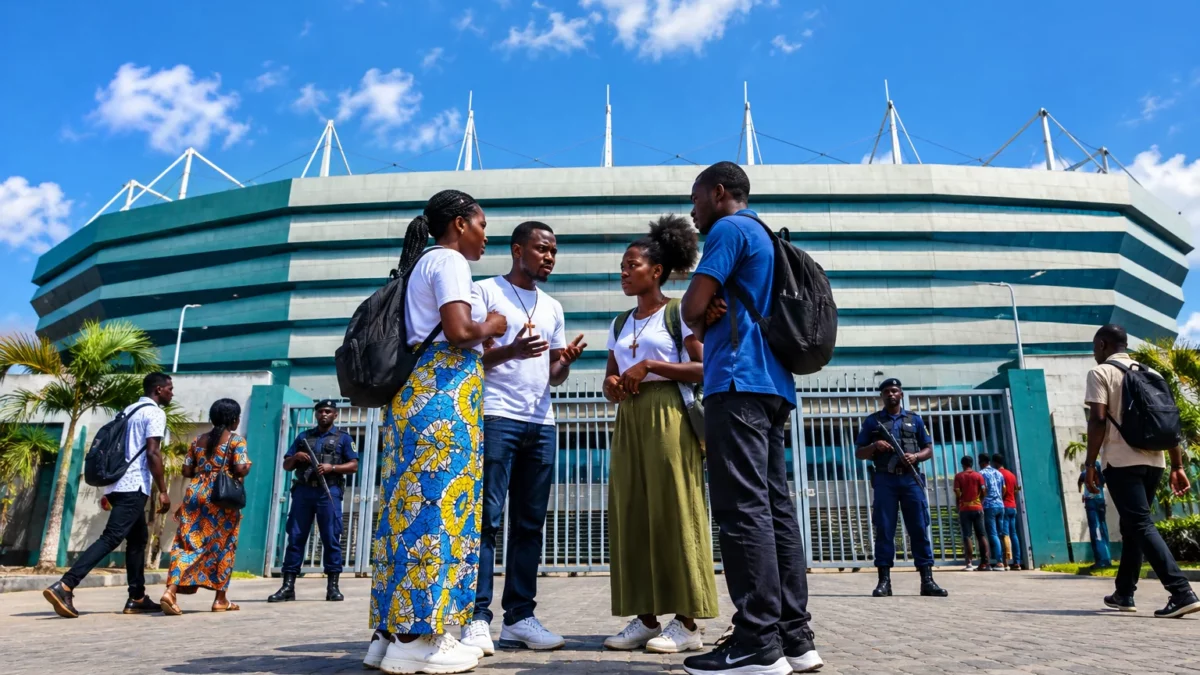
In Kinshasa, a Mass planned at a stadium was ultimately held at a school. In Lubumbashi, police dispersed a march linked to a land dispute. In the space of two days, restrictions imposed on two Catholic events put relations between the Church and the Congolese authorities under strain.
Two blocked events, two different grounds
On Sunday 22 November 2026, Cardinal Fridolin Ambongo was due to preside over a Mass at Tata Raphaël Stadium in Kinshasa for the solemnity of Christ the King and Diocesan Youth Day. According to the cardinal, the archdiocese had obtained the necessary permits and the relevant ministries had been informed. On the morning itself, police prevented young people from entering the stadium. The service was eventually held at Saint-Raphaël College.
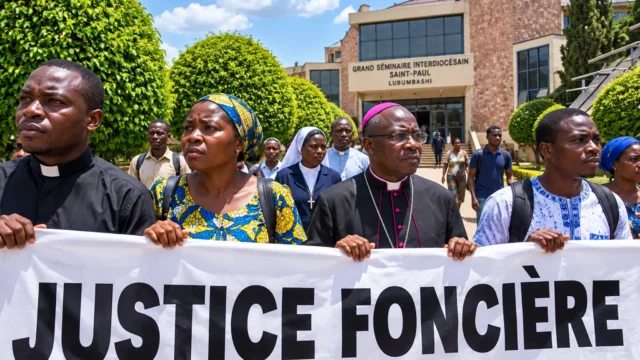
The following day, in Lubumbashi, Haut-Katanga, police dispersed a march organised by the archdiocese. Participants wanted to demand enforcement of a court ruling concerning buildings on the grounds of the Saint-Paul Interdiocesan Major Seminary in Tshamalale. Radio Okapi reports that the ruling orders the demolition of the disputed buildings. Police used tear gas and demonstrators were detained, according to the diocesan media outlet DIA-CENCO.
The two cases are therefore not identical. In Kinshasa, the dispute concerns access to a venue for a religious celebration. In Lubumbashi, it concerns a march and the implementation of a court ruling in a land dispute. But in both cases, the Church says it was prevented from carrying out an announced activity.
Freedom of assembly and enforcement of rulings
In Lubumbashi, the municipal authorities had banned demonstrations on public roads, according to DIA-CENCO. This administrative decision explains the stated grounds for the police deployment. It does not, however, settle the substance of the land dispute or the question of enforcing the ruling cited by the Church. The information consulted does not establish the municipality’s detailed response on either point.
In Kinshasa, Cardinal Ambongo says the permits had been granted before access to the stadium was blocked. He says he received no explanation for the change. The authorities have not provided, in the sources consulted, any public grounds that would clarify the decision. The Church held its Mass at another venue, with no incident reported by the cardinal.
These details matter. Without a full official explanation, it would be premature to attribute both interventions to the same political strategy. Congolese analyst Christian Moleka nevertheless sees them as a sign of deteriorating relations between the authorities and Catholic leaders who regularly criticise them. This interpretation sheds light on the context, but remains an analysis, not proof of a coordinated decision.
A religious actor also prominent in public debate
In the Democratic Republic of the Congo, the National Episcopal Conference of Congo, or CENCO, brings together the country’s Catholic bishops. It is involved in public debate beyond religious matters. Its positions on governance, rights and political milestones give it particular prominence. Cardinal Ambongo, Archbishop of Kinshasa, and Bishop Fulgence Muteba, Archbishop of Lubumbashi and president of CENCO, are among the institution’s most listened-to voices.
This influence creates points of contact with the authorities, but also disagreements. The cardinal called on the faithful to remain calm after the Mass was banned. He also said that dialogue with the authorities had not broken down. This position avoids turning the incident into a call for confrontation, while still seeking explanations.
For the faithful, the consequences are tangible. In Kinshasa, young people from several parishes had to change venue at the last minute. In Lubumbashi, those mobilised over the Tshamalale case were unable to take their demand to the streets. Beyond religious leaders, these episodes therefore affect access to gathering places and confidence in administrative or judicial decisions.
A test for Congolese institutions
What happens next will depend in particular on the authorities’ ability to explain the ban on the Mass and clarify the basis for the municipal order applied in Lubumbashi. In the land dispute, the central issue remains enforcement of the court ruling: the available information is not sufficient to describe all stages of the case or the positions of the other parties involved.
The sequence is a reminder that the state must both regulate gatherings and guarantee public freedoms. A ban may be justified on specific grounds, but its application gains legitimacy when the reasons are explained and avenues of appeal remain accessible. Similarly, a ruling only has its full effect when the institutions responsible for enforcing it act.
At regional level, the two incidents alone do not allow us to conclude that relations between the Church and the authorities have reached a turning point. They will nevertheless be watched in a country where Catholic leaders carry weight in national debate. The next sign to watch will be the authorities’ response to the cardinal’s requests for an explanation, as well as developments in the Tshamalale case. For now, the established facts show two contested decisions, two different contexts and one shared demand: that the reasons for public action be open to verification.
The facts concerning the Mass were corroborated by Fides News Agency and Vatican News. On Lubumbashi, Radio Okapi and DIA-CENCO report the dispersal of the march, while offering different accounts of the circumstances.