Algeria
 Egypt
 Libya
 Morocco
 Sudan
 Tunisia
 Benin
 Burkina Faso
 Cabo Verde
 Côte d'Ivoire
 Guinea
 Guinea-Bissau
 Liberia
 Mali
 Mauritania
 Niger
 Nigeria
 Senegal
 Sierra Leone
 The Gambia
 Togo
 Cameroon
 Central African Republic
 Chad
 DR Congo
 Equatorial Guinea
 Gabon
 Republic of the Congo
 São Tomé and Príncipe
 Burundi
 Comoros
 Djibouti
 Eritrea
 Ethiopia
 Kenya
 Madagascar
 Malawi
 Mauritius
 Mozambique
 Rwanda
 Seychelles
 Somalia
 South Sudan
 Tanzania
 Uganda
 Angola
 Botswana
 Eswatini
 Lesotho
 Namibia
 South Africa
 Zambia
 Zimbabwe
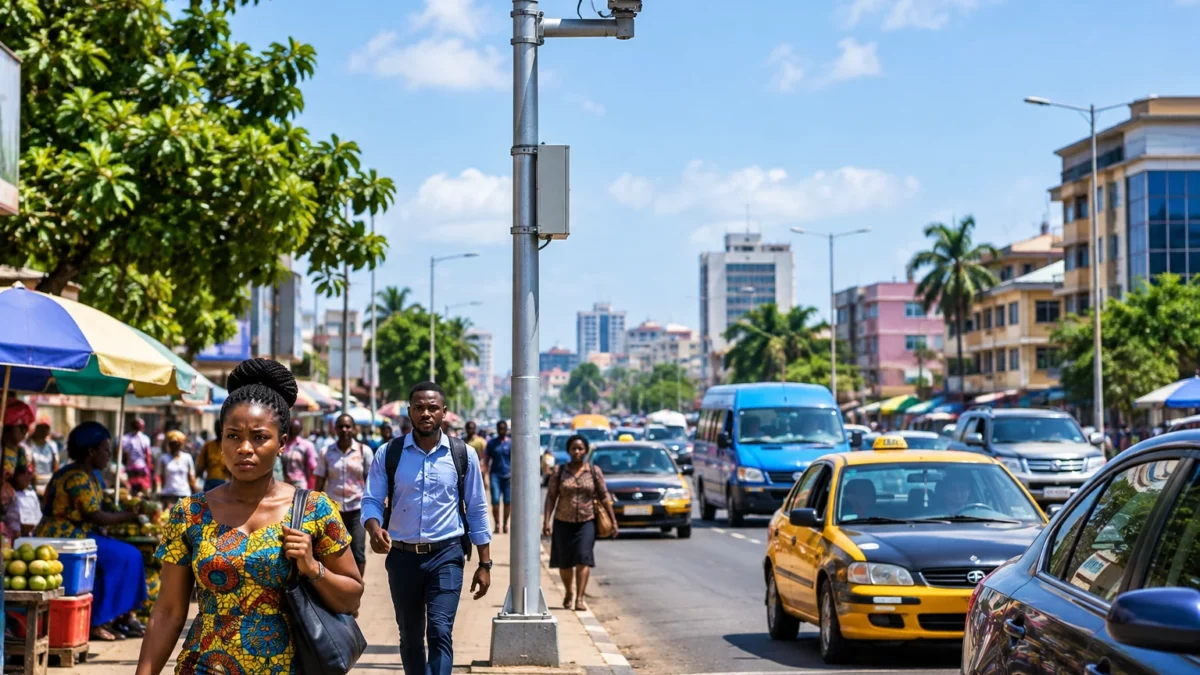
Road enforcement is about more than a camera by the roadside. For Ghanaian families, the aim is to reduce serious collisions; for drivers, it is also important to know how an offence is detected, challenged and penalised.
National system, after several delays
In Ghana, a West African country and member of ECOWAS — the Economic Community of West African States — road safety involves the police, transport services and local authorities. The TraffiTech-GH system marks a shift towards automated enforcement, without replacing officers’ work on the road.
Its launch was initially scheduled for 1 October 2026. The Ghana Police Service’s Motor Traffic and Transport Department (MTTD) postponed it to 1 November to strengthen public awareness. The Ghana News Agency reported the delay, then confirmed that the system had gone live on the new date. Ghanaian newspaper Graphic Online also covered the launch.
The change affects motorists in Accra, the capital, as well as drivers in Kumasi, Takoradi, Tamale and other urban centres. It covers motorcycles, taxis, minibuses, coaches and heavy goods vehicles. The police plan to use fixed, mobile and tripod-mounted devices.
How electronic notices work
Cameras and sensors record, among other things, speeding and running red lights. The footage is then reviewed by the relevant authorities. If an offence is confirmed, an electronic notice is sent by SMS to the vehicle’s registered owner, with details of the offence and the fine. According to the rules described by the police, automated enforcement therefore does not mean that a penalty is issued without human review.
The process also provides for an appeal. The owner can view the available evidence and challenge the notice within 14 days, according to information published by the police. This mechanism matters when a vehicle has been sold, registration details are incorrect or the driver disputes the measurement. However, responsibility for a vehicle registered in someone’s name may rest with that person, even if they were not driving at the time.
The police have also warned about fake messages. They say official notices carry the GPS-MTTD identifier and advise people not to click on links received from any other sender. This warning is particularly relevant in a system where SMS is used to notify people of offences and payments can be made electronically.
Speeding the focus of initial operations
The decision to target speeding first is based on its link to the severity of crashes. Alexander Kwaku Obeng, the MTTD’s head of training and research, told Graphic Online that excessive speed was associated with 60 to 62% of serious injuries and deaths linked to road crashes. The Ghana News Agency reported a police estimate of 50 to 62% of deaths or serious crashes. These figures are statements attributed to police officials, not independent measurements presented in these reports.
The police have also said that enforcement would cover Accra and several other cities, including Kumasi, Takoradi, Sunyani, Tamale, Koforidua, Tema and Ho. According to Graphic Online, the announced minimum fine is 240 Ghanaian cedis for exceeding the speed limit by 5 to 20 km/h, with heavier penalties for higher speeds. Enforcement in practice will depend on the road rules in force and the evidence considered in each case.
However, reactions reported at the launch show that trust cannot be taken for granted. The Ghana News Agency noted that some drivers supported enforcement, while others criticised the system’s fairness and the visibility of speed limits. Some commercial drivers said they feared being disadvantaged. Signposting, the reliability of the devices and genuine access to appeals will therefore shape acceptance of the system.
Cameras can help, but are not enough
Technology can make enforcement less predictable and produce evidence that can be reviewed. But on its own, it does not address other risk factors: road conditions, signage, lighting, vehicle maintenance and pedestrian safety. The debate in Ghana also raises the question of which locations should be prioritised: busy roads, areas around schools and markets, or places where the most vulnerable road users are at risk.
Early results announced by the authorities should be treated with caution. The MTTD said that in September 2026, before fines were officially introduced, crashes had fallen by 9.4% compared with the same month in 2025, and deaths by 7.82%. The police linked this change to public awareness efforts and warning notices. These figures, reported by Graphic Online, are not enough to establish the cameras’ specific effect: they predate the start of fines and do not demonstrate a causal link.
For Ghana, the challenge in the coming weeks will therefore be as much institutional as technological: verifying that measurements are accurate, explaining the rules to road users and making appeals accessible, including to people with limited internet access. Across ECOWAS, Ghana’s experience will be of interest to countries facing similar challenges involving cross-border traffic and enforcement. Success will not be measured by the number of SMS messages sent, but by sustained changes in injuries and deaths, and by the trust placed in the process.