Algeria
 Egypt
 Libya
 Morocco
 Sudan
 Tunisia
 Benin
 Burkina Faso
 Cabo Verde
 Ghana
 Guinea
 Guinea-Bissau
 Liberia
 Mali
 Mauritania
 Niger
 Nigeria
 Senegal
 Sierra Leone
 The Gambia
 Togo
 Cameroon
 Central African Republic
 Chad
 DR Congo
 Equatorial Guinea
 Gabon
 Republic of the Congo
 São Tomé and Príncipe
 Burundi
 Comoros
 Djibouti
 Eritrea
 Ethiopia
 Kenya
 Madagascar
 Malawi
 Mauritius
 Mozambique
 Rwanda
 Seychelles
 Somalia
 South Sudan
 Tanzania
 Uganda
 Angola
 Botswana
 Eswatini
 Lesotho
 Namibia
 South Africa
 Zambia
 Zimbabwe
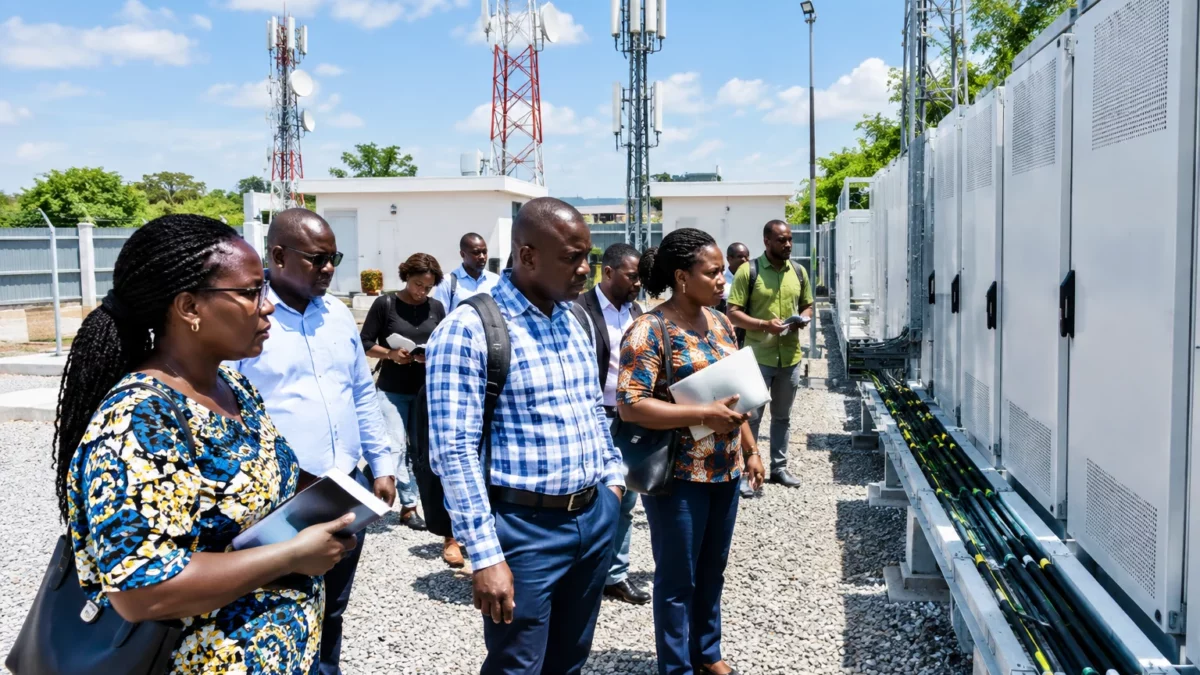
In telecommunications, service quality is measured as much by network coverage as by how an outage or complaint is handled. In Côte d’Ivoire, Orange welcomed representatives of consumer associations to its technical site in Assabou, Yamoussoukro, to show them its facilities and outline its announced responses to their concerns.
From announced dialogue to verifying commitments
The meeting took place on 19 and 20 November 2026. It follows an initial day of discussions held in Abidjan in May, where associations, the regulator, the ministry and the operator discussed the quality of digital services and relations with users. The Ivorian Press Agency reported on that first meeting.
At Assabou, participants toured equipment involved in operating the network. The operator said it wanted to explain the security measures, energy supply and interconnection of its facilities. The initiative is also intended to enable associations to share the difficulties subscribers encounter with the internet, fibre, mobile data and Orange Money.
Habib Bamba, Orange Côte d’Ivoire’s director of customer experience, described the initiative as the start of a process, not its culmination. Yves Aka, president of the National Federation of Consumer Associations of Côte d’Ivoire, said that seeing things directly helped consumers assess the company’s commitments. These remarks describe the aims of the visit; on their own, they do not constitute an independent measure of network quality.
This distinction matters. A technical visit provides information about the equipment and procedures shown to guests. It does not necessarily show whether service is stable in every neighbourhood, village or rural area, or whether complaints are resolved within satisfactory timeframes. Establishing those outcomes requires published indicators, tracked over time and compared with user feedback.
A dominant operator faces concrete expectations
Orange’s position gives these discussions particular weight. In its third-quarter 2026 report, Côte d’Ivoire’s Telecommunications/ICT Regulatory Authority (ARTCI) records around 30.4 million Orange mobile subscriptions, nearly half the national total. It also attributes FCFA 144.7 billion in mobile revenue to the operator for the quarter. The regulator notes, however, that the number of Orange subscriptions is being verified.
The same report counts more than 20.4 million Orange Money subscriptions at the end of September 2026. These are subscriptions, not necessarily distinct people or regularly used accounts. This distinction matters in a market where mobile financial services are used for transfers, payments and some commercial activities.
For customers, the issues therefore go beyond the availability of calls. A data outage can affect work, administrative procedures or online sales. A delay in processing a transfer or complaint directly affects Orange Money users. People with reduced mobility also depend on accessible branches to resolve some problems that cannot be sorted out through an app.
Orange says it has launched an action plan covering network quality, infrastructure security, accessibility and the monitoring of complaints. The company has announced, in particular, a WhatsApp group for associations, as well as improvements to its Ma Box and Max It applications to track certain requests and carry out remote diagnostics. It also says that 20 of its 33 branches were adapted for people with reduced mobility at the end of 2025. These announcements would benefit from being accompanied by a timetable and verifiable results.
Investment and public oversight
The text presenting the initiative refers to nearly FCFA 100 billion invested in 2025 to modernise and expand the network. The integrated annual report published by Orange Côte d’Ivoire, meanwhile, reports FCFA 184 billion in investment for the year. The figures do not match; the scopes used may differ, but the information consulted does not make it possible to reconcile them. They should therefore not be presented as the same measure.
Regulation is another point of oversight. ARTCI publishes market statistics and monitors the sector. For consumers, the challenge is to ensure that announced commitments on coverage, continuity and complaints can be checked against accessible data. Associations, for their part, can highlight problems that may be invisible in national figures, particularly in less well-covered areas or among people with limited access to digital tools.
This issue also sits within the West African context. Côte d’Ivoire is a member of ECOWAS, which brings the countries of the region together for economic and political cooperation. Digital services and mobile payments increasingly cross borders; user confidence therefore depends on transparent practices, but also on networks capable of supporting regional exchanges.
The Assabou visit creates a space for dialogue between a major operator and consumer organisations. Its impact will now depend on follow-up: the publication of quality indicators, changes in response times and the effective resolution of reported problems. Without these elements, transparency remains an intention; with them, it can become a tool of accountability for customers and the regulator alike.
Sources consulted: Ivorian Press Agency report on the May 2026 discussions, ARTCI report on the telecoms market in the third quarter of 2026 and Orange Côte d’Ivoire’s 2025 integrated annual report.