Algeria
 Egypt
 Libya
 Morocco
 Sudan
 Tunisia
 Benin
 Burkina Faso
 Cabo Verde
 Côte d'Ivoire
 Ghana
 Guinea-Bissau
 Liberia
 Mali
 Mauritania
 Niger
 Nigeria
 Senegal
 Sierra Leone
 The Gambia
 Togo
 Cameroon
 Central African Republic
 Chad
 DR Congo
 Equatorial Guinea
 Gabon
 Republic of the Congo
 São Tomé and Príncipe
 Burundi
 Comoros
 Djibouti
 Eritrea
 Ethiopia
 Kenya
 Madagascar
 Malawi
 Mauritius
 Mozambique
 Rwanda
 Seychelles
 Somalia
 South Sudan
 Tanzania
 Uganda
 Angola
 Botswana
 Eswatini
 Lesotho
 Namibia
 South Africa
 Zambia
 Zimbabwe
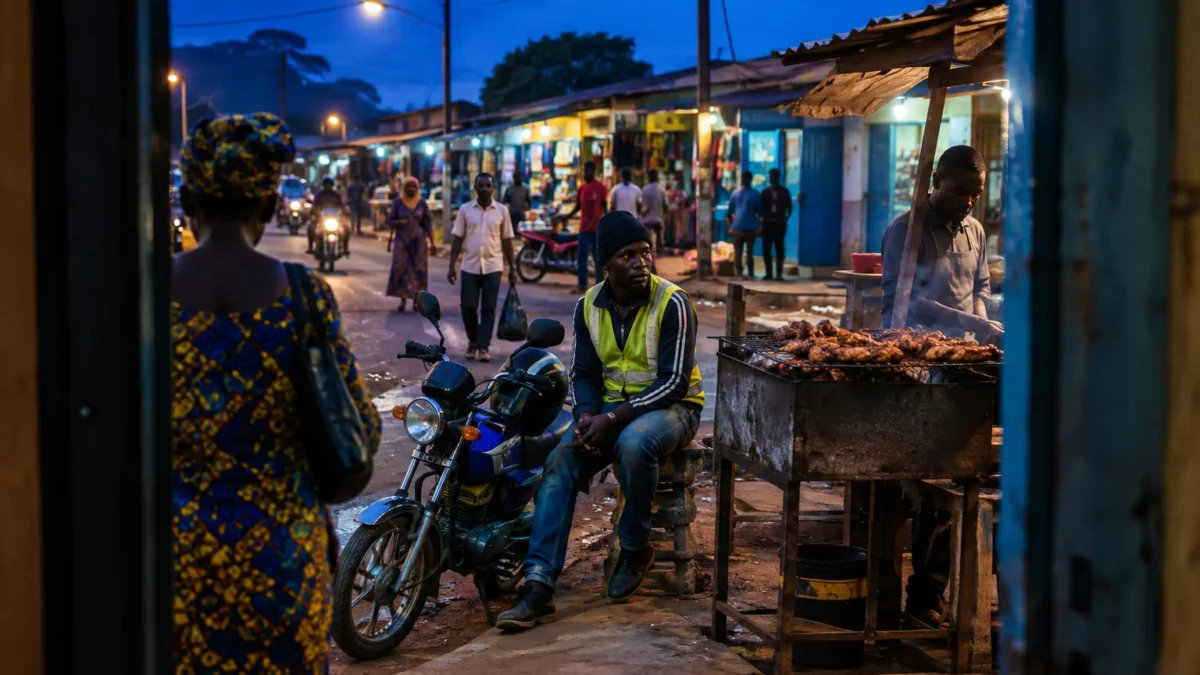
In Siguiri, the closure of artisanal gold-mining sites is felt far beyond the mines. Its effects reach into the streets, where motorcycle-taxi drivers, vendors and small businesses are losing some of their customers. For families who depended on gold, the ban has turned a daily source of income into immediate uncertainty.
A local economy tied to gold-mining sites
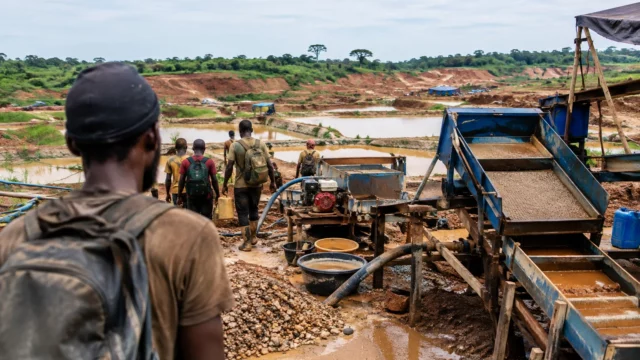
In Siguiri prefecture, in north-eastern Guinea, artisanal gold mining supports many people beyond those who dig. Transport, the sale of food and meat, accommodation and exchanges between villages also depend on the income generated around the sites.
This economy is rooted in a border region where workers from different Guinean prefectures and neighbouring countries have long travelled. Artisanal gold mining — the small-scale extraction of gold, often using rudimentary methods — provides a source of income, but can also degrade land and pollute water when it operates outside regulations and oversight.
Guinea’s decision also has regional implications. Workers and goods cross borders that national measures cannot erase. Reported departures to Mali and links with Burkina Faso are a reminder that Siguiri’s gold-mining activity is part of wider West African patterns of movement.
Closures hit local businesses
On 2 November 2026, the Guinean authorities announced a ban on gold mining deemed illegal and anarchic, deploying security forces to enforce the measure. The government describes the operation as a lasting initiative, intended in particular to limit environmental damage. Officials have also raised the possibility of agricultural retraining for young people and women.
On the ground, several workers have left mining communities to return to their home regions. Transport vehicles have been deployed in various parts of Siguiri. Accounts gathered in Bouré describe the knock-on effects of these departures.
In Bouré-Kofilani, motorcycle-taxi driver Djaka Mamadi Fofana says he has lost much of his customer base. His work, he explains, helped cover his household expenses. In Bouré-Balato, Mamadou Madane Diallo, a grilled-meat seller, says sales have slowed: what used to sell in a day can now take two days. These accounts illustrate the local impact, but do not in themselves measure the full scale of the losses.
The effects extend beyond Siguiri’s residents. Workers from other Guinean prefectures are returning home, while foreign nationals are also leaving the area. The consequences travel with them: lower incomes for vendors and transport operators, as well as uncertainty about finding work again or sending children back to school in their home communities.
Security operation amid tensions
Enforcement of the ban has led to arrests and court proceedings. The Guinean Press Agency reported on 11 November that 202 people charged with illegal mining, environmental degradation and water pollution were appearing before the Court for the Repression of Economic and Financial Offences. It also said that 1,263 people had been detained in the region, citing the army’s spokesman. These figures are attributed to the authorities and the agency; they are not an independent tally of those affected.
Clashes broke out on 11 November in Balato, in Kintinian prefecture, during a patrol linked to enforcement of the order. In a statement dated 12 November, the Guinean government reported a provisional toll of ten dead and 13 injured. The Associated Press reported the same toll, noting that the circumstances of the shooting had yet to be established. Judicial authorities have been asked to investigate. At this stage, responsibility has not been publicly established.
The episode highlights the difficulty of enforcing a ban in an area where mining also sustains everyday incomes. Tackling pollution and land degradation addresses issues of collective concern. But a police operation alone cannot replace the jobs, trade and income associated with the sites.
Promised alternatives have yet to take shape
Ministers have spoken of developing agricultural land in several prefectures, including Siguiri, as well as registering people dependent on artisanal gold mining. These announcements point to a policy direction, but their impact will depend on implementation: access to land, timing, production resources, markets and support for those affected.
The effects will not be the same for everyone. Traders based in Bouré’s centres can lose customers quickly. Families returning to their villages, meanwhile, must find new sources of income and sometimes reorganise their children’s schooling. For local authorities, the challenge is to enforce the rules while preventing the transition from shifting hardship from one community to another.
Across West Africa, Siguiri is a reminder that managing artisanal gold mining involves more than controlling sites. It affects workers’ movements, cross-border trade and the protection of shared natural resources. What happens next will depend as much on the progress of judicial proceedings as on whether the promised economic solutions are delivered. Without accessible alternatives, closures may displace hardship without addressing the underlying causes of informal mining in a lasting way.